William Blake, Ralph Waldo Emerson, Martin Luther King Jr. and even Helen Keller all found something to like in Emanuel Swedenborg.
Emanuel who?
A new book, “Swedenborg,” by author and former Blondie bassist Gary Lachman attempts to uncover the little-known Swedish scientist, philosopher and theologian.
Zimmerman 'Sorry' For Loss Of Martins' Son; Bond Set At $150,000 - Will Right Wing Really Let Mitt Romney `Pivot’ On Immigration? - The Evangelical Left In History And Today - Nebraska To Provide Prenatal Care To Undocumented Immigrants - Congressman Ryan's Delusional Politics - Religion, Politics Didn't Always Meet On The Right - There Are More Protected Places on Earth Now Than Ever Before - Sudan’s Return To War? - How Americans Lost Trust In Our Greatest Institutions - Awaiting A Verdict In Charles Taylor’s War Crimes Trial.
The U.S. and European allies in the so-called “Friends of Syria” took another step down the slope toward military intervention this week. In a Paris conference, the talk was tough, especially from Secretary of State Hillary Clinton.
The Washington Post began its story, “The United States, France and 13 other nations demanded Thursday that Syria immediately cease military operations against rebel forces and allow unfettered deployment of U.N. observers, suggesting that use of force will be considered if Damascus fails to comply.”
It continued by quoting Sec. Clinton making the suggestion more concrete: “I think we have to do more to take stronger action against the Assad regime,” she said. “We need to start moving very urgently in the Security Council for a Chapter 7 sanctions resolution, including travel, financial sanctions, an arms embargo and the pressure that that will give us on the regime to push for compliance with Kofi Annan’s six-point plan.”
The New York Times added that “Mrs. Clinton said the United States was increasing its nonmilitary aid. Other countries may be doing more with military training. But ‘we are expanding our communications, logistics and other support for the Syrian opposition,’ she said.”
One might think that after Iraq, Afghanistan and Libya, we have learned that military intervention usually does not solve the problems it purports to, and in fact, many times exacerbates them. Yet with expanded drone strikes in Yemen, the continuing threat of attacks on Iran, and the growing war talk on Syria, we seem to have learned nothing. Stay tuned for the next war.
Duane Shank is Senior Policy Advisor at Sojourners. You can follow him on Twitter @DShankDC.
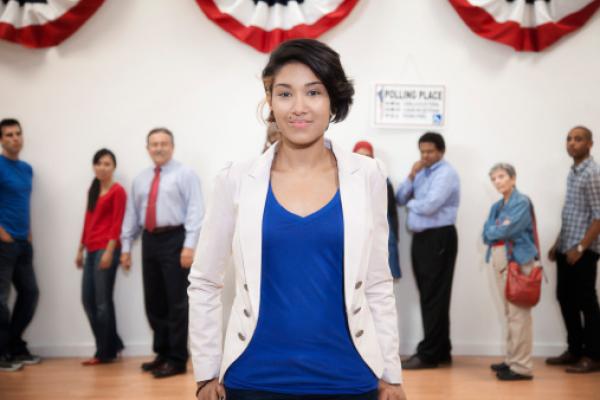
On Thursday, Sojourners launched its 2012 election campaign, Voting For Us, and the Public Religion Research Institute and Berkley Center released its “2012 Millennial Values Survey.” Young Christians, and particularly young evangelicals are a significant demographic to understand. They could be a large “persuadable” population in the run up to the November elections.
What do they believe? What are their priorities? How will they vote?
Young evangelicals are different from their parents and any generation that has preceded them. Their priorities are changing, their world view is shifting and their political engagement is becoming increasingly nuanced – going well beyond the narrow interests of the Religious Right that until now have been associated with evangelicalism in the United States.
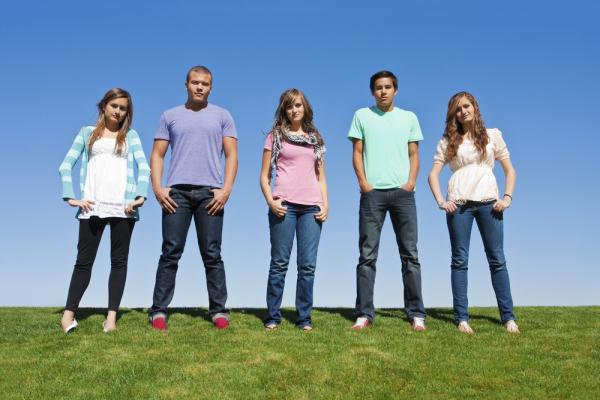
As part of the rollout for "Millennial Values Survey" from Public Religion Research and the Berkley Center, I sat at Georgetown University and listened to a very long list of what pollsters think makes up college-age millennials. I’m in the right age bracket, but I couldn’t stop thinking about what a difference just a few years makes.
I’m part of the millennial generation, albeit at the high end of the spectrum. At 29, my attitudes and behaviors look completely different to those on the lower end. Part of it, of course, is phase of life. I’m a professional, married, with a few life experiences under my belt. Most of the respondents of the survey are in college or recently graduated—half live with their parents.
In discussing the survey results with a 23-year-old friend, we worked through both obvious and subtle differences. Some key characteristics of this cohort, and perhaps ways to engage them, surfaced.
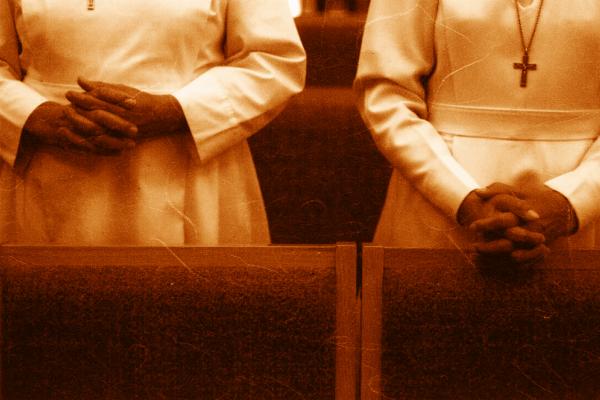
It’s not exactly headline-worthy news that many Catholics actually hold personal beliefs that don’t line up with church doctrine. It does get a little more interesting, however, when an umbrella group for 57,000 American nuns is called to the carpet for straying from Church teaching.
Reportedly, the nuns are promoting ideas on issues like abortion and homosexuality, among others in their programs that the Church condemns.
The ladies in black and white have gotten into some hot water with the Vatican, whose representatives claim the nuns are practicing “certain radical feminist themes incompatible with the Catholic faith.”
God, give me the patience to rest in you. make me lie down in green pastures; take me by the hand to still waters. Lord, refresh my weary soul even when I resist. Amen.
"No longer present your members to sin as instruments of wickedness, but present yourselves to God as those who have been brought from death to life, and present your members to God as instruments of righteousness. For sin will have no dominion over you, since you are not under law but under grace." - Romans 6:13-14
"Welcome any change that comes into any phase in your life; insist that it is going to turn out for the better – and it will. See the Angel of God in it, and the Angel of God will make all things new." - Emmet Fox
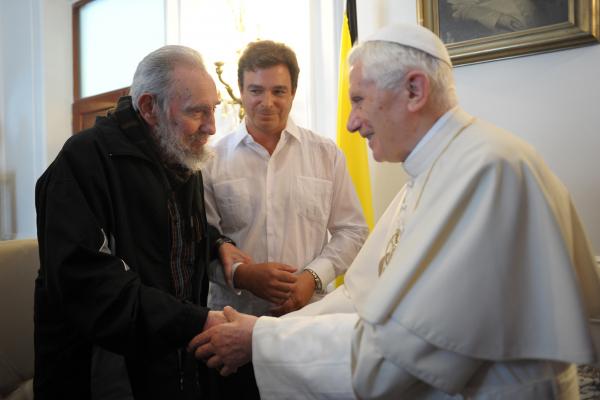
Following Pope Benedict XVI's recent trip to Cuba, U.S. Catholic bishops are pushing the State Department to lift the 50-year Cuban embargo in order to improve religious liberty and human rights for the Cuban people.
In a Tuesday (April 17) letter to Secretary of State Hillary Rodham Clinton, Bishop Richard E. Pates of Des Moines, Iowa, the chairman of the bishops' Committee on International Justice and Peace, pressed the Obama administration to pursue “purposeful engagement rather than ineffective isolation” with Havana.