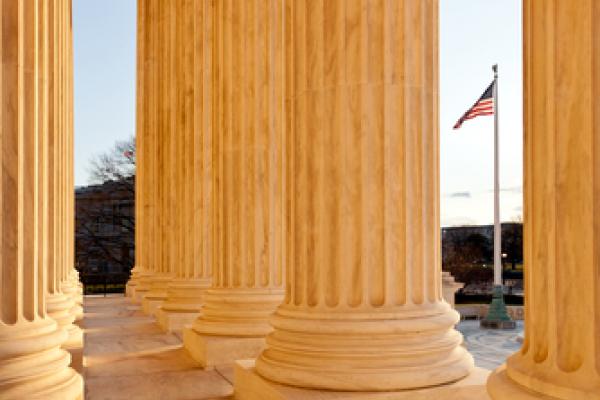
Social conservatives on Thursday reacted sharply to a federal appeals court ruling that declared the law barring federal recognition of same-sex marriage unconstitutional.
The First U.S. Circuit Court of Appeals judges are "intent on imposing their liberal, elitist views of marriage on the American people,” Brian Brown, president of the National Organization for Marriage.
In its unanimous ruling, the three-judge panel said the 1996 Defense of Marriage Act, or DOMA, deprives same-sex couples the same rights and privileges granted to heterosexual couples. The decision sets up a likely showdown in the Supreme Court and provides another culture war issue for the already contentious presidential campaign.

In the wake of President Obama's declaration of his personal support for the right of same-sex couples to marry under civil law, the nation is understandably focused on debating the merits of this position. Three related points from President Obama's announcement, however, deserve our attention as well.
First, President Obama noted that there is an important difference between civil marriage and religious marriage. The state defines civil marriage, which serves as the gateway for a wide variety of government benefits, rights and privileges. Religious marriage, on the other hand, is defined solely by religious communities.
These categories may be fuzzy in our minds because current law not only respects the ability of clergy and religious communities to define and bless religious marriage, it also allows clergy to solemnize civil marriage. That's why one often hears a minister conclude a wedding by saying, "By the authority vested in me by the state of X, I now pronounce you husband and wife."
Setting aside the oddity of a minister claiming the authority of the state rather than a higher power, the fact that the state allows clergy to bring a civil marriage into being does not mean it can require clergy to bless or recognize any relationship the state defines as civil marriage.
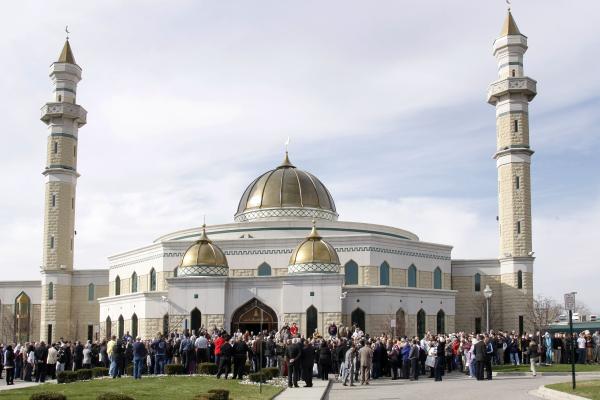
Mohammed Labadi had a lot at stake when the DeKalb City Council voted on May 29 on a request from the Islamic Society of Northern Illinois University to build a two-story mosque.
Labadi, a businessman and Islamic Society board member, said a bigger mosque is needed to replace the small house where local Muslims now worship. He also was hoping for affirmation that his neighbors and city officials have no fear of the Muslim community.
"Don't look at me just as a Muslim, look at me as an American," Labadi said. It's time, he says, "to take the unfortunate stereotypes about Muslims out of the picture." The City Council unanimously approved the plan.
In the decade since the 9/11 terrorist attacks, animosity toward Muslims sometimes has taken the form of opposition to construction of mosques and other Islamic facilities. National debate erupted over plans for an Islamic community center that became known as the "Ground Zero mosque" in Lower Manhattan.
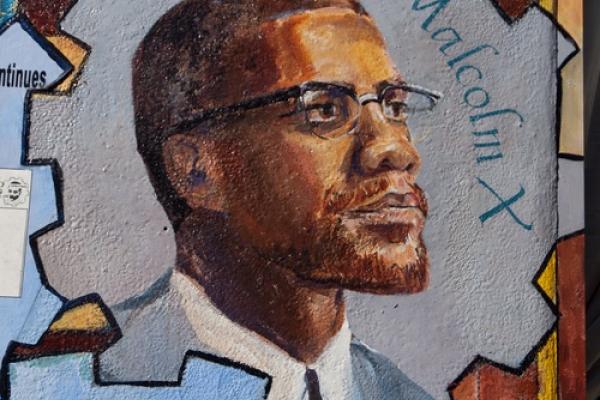
Sitting in his hotel room in Saudi Arabia in April 1964, civil rights activist Malcolm X penned a letter on hotel stationery to his friend and co-author, Alex Haley.
Malcolm X had just left the controversial Nation of Islam, a group whose leader denounced whites as “devils.” In Saudi Arabia, he completed the hajj pilgrimage to Mecca, where the experience of eating and drinking with “fellow Muslims whose skin was the whitest of white” had changed his mind on race, he told Haley.
“What I have seen and experienced on this pilgrimage has forced me to ‘rearrange’ much of my thought patterns and to toss aside some of my previous conclusions,” he wrote.
Ten months later, Malcolm X was assassinated in New York City.
The letter – considered by many historians to capture a watershed moment in Malcolm X’s life and philosophy, became part of “The Autobiography of Malcolm X,” which Haley co-wrote and Grove Press published in 1965. Four years later, Grove’s owner agreed to give his company’s files – including the letter from Saudi Arabia — to Syracuse University, where they sit today on the sixth floor of Bird Library.
Now, Haley’s son wants that letter back.
Politwoops presents deleted tweets from politicians -- bloopers from The Muppets -- crocheting massive portraits -- mashup of Men in Black III and Wes Anderson -- The Walkmen -- Rainn Wilson's airplane magazine article -- and Reggie Watts and Michael Cera improv a soul song about friendship and pie. See these and more on today's Links of Awesomeness...
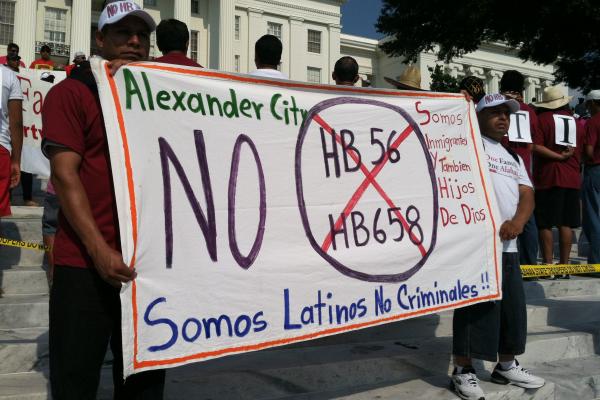
Hundreds of Alabamians gathered at the state Capitol grounds after their legislators passed HB 658, a harsher version of now infamous anti-immigrant HB56.
HB658 calls for the creation of an online public database to expose individuals’ identities. The database would list the names of all undocumented immigrants who have appeared in court. In addition, the law targets innocent children by requiring schools to check the immigration status of students. It is both reckless and morally indefensible.

Among my must reads are the Sunday New York Times Book Review and other book reviews I come across in various media outlets. There are too many books being published that I would love to read, but just don’t have the time. So, I rely on reading book reviews as one way of keeping in touch with what’s being written.
Here are my picks in this week’s books of interest:
In the aftermath of former Liberian president, Charles Taylor's conviction for war crimes this week, author Greg Campbell writes for The Atlantic that the children of neighboring Sierra Leone still suffer in abject poverty:
Ten years after the end of Sierra Leone's bloody civil war over control of its diamond fields, children as young as 3 years old continue to toil in its mines, hoping at best to earn a few pennies for food in a country still wracked by extreme poverty.
Read his full piece here
As reported by Reuters today:
A federal appeals court on Thursday found a law that denies federal benefits to married same-sex couples unconstitutional, in a case with implications for gay marriages across the United States.
Read more about the ruling here
Christianity Today reports:
17 Coptic evangelical leaders met with five Muslim Brotherhood counterparts at the Brotherhood's headquarters on February 28, and crafted a joint statement of common values that both sides agree the new Egyptian constitution and government should uphold. Evangelicals comprise a minority of Egyptian Christians, almost 90 percent of whom are Coptic Orthodox.
Read more about this story here