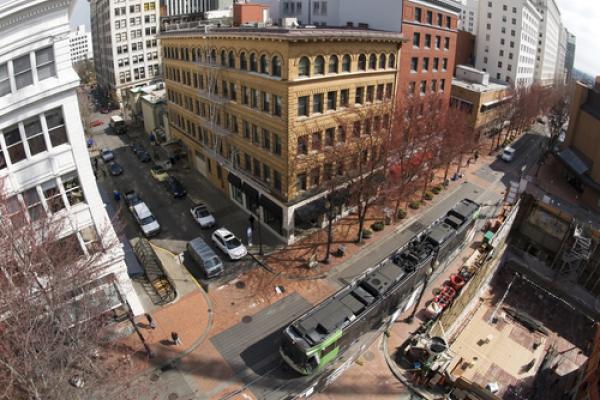
It’s easier to guide the vision and mission of a church you start. It’s another thing to help a 135-year-old congregation reimagine what it means to be a downtown urban church in a world that has changed dramatically all around it. At Milagro, the church we founded in our living room some nine years ago, we set the course for what we wanted that community to look like: a refuge for the spiritual walking wounded, safe haven for questions, doubt, and a culture of mutual encouragement, support, and accountability that would allow people to explore their own relationship with the Divine. We have since set that community free and already, it is becoming something different.
As well it should.
Now we find ourselves at First Christian Church in downtown Portland — a different animal entirely. In some ways, the two communities are very complementary, in that one has what the other tends to lack. But we’ve discerned that, first and foremost, our job is to help cultivate a spirit of radical openness and welcome. But what does this mean, and how do we even begin to change the makeup of an institution that has exited for more than five generations before us?
Sometimes, it’s the simplest things that say the most. We had a tradition at Milagro of “mugging” people when they came for the first time. This meant one of our hospitality stewards (AKA, “muggers”) would approach them and give them a coffee mug filled with candy and some information about the church. With First Christian, however, most people know we’re here; the bigger question lingering in the public mind is why.
In this case, instead of a brochure describing programs or institutional history, Amy included the welcome statement that follows, which she borrowed and adapted from a Catholic community.
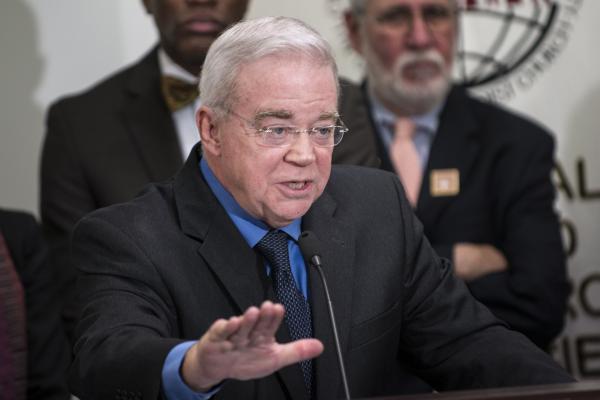
WASHINGTON — Dozens of the nation’s faith leaders said on Tuesday that they’re ready to take on the gun lobby and demanded that politicians take quick and concrete steps to stem gun violence.
At a Capitol Hill press conference and in a letter to Congress, more than 45 clergy and heads of religious groups — representing the spectrum of American religious life — petitioned lawmakers to reinstitute a ban on assault weapons, require background checks on all gun buyers, and make gun trafficking a federal crime.
Organized by the two-year-old coalition Faiths United To Prevent Gun Violence, the signers said the slayings at a Newtown, Conn., elementary school last month had pushed them to redouble their efforts, and created an opportunity to beat back the gun lobby.
The Rev. Jim Wallis, the evangelical who heads the progressive Christian group Sojourners, took on Wayne LaPierre, the outspoken executive vice president of the National Rifle Association, directly.
LaPierre’s statement after Newtown that the “the only thing that stops a bad guy with a gun is a good guy with a gun” is “morally mistaken” and “religiously repugnant,” Wallis said.
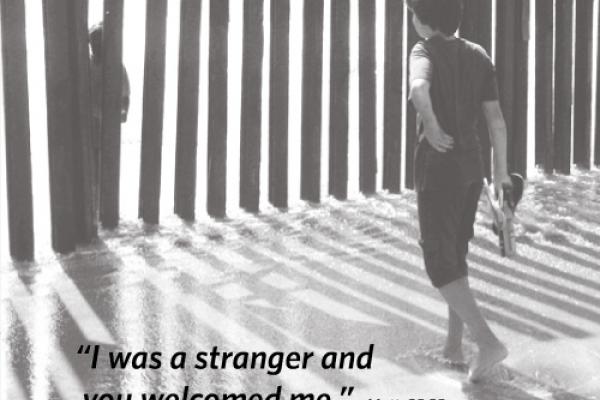
On Monday a group of prominent faith leaders belonging to the Evangelical Immigration Table gathered on a press call to launch largest evangelical mobilization effort for immigration reform known to date.
Reaching out to more than 100,000 evangelical churches nationwide and more than 875,000 followers through social media, leaders promoted the “I Was a Stranger” immigration prayer challenge and a feature video that encourages congregations to participate. During this initiative, participants are asked to read one scripture on immigration a day for 40 days and reflect on it to help inform their views.
This campaign is part of a broader evangelical effort to help change the hearts and minds of policy makers and build the political willpower to pass immigration reform. Faith leaders encouraged our nation’s leaders — especially those who are compelled by their faith — to take the challenge and enact immigration policy that is driven by biblical principles.
I Was A Stranger from G92 on Vimeo.

As the Faith Based Organizer for the Federation of Protestant Welfare Agencies (FPWA) — a citywide coalition of more than 300 member agencies and faith institutions — I have the privilege of working with a diverse group of faith leaders. Last spring we were thrust into an important struggle for childcare and after school funding led by the Campaign for Children (C4C), a citywide coalition of organizations advocating for childcare and after school funding. Some may wonder why clergy would be concerned about this issue, but for the clergy I work with, the reason is clear: budgets are moral documents, and what is funded reflects our values. Our clergy know that children are the greatest in God’s kingdom and our investment (or lack thereof) in them will have consequences for our future.
In New York City obtaining quality education is a serious struggle for parents of all classes. This struggle includes waiting lists that upperclass parents place their unborn children on, intelligence test for 5 year olds, interviews and hustling from one open house to another. Finding childcare is a daunting task, especially for low-income parents. As a child in New York City I knew how important it was to not end up at my “zone school,” which are schools for children who could not get in anywhere else. Growing up in one of the 12 poorest communities in New York City, my zone schools were the worst. From junior high on I had to take buses and trains to get an education. The process of finding childcare is one of the clearest depictions of the greatest lie that controls New York City: “that some people are worth more than others” (NYFJ Faith Rooted Organizing Core Lie Exercise March 2011).

A super artsy way to make shirts and furniture look cool, a wolverine that saves people from avalanches, a bird singing dubstep, a guy who documented his year in one-second video clips, and a petition to the White House to make the Death Star. Awesome.

"I expect and am willing to be persecuted, imprisoned, and bound for advocating African rights. And I should deserve to be a slave myself if I shrunk from that duty or danger." -William Lloyd Garrison, Abolitionist (1805 - 1879)
With Black History Month coming up in February, many of us will remember the civil rights struggles that have brought us to where we are today. I recently read a fascinating book about that movement focused on the role of women in those efforts called Freedom’s Daughters. It highlights past generations of women activists, both black and white. They led in the struggles for abolition, desegregation, civil rights, and women’s suffrage. These movements carry with them the roots of our contemporary work for justice.
As I considered the lessons from that book I found myself resonating with many challenges, failures, and victories these women experienced, much of which was based on the race and gender dynamics of the day.
As an educated white woman who began my foray into community organizing though a summer internship in my early 20s — like many of the young women in Freedom Summer coming down from the North — I had not yet delved into the complicated nature of race relations in the United States. I started my summer feeling competent, a person who could learn and adapt to changes as I had on many previous international mission experiences. I carried with me an overly simplified belief in the romantic “beloved community.” The beloved community would come about as we worked together, prayed, and marched.
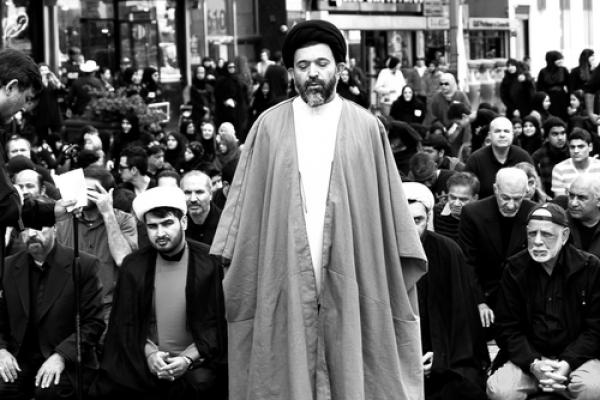
SPOKANE, Wash. — The Spokane Islamic Center wants something mosques all across the country are seeking and can’t seem to find: an educated, bilingual, experienced imam who understands American culture.
According to the report “The American Mosque 2011” by University of Kentucky professor Ihsan Bagby, half of all mosques in the U.S. have no full-time staff, and only 44 percent of imams work as paid, full-time leaders.
In Spokane, the Muslim community has been seeking a leader for 18 months and counting.