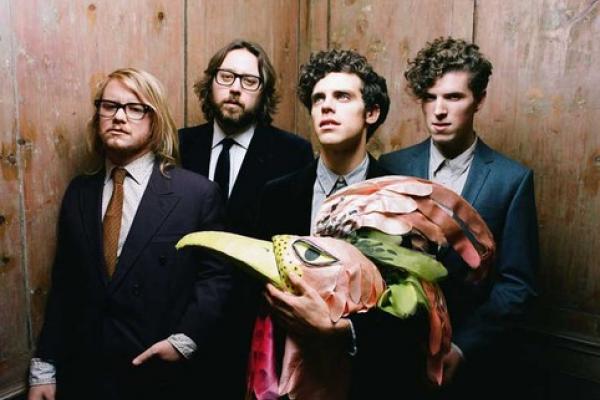
“I’ve always believed that there’s an amazing number of things you can do through a rock ‘n’ roll song,” Lou Reed, who just this past week passed away, once told the journalist Kristine McKenna.
English band Noah and the Whale take that observation and run with it. I had the opportunity of seeing the band live last week, and the show — and their sound — was simple, as nearly every rock song is, yet cathartic and delightful. It mixes elements of Reed and his sixties and seventies peers with Springsteen and sprinkles on touches of indie-folk that’s flourished over the last decade. And the results are marvelous.
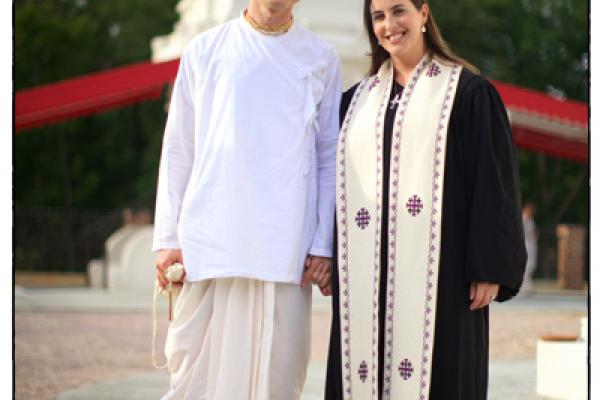
Growing up Baptist, J. Dana Trent heard plenty of warnings about interfaith romance.
Marrying the wrong person — known as being “unequally yoked” — could ruin your faith and your marriage.
But three years after marrying a former Hindu monk, Trent says she’s a better Christian than ever.
“I had become complacent in my Christianity,” said Trent, an ordained Baptist minister. “Now my religion and spirituality have become much more integrated in my life.”
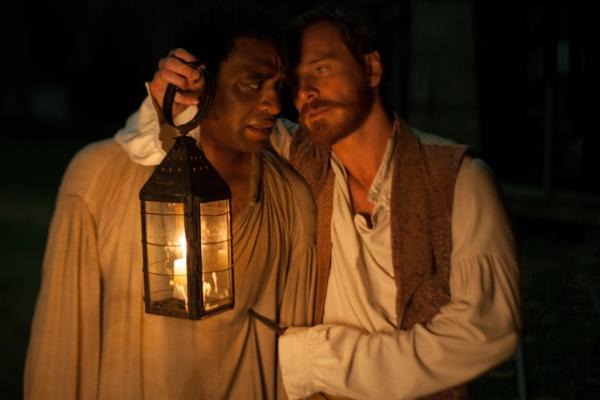
Before I saw the new film 12 Years A Slave, I knew nothing about Solomon Northrop or his astounding story of courage, forbearance, and faith.
I’d never heard of Northrop, an African-American freeman, who was born and reared in upstate New York in the early 1800s, well before the abolition of slavery in the rest of the nation. I’d not known of the historical practice of kidnapping freeborn black Americans in the North and selling them into slavery in the South.
I’d never heard about how Northrop, an accomplished violinist, was bamboozled into traveling from his farm in Hebron, N.Y., where he lived a prosperous life with his wife and three children, to Washington, D.C., for work, but was drugged, kidnapped, and sold in Louisiana. I’d never heard how he remained for a dozen years before heroically regaining his freedom in 1853 — one of a very few kidnapped freemen and freewomen ever to regain their freedom.

I probably shouldn’t admit how much I like Halloween. I’m too much of a slug to deck out my house, I rarely wear a costume, and I haven’t been to a wild party in years, but I love the excitement children bring to the whole process. Then again, there’s the classic It’s the Great Pumpkin, Charlie Brown – what’s better than that? I’m pretty much a sucker for Halloween.
I was already an adult when I learned how we came upon Halloween. All Hallows’ Eve marks the night before All Hallows’ Day, or All Saints’ Day, when Christians celebrate those who have preceded us in the faith. Some churches honor great heroes of the faith, the “saints” of our past. Other churches emphasize that all believers are “saints,” not because we are especially virtuous but because we are made holy simply by God’s will. In some churches, the label “saints” joins us not only to our deceased forebears but also to our living sisters and brothers scattered around the world. (Still other churches simply don’t observe the day at all.)

In a recent USA Today article, reporter Alan Gomez highlights the broad support for immigration reform including among the evangelical faith community.
“About 300 conservatives from around the country and with varying backgrounds — pastors, farmers, police chiefs, business owners — will arrive in Washington on Oct. 28 to meet with Republican lawmakers and make a conservative pitch for a new immigration law,” he wrote.
While Gomez’s piece effectively captures the strong support for immigration reform among evangelical leaders, among others, it also quotes Roy Beck, executive director of the population-control group NumbersUSA, who says these leaders “don’t represent the evangelical rank and file.”
Polls and recent grassroots activity show otherwise.

"Foster care touches on multiple issues and engaging the system is a way to comprehensively engage some of the biggest challenges to a city’s flourishing."
There is a new initiative in Washington, D.C. that hopes to so profoundly change the foster care system in the city that the supply of foster homes will far exceed the demand for them. DC127 is an organization committed to “reversing the list” of children and youth who are waiting for a foster or adoptive home. By reminding churches of the biblical mandate to care for widows and orphans, they have started a network in D.C. that spans Christian denominational lines.
The movement is beginning to gain some traction and DC127 is gearing up for its first event on November 2.
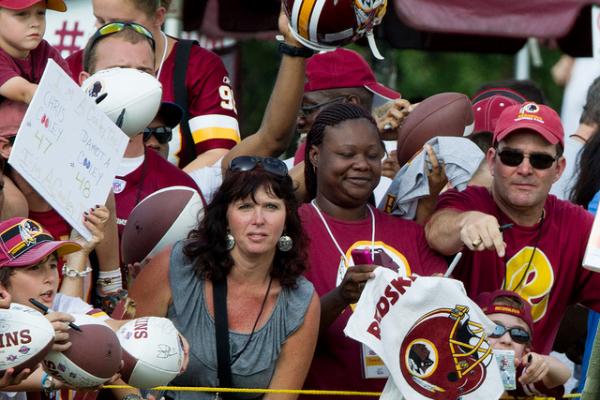
The Oneida Indian Nation’s campaign against the Washington pro football club’s team name picked up new supporters this week when more than two dozen clergy in the Washington region committed to taking the fight to their pulpits.
“Black clergy have been the conscience of America,” Oneida Nation representative Ray Halbritter said to a gathering of roughly 40 people on folding chairs in the basement of Plymouth Congregational United Church of Christ. “This is not a fight we could do by ourselves, or should do by ourselves.”
The Rev. Graylan Hagler, senior minister at Plymouth, asked for a show of hands Wednesday to indicate which clergy members in attendance would be willing to preach against what he termed the “R word.” More than a dozen raised their hands. Hagler said that a different dozen committed to the cause at a clergy breakfast meeting Wednesday and that, all told, he has commitments from roughly 100 clergy members to talk to their congregations in coming weeks.