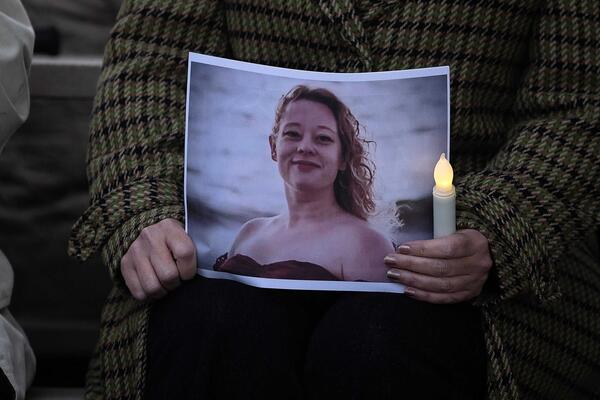
In the days after an Immigration and Customs Enforcement agent shot and killed 37-year-old Renee Nicole Good in Minneapolis, her final words clung to me.
“I’m not mad at you,” she said. Her eyes were earnest.
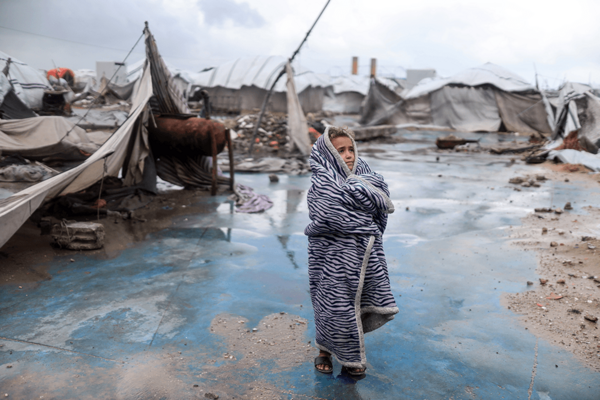
Disintegrating refugee tents, babies freezing to death, and extreme malnutrition are samples of the horrid conditions aid workers with the American Friends Service Committee have been witnessing in Gaza as they and other organizations provide the bulk of health and human services in the decimated region. But soon even those services could be gone. Under new registration requirements from the Israeli government, 37 aid organizations are set to be expelled from the region in March.
“It’s a red flag. It’s a shining light that says things are going to get worse,” Kerri Kennedy, AFSC international associate general secretary, told Sojourners. Kennedy oversees the 100-year-old nonprofit’s work in Gaza. AFSC and dozens of other aid groups have protested the new registration requirements and warned that their expulsion is a harbinger of things to come. “I can’t imagine the horrors and the lives that will be lost,” she said.
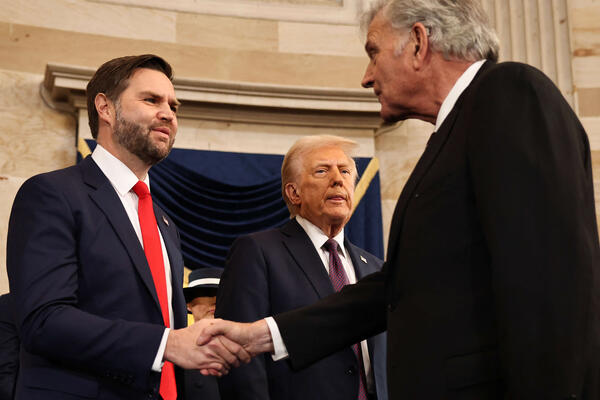
On Dec. 17, 2025, evangelical minister and Republican political activist Franklin Graham led a Christmas worship service at the Pentagon, where he preached about God being a “God of war.” I find it to be one of the most bizarre Christmas sermons ever given, but it was telling.

While many people enter the new year after spending time with families over the holidays, many incarcerated people enter the new year feeling an exacerbated sense of isolation. While outreach ministries, prison chapels, and other forms of spiritual care offer lifelines, many incarcerated LGBTQ+ people—especially Christians—find accessing this care more challenging.
Pastor Que J. Thomas, senior pastor of The REEL Center of Atlanta, and a formerly incarcerated transgender man, spoke to just how significant these obstacles often are.
“Spiritual care is definitely vital, but it was not a safe place,” said Thomas, who was incarcerated in the Georgia state penitentiary system from 1999 through 2015. “If you were a known LGBTQIA person on that compound, the warden and superintendent would not allow you to participate in religious services.”
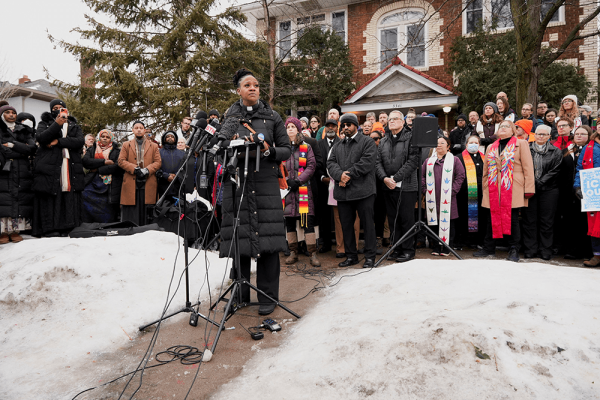
After an Immigration and Customs Enforcement agent shot and killed Renee Nicole Macklin Good, faith leaders in Minneapolis joined demands that ICE leave their city and repent.
“We have our demands. Hundreds of clergy across this state who have gathered together across faith traditions are standing with the rest of Minnesotans to say not again,” Minister JaNaé Bates Imari, co-executive director of ISAIAH, a multiracial interfaith nonprofit, told a crowd of Minnesotans at a press conference.
The press conference, organized by ISAIAH, drew more than a hundred leaders from numerous faith traditions, representing the breadth of the city’s religious communities. ISAIAH presented its demands: That ICE agent Jonathan Ross be arrested, charged, and prosecuted for killing Good; that ICE immediately cease its surge in operations in the state; and that Congress investigate the Department of Homeland Security.
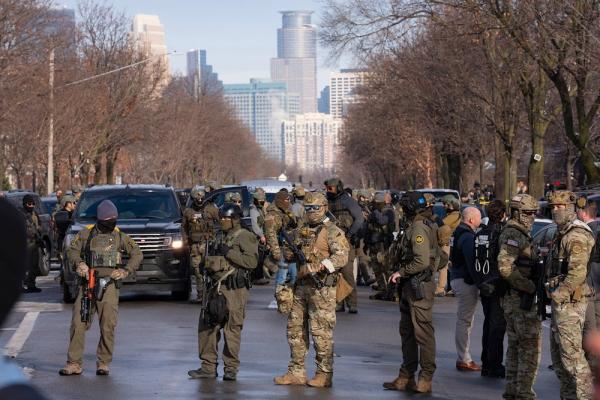
The book of Amos tells us of a priest named Amaziah, who is depicted as something of a rival prophet to Amos himself. The book itself is full of Amos’ harsh words against Israel’s exploitation of the poor and greedy indulgence of the rich, as well as prophetic calls to repentance before God’s judgment falls on the whole nation.
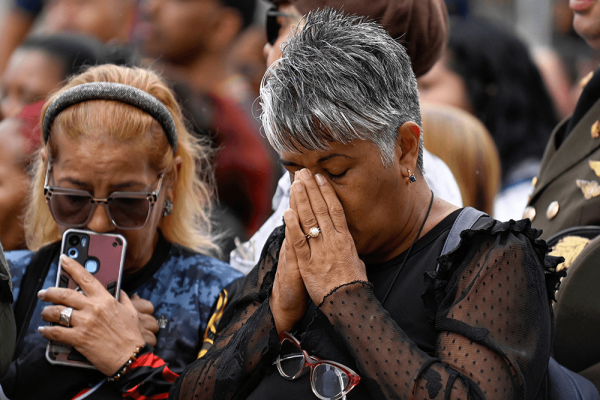
After the U.S. military’s abduction of Venezuelan President Nicolás Maduro, faith leaders are processing deep feelings of conflict, both with Maduro and with the U.S. intervention.
Rev. Ricardo Corzo Moreno is a Presbyterian pastor living in Caracas, Venezuela’s capital. Moreno’s apartment building is approximately one mile away from an air force base in La Carlota that was bombed in the attack. He described how shocked and terrified his neighborhood as bombs started dropping and planes flew at low elevation over their buildings.
“After everything ended ... it was a total silence. Nobody went out in the street; everyone stayed in their buildings. For the next 24 to 48 hours, Caracas became like an empty city,” Moreno said. “A lot of churches here in Caracas, they decided to cancel Sunday service because people were afraid that something would start happening in the population.”

If you ask TV writer and producer Vince Gilligan what his latest show, Pluribus, is about, he’ll turn the question right back around on you.
“I really like the idea of making a show and letting viewers tell us what it’s about,” Gilligan told Sojourners. “I don’t know that there’s any one answer to that question other than what the individual thinks.”
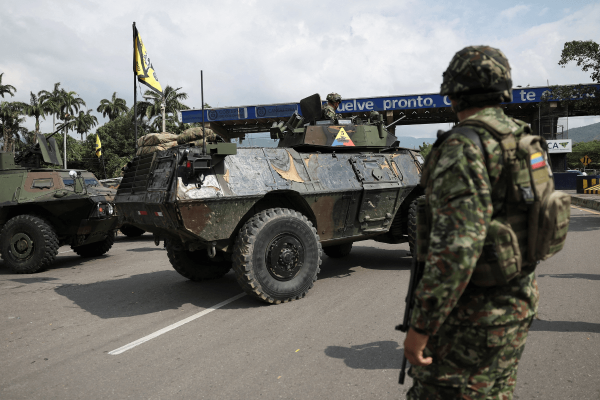
Blessed are the peacemakers, for they will be called children of God (Matthew 5:9). As followers of Jesus, this beatitude from the Sermon on the Mount offers a moral compass for how we treat our neighbors, including those in other nations. Jesus isn’t calling us to be passive; he’s calling us to actively make peace. I’m reminded of the Hebrew and Greek words for peace, shalom and eirene, which evoke a sense of repair or a “setting right” of what is broken. Jesus modeled this active pursuit of peace in his own life. Born into a community occupied by violent, imperial powers, Jesus rejected the logic of might-makes-right and instead ushered in something more powerful: God’s promised reign of justice, righteousness, and love. Today, that kind of restoration often requires combating the fear, hatred, hubris, and greed that so often undergird conflict.
Jesus’ call to be peacemakers feels especially urgent given that this year began with a literal bang: On Jan. 3, the Trump administration launched a military assault on Venezuela to abduct and arrest President Nicolás Maduro and his wife, Cilia Flores. At least 80 Venezuelans were killed by an attack that did not have congressional approval, violated international law, and set a dangerous precedent for a presidency characterized by extending and imposing U.S. power and influence on other countries through military force. Most significantly for us as Christians, the administration’s actions in Venezuela signal a further U.S. retreat from a commitment to protect human dignity, freedom, human rights, and peace.
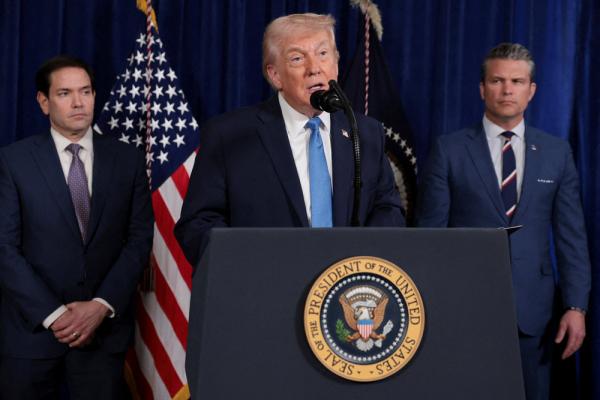
During his life, Otto Maduro, the late Venezuelan sociologist and liberation theologian, lamented how the majority of Latin Americans were being treated to “fatten the bank accounts” of a small minority. This deeply troubled Maduro. As he wrote in his 1982 Religion and Social Conflicts, “I cannot submissively cross my arms in the face of certain allegedly ‘Christian’ attitudes and traditions that appear to me to be an antievangelical instrumentalization of the church in the service of social injustice.”