Open Doors, a non-denominational Christian group that supports persecuted Christians, reminds us what real persecution is. There are more than 65 countries where Christians face imprisonment, torture, or death because of their faith. Reuters Faith World reports
“About 100 million Christians are persecuted around the world, with conditions worsening for them most rapidly in Syria and Ethiopia, according to an annual report by a group supporting oppressed Christians worldwide.
“Open Doors, a non-denominational Christian group, listed North Korea, Saudi Arabia and Afghanistan as the three toughest countries for Christians last year. They topped the 50-country ranking for 2011 as well.”
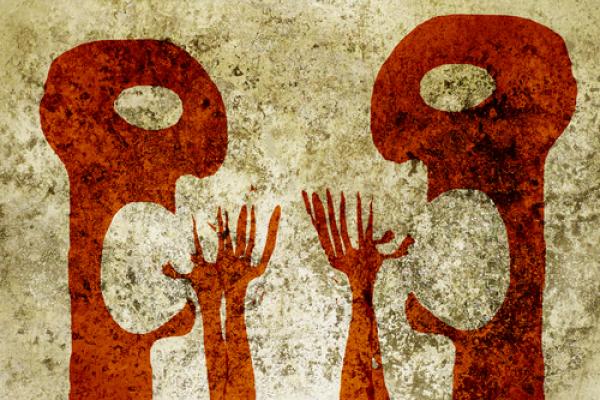
Conflict happens everywhere, from Congress to congregations, from boardrooms to bedrooms. The dysfunction of Congress is just a highly public instance of a typical conflict scenario.
I recently compiled some basics of church conflict. See if you agree with me that this playbook applies broadly.
Church conflicts – which will happen to all clergy and congregations eventually – generally focus on the clergy, just as conflict in any enterprise tends to focus on the top leader. That’s because the underlying issue usually is power – who calls the shots, who can initiate change, who can hold others accountable.
Secondary issues like specific actions, perceived performance and trust get the spotlight, but are surrogates for the power issue. People who want power don’t relish being perceived as wanting power. They prefer being seen as the aggrieved, better performers, more trustworthy, more faithful to ultimate purposes.
Church conflicts usually spring from a small group of antagonists, perhaps even a single person, who start with a conclusion, largely intuitive and emotional, and then search for reasons. Those reasons tend to be moving targets that defy better information. Deal with one reason, and two more take its place.
Antagonists, meanwhile, intimidate others into compliance, or at least silence, by making it clear they will stop at nothing to win.
PASSINGS, 2012
I always begin a new year by remembering those who passed in the just concluded year. These aren’t necessarily the most famous, and I didn’t know them personally (or, at best, had met several briefly), but their lives touched mine in three of my passions.
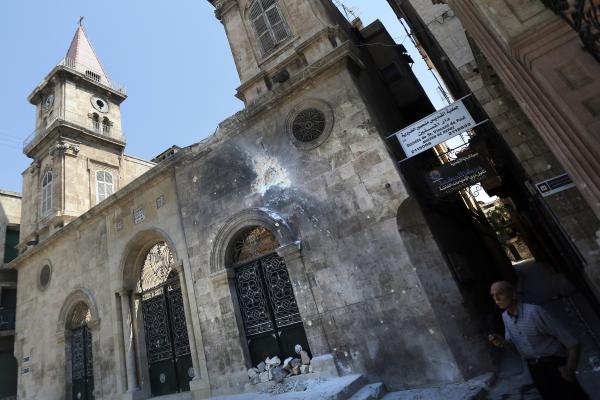
WASHINGTON — The persecution of Christians “vastly rose” in 2012 as radical Islamists consolidated power in Africa, according to Open Doors, a Christian missionary organization which publishes an annual list of offending nations.
Increasing threats to African Christians can be seen in focused attacks, such as the killings of Christians in Nigerian churches by the radical Muslim group Boko Haram, but also in the greater prevalence of radical Muslims in government, according to the California-based Open Doors.
In Mali, for example, which made the biggest leap on the “World Watch List,” from unranked in 2011 to No. 7 in 2012, a coup in the north brought fundamentalist Muslims to power.
“The situation in the north used to be a bit tense, but Christians and even missionaries could be active,” said Open Doors spokesman Jerry Dykstra.

Almost two years ago, I took a titanic risk. If you look at things from an earthbound perspective, what I did is: I took my livelihood, and my children's provision, in my hands alone. I quit my job at The News & Observer, a major, Pulitzer-prize-winning newspaper where I earned a decent salary and reached 150,000 to 200,000 readers on any given day.
The decision was a long time coming — my whole adult life, really. Before I ever started my first newspaper job in 2000, I’d wanted to help people explore deeper things than just tax policy, or crime, or environmental regulation. These just skim the surface of who we are as humans: why we share or hoard, why we hurt or protect one another, what we owe to Mother Earth.
What I found as a newspaper reporter was that I had no choice but to skim the surface of things. There’s not enough space to go deeper, but, more importantly, deeper takes you into hypothesis, not fact — and hypothesis is a leap of faith. What you find when you go deeper depends a lot on the gear you’re wearing when you dive. I’m cloaked in Bible stories and Christian tradition, and therefore I live in hope that there’s a Creator and that this God is working quietly to heal the world.
I read recently in Psalm 27:
“The Lord is my light and my salvation —
whom shall I fear?
The Lord is the stronghold of my life —
of whom shall I be afraid?”
Michael Boyle, an assistant professor at La Salle University, who served on President Obama’s counter-terrorism advisory group during the 2008 campaign, has written a new, critical article on drones for the journal International Affairs.
The Guardian reports:
“The United States' use of drones is counter-productive, less effective than the White House claims, and is 'encouraging a new arms race that will empower current and future rivals and lay the foundations for an international system that is increasingly violent,' according to a study by one of President Obama's former security advisers.
“Michael Boyle, who was on Obama's counter-terrorism group in the run-up to his election in 2008, said the US administration's growing reliance on drone technology was having 'adverse strategic effects that have not been properly weighed against the tactical gains associated with killing terrorists.'"

“After the first exile, there is no other.”
—Rosellen Brown, The Autobiography of My Mother, 1976
The great wheel of the year has turned once more, and I find myself back at the beginning again. Not at the start of a brand new year, but rather, at the anniversary of my father’s death.
I was eight years old when he died, on January 8, 1977, after six long months of decline from lung cancer. In the family’s last-minute midnight scramble to the King’s Daughters Hospital to offer a final farewell, I was adjudged too young and too asleep to wake up for the ride.
I found out that he had died when I crawled from bed at dawn the next morning, yawning and jonesing for cartoons, only to find a bath robed neighbor stoking the fireplace, and my father disappeared into ether.
That singular fact has been the still point of my turning world in the decades since.
The secrecy of the U.S. drone program often makes it difficult to follow what is happening. News reports cite unnamed intelligence or security officials, sometimes tribal sources, usually with different information.
For example, on Sunday a large number of people were killed by drone strikes in Pakistan's South Waziristan region. The story was reported by Al Jazeera, Reuters, DAWN, Associated Press, and CNN; among others.
The strike involved “several missiles” (AP), “eight to 10 missiles” (Al Jazeera), or “four unmanned drones fired ten missiles” (DAWN). It was aimed at “a suspected Taliban compound” (Al Jazeera), “three Taliban compounds” (Reuters), “three militant hideouts” (AP), or “three houses” (DAWN). The casualties were “sixteen killed and several others wounded” (Al Jazeera), “seventeen dead, three wounded” (CNN), “between ten and twelve dead” (Reuters), “seventeen dead” (DAWN), or “nine dead” (AP). They were “believed to be militants” (CNN), “suspected to be Taliban fighters” (Reuters), or “fighters belonging to the Punjabi Taliban” (Al Jazeera),
So, how many people were killed? Who were they? You decide.