
When disgruntled congregations have left hierarchical denominations such as the Episcopal Church, they’ve often lost property battles as civil courts ruled buildings and land are not theirs to keep.
But outcomes could be different this year, court watchers say, as high-profile cases involving dozens of Episcopal congregations in South Carolina and Texas wind their way through state courts. That prospect has observers watching for insights that could shape legal strategies in other states and denominations.
Both cases involve conservative dioceses that voted to leave the Episcopal Church over homosexuality, among other issues. In South Carolina, congregations representing about 22,000 people are suing the Episcopal Church for control of real estate worth some $500 million and rights to the diocese’s identity. In Texas, the national Episcopal Church is suing about 60 breakaway congregations in the Fort Worth area for properties estimated to be worth more than $100 million.

Just as the winter months tend to bring a mellower, melancholic feel to life, so too can music. And some of this month’s more obscure releases do just that. If you’re looking for an album to check out on a dreary winter morning, look no further.
That’s not to say at all that they’re bad releases. One can quickly point to the likes of Bon Iver or Radiohead as figureheads of melancholy. They’re just different from the bubbly pop one might hear a lot on the radio.

I awoke in the middle of the night last evening and walked the house in the dark. Kenneth and Caitlin were still stirring, as the older children sometimes do on the weekend. As I climbed the stairs back to our room I felt a wave of gratitude.
Here we are all under one roof for who knows how much longer, yet such a privilege to still be together even as four of seven attend college and work hard and make us proud as they figure out what's next.
I got back into bed and Debbie put her arm around me in her sleep. I said "I love you," and she whispered, half-asleep "I love you, too," and for that moment all was well, and I had a sense that all would be well in the future, come what may.
As I lay there in the stillness, an encounter from five years ago came back to me in vivid color. I had just preached the funeral of a man taken unexpectedly following a routine surgery. I was at the wake afterward and sat next to an unassuming man in his mid-50s whose suit was impeccable and whose polite manners suggested a quiet grace and a bearing of humility in his obvious accomplishments, but also a bit of world-weariness.

The U.S. killing by drones in countries other than war zones is run by the CIA. This leads to the secrecy of the program, one of its controversial aspects. Now, according to Ken Dilanian in the Los Angeles Times, it may change.
“Facing growing pressure to lift the veil of secrecy around targeted killings overseas, the Obama administration is considering shifting more of the CIA's covert drone program to the Pentagon, which operates under legal guidelines that could allow for more public disclosure in some cases. John Brennan, whom President Obama has nominated to run the CIA, favors moving the bulk of drone killing operations to the military, current and former U.S. officials say.”
Some think this would result in less secrecy, as the Pentagon has already acknowledged its use of drones. Others think it would prove more difficult in causing problems for nations that secretly host U.S. drone bases. Whatever the perceived problems may be, if a change leads to a more open and accountable program, it’s a good thing.

Remember those who are in prison, as though in prison with them, and those who are mistreated, since you also are in the body. — Hebrews 13:3
Where are defendants, who have committed no atrocious crimes, denied due process, shackled en masse before a judge, and sentenced during a trial of assembly-line justice? The answer: the daily proceedings in the federal courthouses of Tucson, Ariz., and a few other border locations. But anti-immigrant masterminds in Arizona did not think up this “zero tolerance” program. It is the result of powerful lobbying by private prison companies and our political willingness to harshly criminalize unauthorized migration.
Operation Streamline began in 2005 in Texas and 2008 in Arizona as part of the deterrence strategy of border enforcement. Instead of the typical civil violation, it charges people who cross the border without authorization with criminal misdemeanors (punishable by up to six months in federal prison) and then felonies (punishable 20 years) to those who return after a past deportation. Sen. John McCain, (R - Ariz.) has proposed an expansion of the program as part of immigration reform.
But according to a recent report, the federal government already has spent an estimated $5.5 billion incarcerating undocumented immigrants in the criminal justice system for unauthorized entry and re-entry since 2005. Unauthorized entry/re-entry have recently become the two most prosecuted crimes in the entire federal judicial system. Consequently, Latinos now represent more than 50 percent of all those sentenced to federal prison despite making up only 16 percent of the U.S. population.
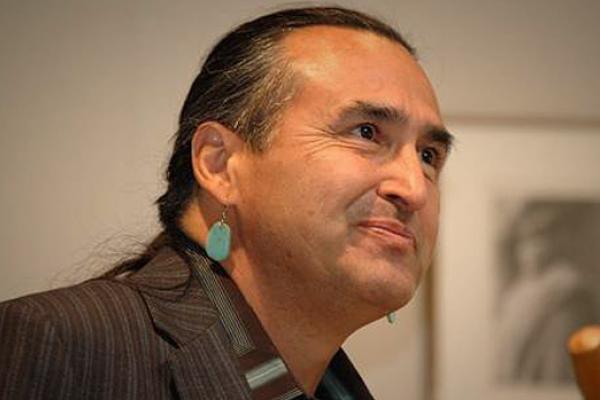
It was one week ago that I received the email I had been dreading. On Feb. 6, 2013, while in Washington, D.C., for the National Prayer Breakfast, Richard Twiss suffered a major heart attack. He remained in a hospital in the D.C. area for several days as friends and family rushed to his side. But on Feb. 9, at the age of 58, Taoyate Obnajin, he Stands with his People, crossed over to meet the Creator. He is survived by his wife Katherine and his four sons Andrew, Philip, Ian, and Daniel.
If you ever had the privilege of meeting Richard Twiss, chances are he invited you somewhere. Richard was an incredible host. I remember last summer I attended a symposium for the North American Institute for Indigenous Theological Studies, of which Richard was a board member. No sooner had I walked through the door when I was greeted by Richard and asked if I would like to join their drum circle up front to start the next session. I felt extremely honored by this invitation and gladly accepted. I am not a trained theologian nor am I a prolific powwow drummer, but this small gesture immediately made me feel at home and communicated that I was welcome there and was given a voice should I have something to contribute.
Richard was involved in many conversations. As a follower of Jesus, president and co-founder of Wi

For those who are students of Africa, the Caprivi Strip of Northern Namibia brings memories of the awful border wars and independence struggles of the 1970s and 80s. Perhaps the lessons apply to Israel and Palestine.
Ironically, one of the last and longest, most peaceful and unpolluted rivers in the world is the Okavango. It is the border between Namibia and Angola where still today a long stretch of the north bank Angolan farmland is mine infested. Large breem and tiger fish jump, and magnificent fish eagles take flight from trees on the Namibian bank and wing to large dead trees in Angola where hippo provide background music with loud braying. The behemoths make their way back and forth and often spend the early evening hours lounging on the beach in front of the main buildings of the River Dance Lodge near Divindu on the southern shore.
This gently lapping, wide, drinkable stream — that creates in nearby Botswana the amazing Okavango Delta — is bordered by Angola, Namibia, and Botswana. The crystal clear ribbon of nearly 500 miles of uninterrupted resource runs just a few yards under my feet a quarter of a mile across from where the Angolan fields and forests were the hiding place for Jonas Savembi before he was killed in 2002. His South African- and American-supported troops were routed by Jose Eduardo Dos Santos, the socialist leader of UNITA and president since 1979. We can see homes there that have been vacant since the war because local farmers fled the fighting. Kavanaga tribal tradition requires people to not dwell in places where violent deaths have occurred. Ethnic tribal relations are still tense between the Portuguese-speaking Angolans and the English/German-speaking Namibians, even though they are from the same ethnic group. The horrific memories of vicious cross-river raids and shelling persist.