
When I got off the plane at O’Hare Airport in Chicago on my way home to Boston on April 15, I couldn’t believe my eyes. Televisions blaring everywhere showed my beloved city at her premier event of the year, the Boston Marathon. Everyone knows the rest of the story.
“Is this for real? How can this be?” I asked, unable at first to face the reality of what had occurred. Feelings of fear and anger followed quickly on the heels of the denial.
Leaders responded quickly: the mayor, the governor, the president. “Any responsible individuals, any responsible groups will feel the full weight of justice,” promised President Barack Obama.
What is justice? Vengeful words immediately spewed from talk shows and bloggers’ keyboards. “We must catch them alive and make them suffer as much as possible. That will pay them back for what they did,” spewed those who equate justice with revenge.
Of course, violence begets more violence. Gandhi put it succinctly: “An eye for an eye makes the whole world blind.” Paul exhorted the Romans, “Repay no one evil for evil, but take thought for what is noble in the sight of all. . . Beloved, never avenge yourselves, but leave it to God, for it is written, ‘Vengeance is mine, I will repay,’ says the Lord. (Romans 12:17,19.)”
If migrants and refugees worldwide were their own country, it would be the fifth most populous in the world today. Increasingly, it is women who are leaving their homes and families to seek work to support their families economically. They are the heads of households. They are the primary "breadwinners" for their extended families. They are also more vulnerable to sexual exploitation. The United Nations Population Fund recently hosted a week-long meeting to study the more than 100 million women who are migrant workers.IPS reports:
The face of migration is changing dramatically as women and girls now represent about half of the over 214 million migrants worldwide. And in some regions of the world, they outnumber their male counterparts, says Dr. Babatunde Osotimehin, executive director of the U.N. Population Fund (UNFPA). Addressing a week-long meeting of the 46th session of the U.N. Commission on Population and Development (CPD), which concluded Friday, he pointed out that many women migrate on their own as heads of households, to secure a livelihood.“Others leave their homes in search of more open societies, to get out of a bad marriage, or to escape all forms of discrimination and gender-based violence, political conflicts, and cultural constraints.”
Read more here.
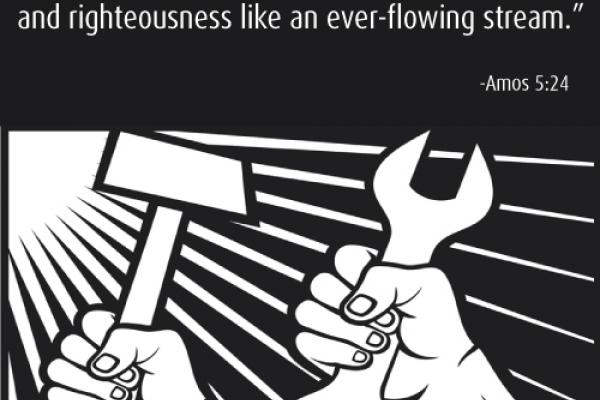
Editor's Note: The following is the text of an invocation being given at the May Day Rally in Madison, Wis.
When we gather at a place like our State Capitol, there are people here from all sorts of religious and non-religious backgrounds.
There are Christians and Jews, Muslims and Buddhists, Hindus and and Bahai, Humanists and people who are pretty sure they believe something, but don’t know exactly how the heck to describe it.
What connects us all this day is a spirit of hospitality, a spirit of compassion and a spirit of justice.
At their worst, religious and other beliefs can isolate us in little camps where we see outsiders as threats. At their best, they call us to hospitality, not only to those we know, but to the strangers in our midst – those who come from other places, speak other languages, seek a new life. At their best, they call us to embrace those who seek to be part of our community.

It can be hard to come up with a list of countries with the most egregious records on religious freedom when some of the world’s worst offenders aren’t even nation states.
For its annual report of violators, the U.S. Commission on International Religious Freedom counts 15 nations where abuse of religious liberty is “systemic, egregious, and ongoing.”
But the commission, which was created by Congress in 1998 as an independent watchdog panel, also wants to highlight the crimes of non-nations, which for the first time this year get their own section in the report.
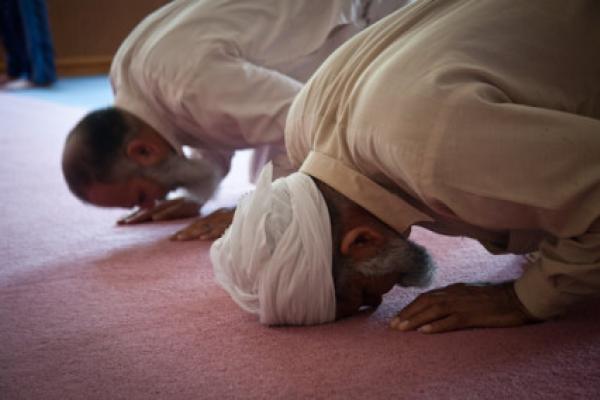
Muslims in America are much less inclined to support suicide bombing than other Muslims abroad, and are more likely to believe that people of other faiths can attain eternal life in heaven, according to a new report released Tuesday by the Pew Forum on Religion & Public Life.
“The World’s Muslims” report looks at Muslim views across seven categories: Islamic law; religion and politics; morality; women; relations among Muslims; interfaith relations; and religion, science, and pop culture. There is also a special section on U.S. Muslims.
Of the countries surveyed, only a majority of Muslims in America — 56 percent — believe people of other faiths can go to heaven; by contrast, that figure among U.S. Christians is about 64 percent. U.S. Muslims are also less likely than Muslims abroad to believe in evolution, sharing views that are closer to those of U.S. Christians.
On suicide bombing, 81 percent of U.S. Muslims said it was never justified, 7 percent said it was justified to “defend Islam,” and 1 percent said it was “sometimes justified.”
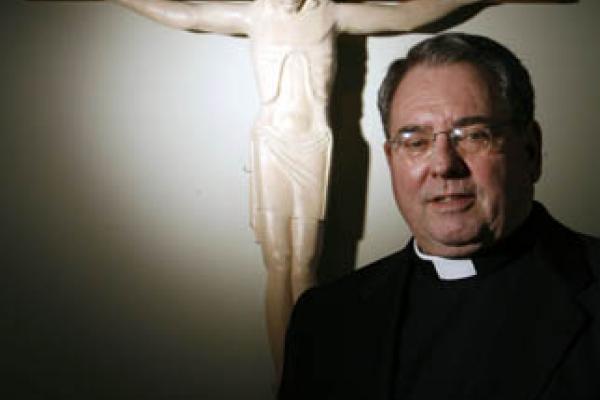
Amid calls for a Vatican investigation, Newark Archbishop John J. Myers is facing fierce criticism for his handling of a priest who attended youth retreats and heard confessions from minors in defiance of a court-ordered lifetime ban on ministry to children.
At St. Mary’s Catholic Church in Colts Neck, where the Rev. Michael Fugee had been spending time with a youth group, angry parishioners said they were never told about Fugee’s background, and they questioned Myers’ defense of the priest, the subject of a lengthy story in The Star-Ledger.
“It’s complete craziness that the church can let this happen,” said John Santulli, 38, a father of two at St. Mary’s. “I’m a softball coach, and I need a background check just to get on the field. Every single person I spoke to today said, ‘Oh my God. I didn’t know about this.’ It’s incomprehensible.”

If Congress passes immigration reform, much of the credit will be given to the broad and diverse voices that have lined up in support of fixing our nation’s broken immigration system. Both the labor and business community have been instrumental in moving legislation forward, while the evangelical community’s call to “welcome the stranger” has received significant attention by politicians and the media. The coalition of supporters continues to grow, as last week the Sierra Club, the oldest environmental organization in the country, announced its support for immigration reform.
Why would an environmental organization get involved with immigration reform? What could they possibly have at stake?
A lot.

Editor’s Note: Jim Wallis’ latest book On God’s Side: What Religion Forgets and Politics Hasn’t Learned About Serving the Common Good is sparking a national conversation of what it means to come together on issues that traditionally divide the nation. Bloggers Adam Ericksen and Tripp Hudgins are having that conversation here, on the God’s Politics blog. Follow along, and join the discussion in the comments section.
In his post “Lattes for the Common Good,” Tripp states that working for the common good starts in mundane places, like a coffee shop. These are the places where we practice neighborliness. Here’s Tripp’s brilliant point:
I wonder if one of the things that we can think about in terms of the common good is learning to practice neighborliness in the inconsequential moments so that when we face the bigger political difficulties of our shared life — when we start talking about the common good in the larger sense around some of the other issues like violence, and fear, and money — that maybe if we've already built up habits we can have these larger conversations with greater ease.
Jim Wallis says something very similar in his book On God’s Side. When it comes to the common good, Wallis states, “I have never seen the real changes we need come from inside politics. Instead, they come from outside social movements” (295).
According to Wallis, for those social movements to make any real change in our politics they must be based on the biblical command to “love your neighbor as yourself.” Indeed, On God’s Side begins with a reflection on the Golden Rule. And, as Tripp says, “learning to practice neighborliness” is learning to practice loving our neighbor as we love ourselves.
But there is a tension in Wallis’s book that, for me, is unresolved. That tension is clearly seen when Wallis talks about baseball.
JERUSALEM — Religious leaders from around the world have stepped up their pleas for the safe return of two Syrian bishops who were kidnapped April 22 by armed men as they were driving near the war-torn city of Aleppo.
The kidnappers, who have not been identified, abducted Greek Orthodox Metropolitan Boulos Yazigi and Syriac Orthodox Metropolitan Youhanna Ibrahim, both of Aleppo, while they were undertaking a “humanitarian mission” to help Syria’s Christian minority, according to Syrian Christian expatriates in the U.S.
The bishops’ Syrian Orthodox driver was killed in the attack.
Since 2011, more than 70,000 Syrians have died in fighting in the bloody civil war between forces loyal to Syrian President Bashar Assad and rebels seeking to oust Assad’s strong-arm regime.