Perry Dropping Out Of GOP Race; How To Argue About Politics (OPINION); Reports Of The Religious Right's Death Are Greatly Exaggerated; The SOPA Blackout Created A Big Problem; Why Religion Should Matter When We Vote; Court Orders Occupiers Out Of St. Paul’s Cathedral; Obama’s Denial Of Keystone Permit Was A Welcome Win Against Big Oil.
All the hype about SOPA, dogs bark to the tune of Darth Vadar, debunking myths about homeschoolers, Tim Tebow visits Sin City, innovative musical projects, extreme skateboards, the day the LOLCats died and more.
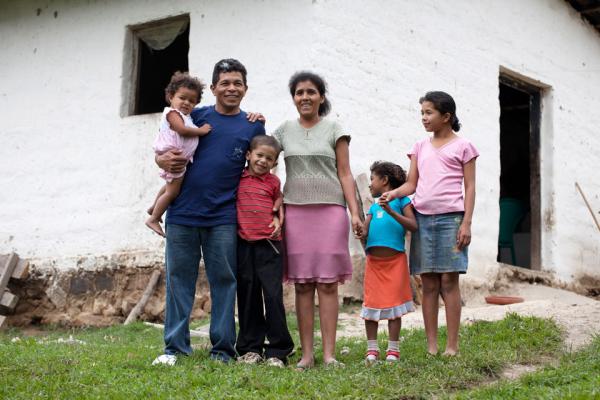
Fight global poverty, invest in agriculture. ~ Growers First
As the winter winds bite at our collars, a hot cup of coffee is a perfect antidote for healing. But what you might not consider when you sip a mug of dark roast is the economic injustices that many coffee growers around the world face.
Coffee is one of the largest cash crops in the world – the U.S.D.A. Foreign Agricultural Service reports that last year 15,689,340,000 pounds of coffee were distributed worldwide. Yet, indigenous coffee growers see only a tiny fraction of its revenue.
These are some of the reasons why fair exchange programs such as Growers First got into the coffee business — to tip the scales of economic and social inequity that has become a way of life for many coffee farmers globally in a more just direction.
Even more importantly, Growers First exists to transform lives. The non-profit based in Laguna Beach, Calif., has a powerful story of action, conflict, struggle — and ultimately hope.
Just how free are we?
Freedom is a word often used by politicians, economists and others in positions of power/authority as a byword for happiness. The more freedom we have, the happier we are. Whether this is actually the case, freedom is something that oftentimes may not be particularly tangible.
Freedom House attempts to help us understand what freedom actually looks like in its annual publication, Freedom In The World, with the 2012 edition published today. And their focus? The Arab Uprisings and the impact they have had, and continue to have, on the world.
From the top-line data that Freedom House has collected, the news isn’t good. Despite seeing “the most significant challenge to authoritarian rule since the collapse of Soviet communism” during the past year, only 12 countries actually recorded an overall improvement in their freedoms, in comparison to 26 countries that saw their freedoms lessened.

Having critics isn’t a bad thing. Sometimes they serve as a sort of public accountability. Other times, they express questions that others might be asking but haven’t voiced.
Marvin Olasky, editor in chief of World Magazine, came out with a quick critique of Sojourners’ press release celebrating the Obama Administration’s decision to reject the current plans for building the Keystone XL pipeline. His post offers an excellent opportunity to address a few things that others might have been wondering as well.
His headline? “Sojourners and Keystone: Using the Bible for Political Purposes.”

As someone who self-identifies as an evangelical Christian, often I begin to feel like the subject of a Discovery Channel documentary, particularly in the midst of a heated presidential election cycle.
It’s Evangelical Week here on Discovery! Travel with us as our explorers track the elusive evangelical in its native habitats. Watch as evangelicals worship, work and play, all captured on film with the latest high definition technology. And follow our intrepid documentary team members as they bravely venture into the most dangerous of exotic evangelical locations — the voting booth!
I understand the interest in us evangelicals, I really do. The way much of the mainstream media covers our communities in the news can make us seem like a puzzling subspecies of the American population, not unlike the Rocky Mountain long-haired yeti.
Are we really that difficult to comprehend?
In a word, yes.
Gracious God, we pray for those going through a difficult time. May we all remember the words in Proverbs 3, to trust in you with all our heart and lean not on our own understanding, that in all our ways we may look to you to guide our path. Amen.
"For you were called to freedom, brothers and sisters; only do not use your freedom as an opportunity for self-indulgence, but through love become slaves to one another. For the whole law is summed up in a single commandment, ‘You shall love your neighbour as yourself.’ If, however, you bite and devour one another, take care that you are not consumed by one another." - Galatians 5:13-15
"Peace starts within each one of us. When we have inner peace, we can be at peace with those around us. When our community is in a state of peace, it can share that peace with neighboring communities, and so on. When we feel love and kindness toward others, it not only makes others feel loved and cared for, but it helps us also to develop inner happiness and peace." - Dalai Lama

This is a touchy subject for me, as I am a strong advocate of bringing cultural criticism and dialogue into the church, and I’m equally supportive of churches having frank forums where they deal with issues of sex and sexuality. But there is a distinct, if not fine, line between stretching a church to be relevant and jumping on the latest trend simply to draw attention to yourself.
Yes, I know religious institutions are collectively flipping out about the decreasing number of attendees and increased number of church closures. The fact is that some churches will do the world more good once closed than they’re doing today. This is not to say they’re doing active harm (though I’m sure some are), but rather that the tireless, copious use of resources – both human and financial – to prop up dying institutions is to point to one’s self rather than toward God. We get hung up on the idea that the former is a necessary means to the latter end, but not necessarily. Like a fallow field, sometimes it’s best to take what is left, turn it into the ground and allow it to be reborn into something entirely new.