During the Central American wars of the 1980s, nearly 200,000 Guatemalans were killed or disappeared. The bloodiest period came during the presidential term of Gen. Efrain Rios Montt, when entire villages were burned and civilians, primarily indigenous people, were massacred.
Rios Montt was a graduate of the U.S. School of the Americas and received millions of dollars in military aid from the U.S. He was also an evangelical/Pentecostal minister and a darling of the Religious Right.
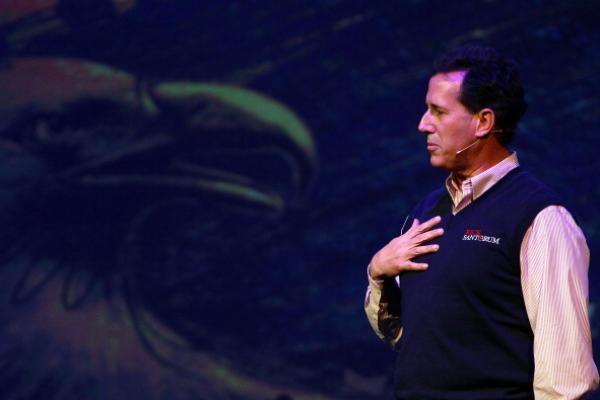
With the Iowa caucus, the "First in the Nation" New Hampshire primary, and South Carolina's primary now behind us, the field of contenders for the Republican nomination continues to shrink. I've watched with great interest as the spectacle rolls on and a parade of non-Romney's (Non-Roms, going forward) rhythmically rise and fall. What is perhaps most interesting about the current frontrunners is the lack of an obvious evangelical candidate. For all the talk that we hear about the importance of the evangelical vote, one would suspect at least one of the potential nominees to be, you know, an evangelical.
But Michele Bachmann is out of the race after a promising start in the Iowa straw poll. Perry, whose entrance into the race as a more "electable" evangelical candidate may have contributed to Bachmann's quick downfall, all but eliminated himself in a number of now infamous debate flops. That leaves one not particularly religious Baptist, two Roman Catholics, and a Mormon. Rick Santorum, a Catholic, is perhaps the most socially conservative and thus the most evangelical-looking of the Non-Roms, but many evangelicals have a deep mistrust of Catholics, so it is doubtful that, as they did in Iowa, evangelicals will support him despite his Catholicism.
So what happened here? Back in 2004, when talking about the evangelical vote was all the rage, one could presume that evangelicals were a unified political front—that denominations or non-denominations within evangelicalism didn't matter, theological differences were moot, and ending abortion was enough to tie them all together. The problem with this presumption is that it was never true. There was never one kind of evangelical. If there was, self-identified evangelicals wouldn't have to add a definition or disclaimer every time they identify as such.

When Sojourners CEO Jim Wallis departed on his three-month sabbatical at the beginning of January, I sent him a list of books, films and music that I thought would nourish his mind and spirit in, perhaps, different ways than the media he normally consumes do.
Jim's sabbatical — a true Sabbath in the literal sense — is designed to be a time of rest and, more importantly, rejuvenation. It will also be a creative time when he will be working on a new book.
Jim is a creative. A writer. A visionary. He regularly digs deep into his heart and soul, breaks himself open and pours out his passion, hope and faith for the edification of others. If creatives aren't diligent, though, we can work ourselves into the ground. Our wells can run dry.
In sending Jim this list of what I like to think of as "soul food," I hoped to inspire his imagination and give him new fuel for the fire, if you will.
On the floor of the House of Representatives Wednesday afternoon, a year and 17 days after she was shot in the head by a would-be assassin's bullet, U.S. Rep. Gabrielle "Gabby" Giffords tendered her resignation as representative of Arizona's 8th Congressional District.
An unusually emotional scene unfolded in the House chamber, with many members of Congress struggling — and failing — to keep their composure as Gifford's close friend, Florida Congresswoman Debbie Wasserman Schultz, tearfully read the resignation letter on Gifford's behalf.
Art in the streets and in the windows of dirty cars, photography hot spots around the world and how it's bringing healing to victims of sexual abuse, Leonard Cohen, David Lynch, Mitt Romney, and a guide to discovering what type of worshipper you are.
Saudi Arabia’s first public display of contemporary art opened last weekend in Jeddah.
The National reports that the city was crowded as people visited the raw concrete building that features more than 50 pieces from 22 local artists, under the somewhat provocative title, “We Need to Talk About It.”
The exhibit displays a spectrum of the land’s story – past, present, future. But because the art is open-ended, multi-faceted, and Saudi Arabia is governed by powerful clerics under a version of Sharia law, this public test of authority proves to be a difficult subject.
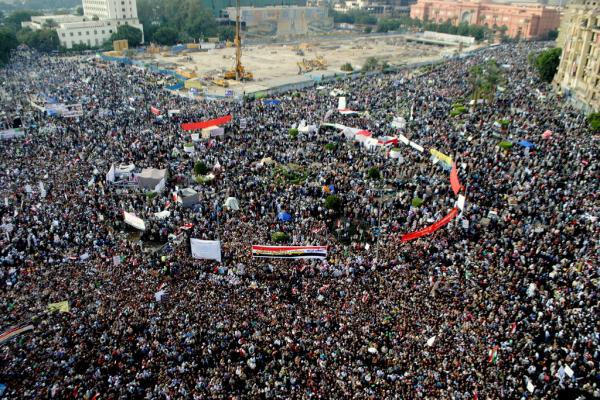
Today is one year to the day since protestors massed in Cairo's now-legendary Tahrir Square. Inspired by events in nearby Tunisia, hundreds of thousands of Egyptians called on their leader, Hosni Mubarak, to step aside and allow democratic reform to take place. The country, the city, the square, were (and remain) icons for what has become known as the Arab Spring.
The protests that began a year ago brought down a government that for too long had failed to care for its citizens in a manner that was good, decent and just. But in the time since, Egypt has walked a difficult path. How are Egyptians marking this poignant anniversary, how do they feel about the changes that have occurred, and what are their hopes for the years to come?
Here’s a round-up of some of the best insights into these questions from around the world:

Obama Speech: State Of The Union Address Carries Emphatic Populist Challenge; What Do Latino Evangelical Voters Want? (OPINION by Gabriel Salguero); Evangelist: True Christians Don’t Demonize Mormons, Obama; Daniels Slams Obama's 'Pro-Poverty' Policy; Does Mitt Romney And Newt Gingrich's Rise Signal The End Of Evangelical Influence In 2012?; Time For The Peace Vote?; Best Actor Nominee Dedicates His Oscar Nod To Undocumented Immigrants; Christine Lagarde Sounds The Alarm On Europe; Davos Elite: Capitalism Has Widened Income; Gap Alabama's Immigration Law Dividing Religious Community.
At NBC's Florida debate earlier this week, Mitt Romney and Newt Gingrich got into a game of one-upmanship over where Cuban dictator Fidel Castro might end up after his hypothetical death.
You really can't make this stuff up. But you can make it funnier...if you're Jon Stewart, that is.
Watch the video inside the blog...
Richard Wilkinson on TED.com: How economic inequality harms societies
We feel instinctively that societies with huge income gaps are somehow going wrong. Richard Wilkinson charts the hard data on economic inequality, and shows what gets worse when rich and poor are too far apart: real effects on health, lifespan, even such basic values as trust.
Watch Wilkinson's TED talk inside the blog...