
I don’t often think of the romance genre as a cinematic vehicle for social commentary. When your film is exploring the complications of modern love in the straitjacket of a “will they/won’t they” story, it can be hard to comment on larger themes. While there are, of course, exceptions to my bias, I often feel that romance films are too preoccupied with the inner lives of their characters to turn their lens outward to societal ailments. While director Vanessa Caswill didn’t entirely abandon the cheesy or saccharine for her latest film, Reminders of Him challenged my pre-conceived romance biases. Based on the Colleen Hoover novel of the same name, Reminders of Him is a tender love story that offers pointed commentary about forgiveness and redemption, as it delivers a humanizing portrait of those who have been victims of the criminal legal system.
Romances tap into the universal longing to be desired, seen, and known. But Reminders of Him raises those emotional stakes by centering Kenna (Maika Monroe), a woman recently released from prison who has been told by both the state and her community that she’s not worthy of redemption or love.

Civil rights leader Dolores Huerta, who co-founded the United Farm Workers union with Cesar Chavez and fought alongside him for decades to expand labor rights in the U.S., on Wednesday accused Chavez of sexually assaulting her in the 1960s.
Huerta said in a statement that she was sharing her story in light of a multi-year New York Times investigation, also published on Wednesday, that detailed a larger pattern of sexual misconduct allegations against Chavez, who died in 1993 at the age of 66, including testimonies by women who said he molested and raped them when they were minors.

On Feb. 15, Israel’s Cabinet approved a measure that would allow the state to exert more control over the occupied West Bank. The measure makes it easier for settlers to occupy Palestinian territory.
Last spring, I traveled to Sebastia, an ancient Palestinian village outside Nablus in the occupied Palestinian West Bank. It is among the oldest continuously inhabited places in the region. Beginning over 5,000 years ago during the second Iron Age, the residents of Sebastia have lived through the ancient Roman, Byzantine, and Ottoman eras. Sebastia is home to significant religious sites for Muslims, Jews, and Christians, including a Byzantine church and mosque said to be the burial site of St. John the Baptist, also known as the Prophet Yahya.

Whatever you may have heard about the Target boycott ending, here’s the truth: The boycott is not over for many Black women. It probably never will be.
A year ago, Black women started the movement to boycott the retail giant after it made a U-turn on its numerous commitments to racial equity—and particularly the Black community. That movement took various forms: Ohio state Sen. Nina Turner called for a national boycott, as did grassroots activists in Minneapolis, where Target is based. Rev. Jamal Harrison Bryant of Atlanta’s New Birth Missionary Baptist Church also launched a 40-day “Target fast” that stretched into nearly 400.
The boycott played a key role in a year of declining sales and profits that forced CEO Brian Cornell to step down. Target’s stock price dropped about 30 percent in 2025.
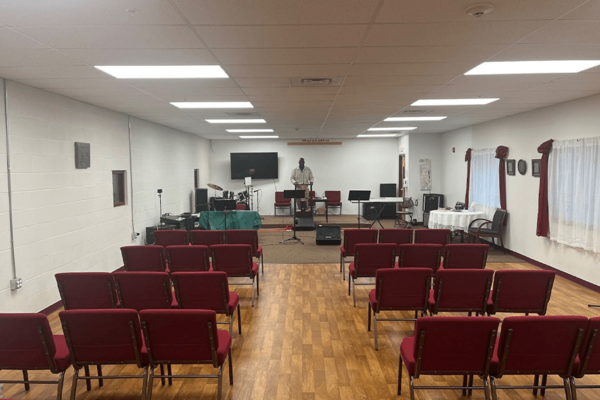
Maranatha Church, Jasmine Ministries, and Creole Resources have served the Haitian population in Spokane, Wa., for years—most recently by creating job and housing opportunities made scarce to them due to social and legal barriers created by the Trump administration.
Only a month ago, many Haitians in Spokane nearly saw the end of their Temporary Protected Status, leaving them with the choice to return to Haiti or find a new way to achieve legal status in the U.S.
Even though a federal judge barred the expiration from taking effect, public uncertainty about the longevity of their TPS has made it hard for Haitians in the U.S. to do things like rent an apartment or apply for jobs.
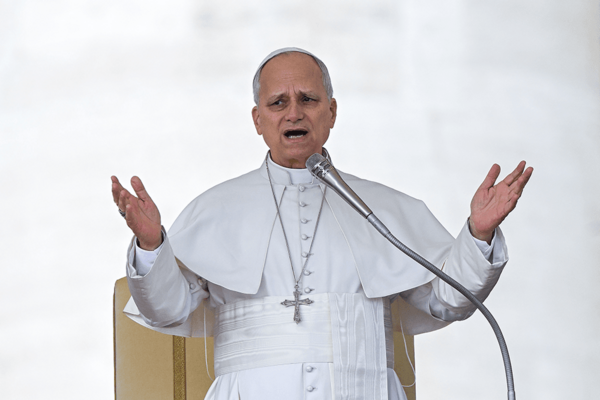
Pope Leo XIV, the first U.S.-born pope, issued an urgent call for a ceasefire in the U.S. and Israeli war with Iran during prayers before tens of thousands gathered on St Peter’s Square in Rome on Sunday.
“In the name of the Christians of the Middle East and of all women and men of goodwill: Cease the fire! Let paths of dialogue be reopened,” the pontiff was quoted as saying by the Vatican’s news website.

In January, Ryan Coogler’s Sinners made history in becoming the Oscars’ all time most-nominated film with 16 total nominations, resurfacing discourse on the film’s many merits: a deep storyline filled with layers of meaning, stellar cinematography and acting, and a breathtaking soundtrack and score. What is truly unique about this movie, however, is how it criticizes Christianity from an anti-imperialist perspective. Sinners displays the importance of resisting the false religious binaries of sacred and demonic that victims of imperialism have had forced upon them for far too long.

John Perkins, a pioneering Civil Rights activist and Baptist leader who devoted his life to racial reconciliation and justice, died on Friday. He was 95.

“I have a purpose. If you think that it’s some kind of blessing, it’s not,” says Timothée Chalamet’s Marty Mauser in Marty Supreme. “It means I have an obligation to see a very specific thing through.”
That very specific thing, for Marty, is the nearly impossible task of somehow pulling enough money out of thin air to pay his debts and fund his trip to compete in a ping-pong championship taking place in Japan. Ironically, Marty Supreme features very little actual ping pong. The majority of the movie is about one particularly audacious young man going to often comically absurd (and morally dubious) lengths to “achieve his dreams,” and more specifically, to somehow acquire the money to fund those dreams.

As for-profit technology platforms grow, they increasingly transform into representations of what Catholic theologian, philosopher, and critic Ivan Illich referred to as “radical monopolies”—an inescapable infrastructure that dominates every aspect of social organization.
Up against the machinations of platform capitalism, people are conditioned to embrace the faulty idea that their intrinsic value comes from how well they can meld into the profit margins of corporate algorithms operated by the likes of Meta, X, Reddit, and others. Brandon Rickabaugh, writing for the Center for Christianity and Public Life, describes this process of melding as “[t]he liturgy of mechanization, of depersonalization,” where demand for scalability and monetization online outweighs the practice of virtues like patience and generosity.