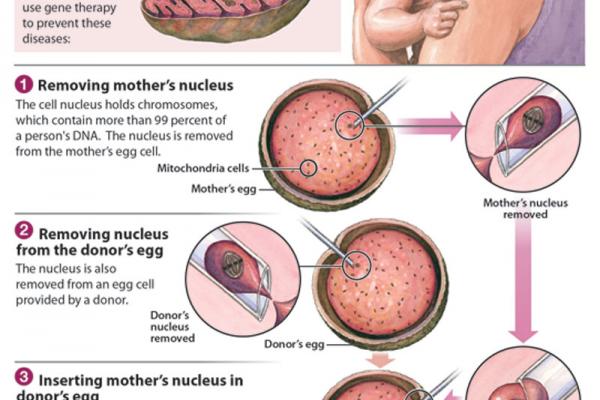
PORTLAND, Ore. – Future generations could be stripped of mutations such as hereditary blindness or maternal diabetes, after a breakthrough study at Oregon Health & Science University.
But the new technique is also one short step from genetic design of future generations, said Marcy Darnovksy of the California-based Center for Genetics and Society. "These powerful new technologies have a whole bunch of wonderful and appropriate uses – and a number of ways they can be misused.
The researchers, led by OHSU biologist Shoukhrat Mitalipov, modified unfertilized eggs for the first time, a technique that offers great promise as well as ethical pitfalls. Such research is banned in many countries.
Three years ago, the Russian-born Mitalipov made headlines with experiments that created monkeys with genetic material from three parents. Now, his team has done it with human cells, setting the stage for possible experiments with humans.
The procedure dealt with what's called mitochondrial DNA, the small part of the cell that turns food into energy. Mitochondrial disorders can lead to neuropathy (a type of dementia) and nervous system disorders such as Leigh disease.
In a study published Wednesday in the journal Nature, the OHSU team described successfully transferring DNA from donor cells into other donor cells, fertilizing the eggs to create 13 tiny early embryos of roughly 100 cells each. These pre-embryos, called blastocysts, were converted to embryonic stem cells for future research.
Key to the technique: replacing the defective mitochondrial DNA with healthy genetic material from the egg of a second woman.
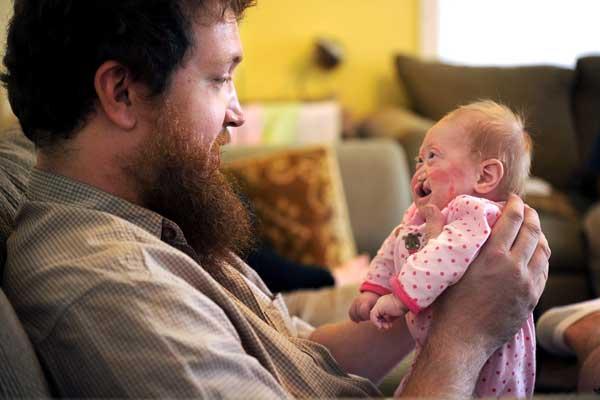
NASHVILLE, Tenn. -- Eric and Ruth Brown believe nothing about daughter Pearl Joy's life is a mistake.
They say God gave Pearl her bright red hair and wide blue eyes, as well as the genetic disorder that created a cleft in her upper lip and caused her brain's development to stall in the first weeks in the womb.
"Things didn't go wrong," Eric Brown said. "God has designed Pearl the way he wanted, for his glory and our good."
That belief has sustained the Browns during the past six months, ever since a routine ultrasound revealed that the couple's third child has alobar holoprosencephaly, a rare genetic condition that's almost always fatal. A specialist told the Browns she would probably die in the womb and advised them to end the pregnancy early.
It's one thing to talk about God's will when life is good. It's another when a doctor is saying your baby won't live.
The Browns were forced to consider religious, medical and ethical issues most parents never will. And nobody could make their decision for them.
The Browns never considered abortion. They believe that Pearl is "fearfully and wonderfully made," as Psalm 139 puts it, and God alone should decide when she lives and when she dies.
Seeing Pearl's beating heart on the ultrasound also persuaded them to continue the pregnancy, even if the odds were stacked against her.
"If there is a chance, you say yes to that chance," Eric Brown said. "The only thing I know about parenting is that you say yes."
So far, Pearl has beaten the odds.
Few babies with Pearl's disorder make it to term, and of those who do, only 3 percent survive birth, according to the Dallas-based Carter Centers for Brain Research in Holoprosencephaly and Related Malformations. Pearl has a particularly severe form of the condition, which means her brain never divided into two hemispheres.
She turned 11 weeks old Oct. 12, a milestone that the Browns celebrated by lighting 11 candles and singing "Happy Birthday."
WASHINGTON -- A federal grand jury added terrorism to the list of charges faced by the Virginia man who was indicted in the shooting of a security guard at the conservative Family Research Council's Washington offices.
Floyd Lee Corkins II, 28, of Herndon, Va., was arrested Aug. 15, shortly after police say he opened fire in the lobby of the FRC's downtown headquarters, injuring an unarmed security guard.
Before he opened fire, Corkins reportedly was carrying a bag of Chick-fil-A sandwiches, and told security guard Leo Johnson he disagreed with the FRC's politics; the FRC had supported the fast-food chain's donations to groups that oppose same-sex marriage.
Corkins pleaded not guilty to initial charges of interstate transportation of a firearm and ammunition, as well as the District of Columbia offenses of assault with intent to kill while armed and possession of a firearm during a crime of violence.
When I was a 17-year-old senior in high school, I was in several Advanced Placement courses. As the school year drew to a close, I wanted to take the AP test that would allow me to attain college credit. The AP tests, however, were very, very expensive. I went to my guidance counselor. She said that they could waive the fees for the exams if I qualified for the school’s free lunch program.
I had avoided the free lunch program for years. I had been on the free lunch program in elementary school and middle school but was always embarrassed by it. So when I got to high school, I didn’t apply for it. I picked up a part-time job so I could pay for my own lunch. But now, I wouldn’t be able to take my AP exams if I didn’t fill out the free lunch program form.
So I agreed to fill out the form. Later that day, my guidance counselor sent a student aide with the form to my social studies class room, where in front of the entire class, she declared that I needed to fill out the free lunch form. I remember the shame of not only my classmates laughing at me that day, but my high school teacher bursting out in laughter as well.
God Girl's New Favorite Thing for Oct. 25, 2012: Two Irish boys cover Rihanna's "We Found Love (in a Hopeless Place)"
Now who are these talented young lads?
UPDATE: WE FOUND 'EM!
More info from the singer's father inside the blog...
Google StreetView is in the Grand Canyon, a video tries to explain why the moon looks so big sometimes, a space shuttle gets shuttled across Los Angeles, Jon Stewarts talks with veterans about job qualifications, and Richard Nixon looks like a hipster. Woah!
Brandon Hook is the Online Assistant at Sojourners.
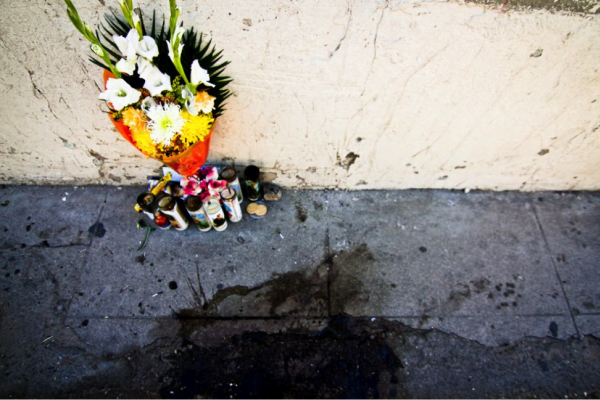
Candles burn near the bloodstained concrete sidewalk where a youth was tragically killed when more than a dozen bullets shot across the wall into the Mexican bordertown. I've walked that sidewalk running parallel to the border wall and Calle Internacional in Nogales, Sonora possibly hundreds of times. It is with this intimate awareness of the context that I describe how recent deaths in the name of homeland security are an affront to all families of the borderlands.
Four deaths in six weeks across the border region, one common offender
On the evening of Oct. 10 U.S. Border Patrol agents shot and killed 16-year old José Antonio Elena Rodriguez. The shots were fired through the paneled border wall in Nogales hitting José Antonio in the back seven-to-eight times. The agents allege the boy was involved in rock throwing. For more detailed description of the circumstances, see this article.
About a week earlier, Border Patrol agent Nicolas Ivie, 30, was killed in Naco, another Arizona border town just east of Nogales, when a fellow U.S. agent searching for smugglers mistakenly opened fire. Agent Ivie has a wife and two young daughters who live in southern Arizona, and the family is publicly fundraising to survive without him.
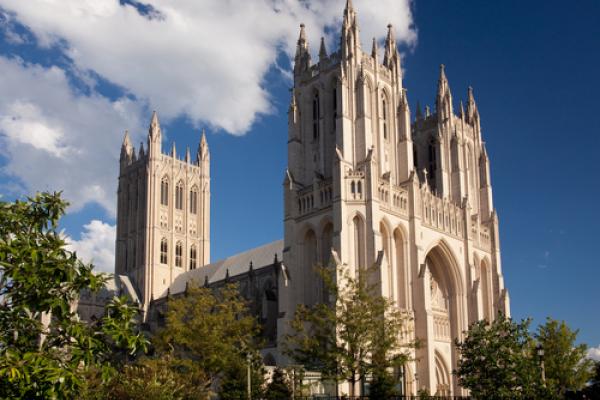
On Sunday, we went to the Washington National Cathedral, a gigantic Episcopal church and self-professed “spiritual home for the nation.” This strikes me a bit funny, as a) Episcopalians make up fewer than half a percent of the nation, and b) America, regardless of religious affiliation, seems more interested in mammon than it does in spirit.
But our friend has been attending the cathedral since she moved to D.C. a few months ago, and I worshipped in Episcopal churches for about seven years, not since 2007, and, frankly, I had missed how the traditional liturgy can transport me to a different place, psychologically speaking – a place where a man dying on a wooden cross 2,000 years really does seem to matter in a cosmic, world-changing kind of way. Plus, I wanted to see the neo-Gothic architecture in its transcendent beauty. This is the rub, right? Mammon makes beautiful things. What was difficult for me about the Episcopal church is the same thing that’s difficult about Washington, D.C.: It’s the wealth, it’s the power, it’s the privileged way of life that seems very distant from my beer-and-burgers existence, let alone from Jesus who had no place to lay his head.
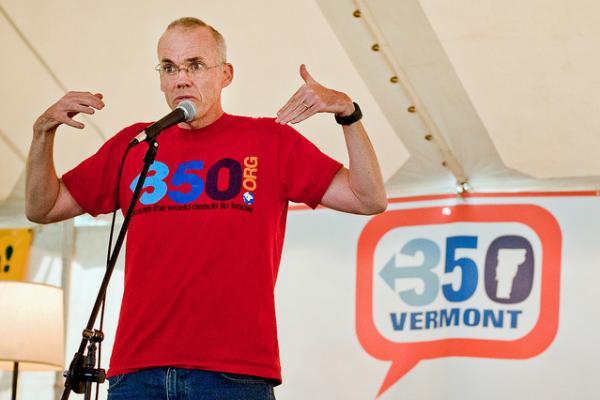
It was game time. The Saturday night crowd on the Vermont campus was festive, boisterous, pumped. People cheered and whooped when told that one of their heroes, climate activist Tim DeChristopher — serving a two-year federal sentence for his civil disobedience opposing new oil and gas drilling in Utah — would soon be back on the field.
When the man on the stage, 350.org’s Bill McKibben, said it was time to march not just on Washington but on the headquarters of fossil fuel companies — “it’s time to march on Dallas” — and asked those to stand who’d be willing to join in the fight, seemingly every person filling the University of Vermont’s cavernous Ira Allen Chapel, some 800 souls, rose to their feet.
McKibben and 350, the folks who brought us the Keystone XL pipeline protests, are now calling for a nationwide divestment campaign aimed at fossil fuel companies’ bottom line. Beginning with student-led campaigns on college campuses, modeled on the anti-apartheid campaigns of the 1980s, they’ll pressure institutions to withdraw all investments from big oil and coal and gas. Their larger goal is to ignite a morally charged movement to strip the industry of its legitimacy.
“The fossil fuel industry has behaved so recklessly that they should lose their social license — their veneer of respectability,” McKibben tells his audience. “You want to take away our planet and our future? We’re going to take away your money and your good name.”