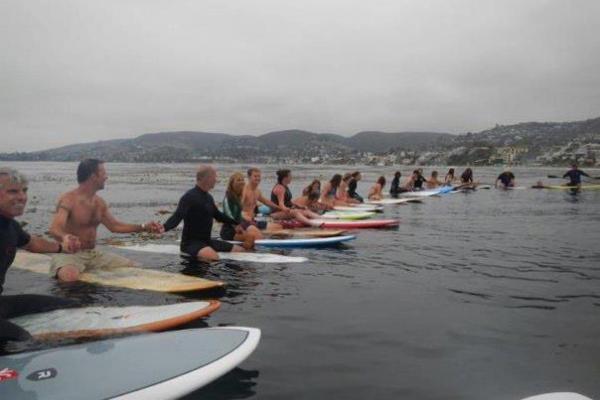
The first wave wrenched the board loose from my fingertips, sending it crashing into my knee and knocking me off my feet.
“You OK, Cath?” I heard someone call from behind me.
“Not really!” I hollered, as someone reached around me to steady the huge stand-up paddle board while I struggled to regain my footing in the icy-cold waters of the Pacific.
My friends, experienced surfers Joel and Rob, appeared at my side, holding onto the board and gently coaching me to wait for the next set of waves to pass before attempting to paddle out toward Second Reef, several hundred yards beyond the shore break.
“You got it?” Rob said, “OK. You’re good to go!”
Gripping the long-handled paddle in one hand, I foisted myself forward (if with less grace than I had hoped) onto the board, while Joel pushed it forward into the momentarily glassy sea between sets.
It may have been buried in the bombastic July Fourth news cycle, but something amazing happened yesterday: scientists in Geneva have found the God particle.The Higgs boson, the elusive, “final puzzle piece” could help complete our current understanding of physics and supposedly explains why objects have mass.
And just cause scientists are really good at keeping people’s heartbeats low, let’s make sure we say they didn’t find it, but they “observed a new particle consistent with a Higgs boson” and are more than 99-percent certain that it is what they think it is.
Why is this a big deal?
It just is. If nothing else, it opens another conversation with scientists, Christians, and anyone who has ever wondered “why are we here?”
New particles don’t get found every day, you know? Link ahead to someone who knows a WHOLE lot more about this than we do. Here’s The Wall Street Journal’s take.
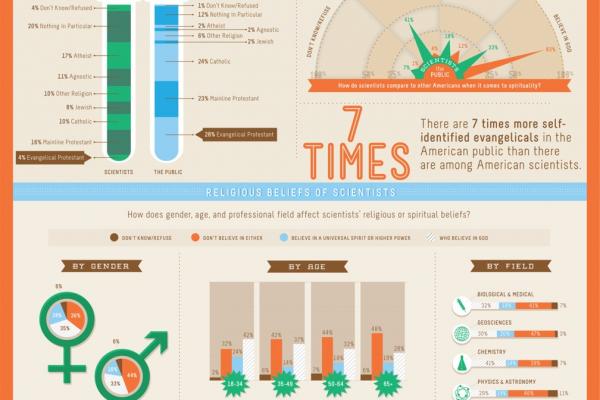
And for your amusement, a pretty infographic: Are you there, God? It’s us, scientists.
The WSJ is reporting today on the testimony of Robert Diamond, the recently resigned CEO of Barclay’s before the British Parliament:
"A day after abruptly resigning amid a mushrooming scandal over interest-rate manipulation, former Barclays PLC chief Robert Diamond on Wednesday was assailed by British lawmakers for the bank's actions, in a preview of the scrutiny likely to lie ahead for other big lenders that are under investigation."
What caught my eye in particular, was the WSJ choice of a pull quote from Diamond’s testimony on the front page:
"I don’t feel personal culpability. What I do feel is a strong sense of responsibility."
In other words, he feels that he is somehow accountable for the wrongdoing in his organization but he also does not deserve blame or consequences for what has been done. To see the tenuous nature of his logic you just need to invert the situation.
If Barclays was having a year of record profits would there be any set of possible circumstances in which he would forgo his bonus by saying that while he was responsible for the growth he did not deserve the rewards? If not, why would we buy the argument that while he is ultimately responsible for the company’s wrongdoings he does not deserve the blame and resulting consequences?

Yesterday, I was walking through Dolores Park and heard a street preacher, saying "If you've ever stolen a stick of gum, then you are guilty of sin! If you've ever looked at Facebook at work, then you've stolen from your employer, and that's sin!"
Of course we all know where he was headed: If we have sinned—even with a trivial infraction like a stick of gum—then God who is holy must punish us for all eternity in Hell unless we accept Jesus right now.
I mean, seriously, gum? Why can't God just get over it? Is God less moral than all of us are? This is not a picture of holiness, it is a picture of a petty tyrant. Aside from the horrible picture of God that this gives us (and honestly, who could ever love, trust, and feel safe around a God like that?), what this ultimately does is trivialize sin. It makes sin into a petty infraction of little consequence.
We elect a president every four years, but perhaps we also elect a high priest. Ever since George Washington spontaneously added “so help me God” to his inaugural oath, Americans have expected their presidents to believe in, worship and publicly invoke God....
History suggests, however, that piety and presidential performance don’t always match. Some of America’s most religious presidents have been its most brutal. And two of its greatest presidents wouldn’t even be considered Christians today, scholars say.
Consider Abraham Lincoln, who is widely acknowledged as one of the nation’s three greatest presidents, along with Washington and Franklin Delano Roosevelt. But Lincoln, who never joined a church, was not a Christian, says Niels C. Nielsen, author of God in the Obama Era.
“Lincoln believed in an active God, he believed in providence. But if you asked Lincoln if he believed in the deity of Jesus, he would have said no,” Nielsen says.
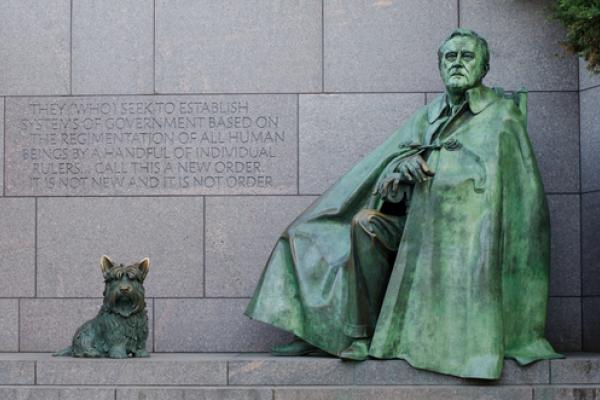
Or look at Roosevelt, who is virtually a national saint. With his perpetual grin and a cigarette holder perched jauntily in his mouth, he guided the nation through the Great Depression and World War II. His legacy is built on his New Deal, an array of programs that protected the poor and elderly from the abuses of unrestrained capitalism.
But Roosevelt was no saint in his personal life. He rarely talked publicly about his Episcopal faith, preferred golf over church (before he was stricken by polio), and likely cheated on his wife, scholars say.
Read Blake's report — which also examines the faith of Lyndon Johnson, Richard Nixon, Andrew Jackson, Thomas Jefferson and Barack Obama — HERE.
It’s July 5 and we’ve got a little gift for you all.
The Sojourners office is only occupied today by a motley crew of staff who fall into two categories: those who were smart enough to not end up with any medical emergencies due to improper use of home fireworks, and those of us who weren’t smart enough to use the July 4th holiday as an opportunity for a five-day weekend. But, with this small, slightly dim group with highly refined survival instincts, we are still ready to bring you some great content.
We work hard every day to make sure our God's Politics blog brings you news and commentary on issues important to Christians who care about social justice. Still, it always seems like there is way more going on all day, every day than one person can ever keep up with.
For all of you who are unlucky enough to be chained to a computer, Blackberry (does anyone still use these?) smart-phone or are otherwise more electronically connected then you would like to be—we’ve got a special treat: our newest blog, “Quick Read: Social. Justice. News."
The Methodist Church in Britain has agreed to ask that the U.K. government urge the U.S. to stop using drones in killing suspected terrorists. One concern expressed by  church leaders was that increased reliance on unmanned weapons could make military interventions easier. On other concerns,
"A working group of policy experts submitted a report to the Methodist Conference highlighting moral concerns surrounding the use of drones, recognising that armed unmanned aircraft has the potential to transform the use of air power in conflict and counter-insurgency.
Steve Hucklesby, a Methodist policy adviser and member of the working group, said: "If there is a legitimate use for this technology we need a much clearer idea of the boundaries for its use. Terrorists function outside the law. It is vitally important that the UK and its allies do not do so as well. The targeted killings carried out by the CIA in northern Pakistan demonstrate only too clearly the ethical challenges that will face us as this technology proliferates more widely."
Following the Methodist action, The United Reformed Church and the Baptist Union of Great Britain voiced their support for the Conference's decision.