Ever wondered how the poverty rate has changed over the years? And how that breaks down by various demographic categories? You could spend several hours poring through the annual reports by the Census Bureau and find all the data.
Here’s an easier (and more interesting) way. Our friends at Demos, an organization that “combines research, policy development and advocacy to influence public debate and catalyze change,” have created a series of interactive graphs that can answer all your questions.
Tracking American Poverty & Policy contains the data on the U.S. poverty rate annually from 1967 to 2010, including the rate of those in “deep” poverty and those near poverty when you zoom in on the graph. Then follows a set of graphs for the same time period by race, gender, age, educational level, and family; with the same three breakdowns.
It’s a useful resource for historical data on poverty, and it’s fun to play with the graphs to find the data.

Rest and renewal are hard to come by for any leader.
As such, there’s a week that I treasure each year for providing me with the deep replenishment I need to keep me going as I lead international creation care ministries. It may not be everyone’s idea of a good time, but for me it’s a balm that picks me up like no other—Duke Divinity School’s annual summer institute hosted by the Center for Reconciliation.
The first time I attended the institute in 2010, I limped in like a spent marathon runner crossing the finish line. After successfully rising to the challenges of the recently ended academic year, I was bone weary from the demands of leadership and ready for a week of recuperation and rejuvenation.
I was looking forward to being with like-minded leaders who implicitly understand my mission to educate Christian university students to “be agents of, and participants in, God’s shalom,” soaking in the wisdom from long time heroes like John Perkins, and participating in my selected creation care track led by Duke Divinity’s Norman Wirzba.

Members of Congress with common interests often create a caucus to advocate for that interest. Some have become permanent institutions – think the Congressional Black Caucus – others are more short-term. One of the more recent, reported by Arizona Public Radio, is the Unmanned Systems Caucus. Its role?
“Primarily, the caucus advocates for drones — those pilot-less planes infamous for their role targeting insurgents in Afghanistan and Pakistan. They’re used as a spy tool in Iran, a drug-fighting tool in Mexico and an anti-smuggling tool along the U.S.-Mexico border. …
The drone caucus — like the technology it promotes — is becoming increasingly important in the nation’s capitol as the government looks to unmanned vehicles to help save money on defense, better patrol the country’s borders and provide a new tool to U.S. law enforcement agencies and civilians.”
And that advocacy is being rewarded. The report cites Alex Bronstein-Moffly, an analyst with First Street Research Group, a D.C.-based company that analyzes lobbying data:
“Many of the drone caucus members are well supported by the industry they endorse. According to Bronstein-Moffly’s data, the 58 drone caucus members received a total of $2.3 million in contributions from political action committees affiliated with drone manufacturers since 2011.”

Over the past several weeks, the U.S. has been expanding its military presence in the Persian Gulf, increasing its capability to act if hostilities begin with Iran. Minesweepers are intended to keep the Strait of Hormuz open, and additional fighter jets increase the ability to launch strikes into Iran.
The latest development, reported by the Los Angeles Times, sea drones.
“The Navy is rushing tiny underwater drones to the Persian Gulf to help find and destroy sea mines as part of an American military buildup aimed at stopping Iran from closing the strategic Strait of Hormuz in the event of a crisis, U.S. officials said.
Only 88 pounds and 4 feet long, the unmanned, remotely guided submersibles carry a TV camera, homing sonar and an explosive charge for what amounts to a kamikaze mission: When it detects a mine, the undersea craft obliterates itself as well as the mine.
The Navy bought dozens of the little-known German-made devices, known as the SeaFox, in February after an urgent request by Marine Gen. James Mattis, the top U.S. commander in the Middle East, for more minesweeping capabilities in the region.”

To begin, we might ask “What’s sin?” I’m aware that there are about a thousand disputed ways to answer that question–and so no one ‘perfect’ way–but I like this one:
Sin is the seeking of our own will instead of the will of God, thus distorting our relationship with God, with other people, and with all creation.
And I’d add that the people who make it easy for all of us to hate our bodies (through relentless idealization of unreal bodies, through profit-motivated manufactured discontent) are more ‘guilty’ than the teenager who thinks there’s something wrong with her thighs.
Then we might ask “what’s meant by ‘hating my body’?” There’s no answer in a catechism, of course, but we could try something like this:
Hating one’s body is the disrespecting of the body God has given us, which in itself is worthy of respect and honor, being made in God’s image, the fulfilling of desires in ways God not intend, to believe lies about human bodies in general and ours in particular, and to covet for ourselves a body not our own.
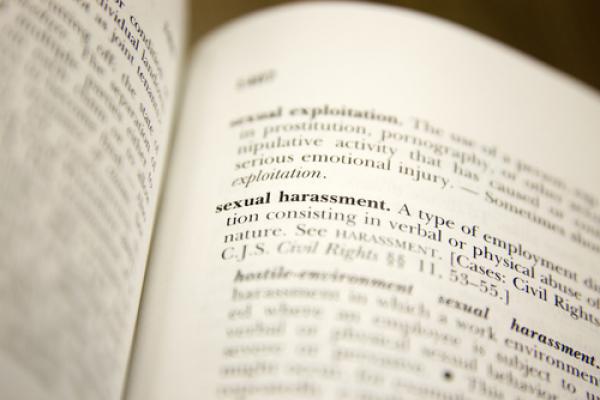
Nontheists — both male and female — have shared stories of unwanted sexual attention at nontheist gatherings, including propositions for sex and unwelcome touching. Chatter has ranged from calls for more women to attend nontheist events to personal attacks on prominent female skeptics for discussing harassment. Meanwhile, two more skeptic/feminist bloggers announced they will not attend TAM.
The debate has had two major impacts — a call for cooler tempers and the immediate implementation of sexual harassment policies by all of the major nontheist organizations, both national and regional.
No one is suggesting that all nontheist events are unsafe for women. But the controversy has members of the nontheist community, which prides itself on its embrace of rational thinking, asking whether they have a sexual harassment problem. And if so, what should be done?
According to Reuters, opposition forces in Syria are reporting that 220—mostly civilians—were killed by Syrian forces in the bloodiest day so far.
"According to a detailed account by activists before news of the massacre, a convoy of 25 vehicles with army and security forces headed west after dawn on Thursday, with three armoured vehicles and five trucks towing artillery, passing through the town of Muharda in the direction of the village of Tremseh.
"They blockaded the village from all four sides and began violently and randomly firing on houses as a helicopter flew overhead. As the attack happened the electricity and telephone lines were cut. Residents gathered in the streets in a state of fear and panic. They were unable to flee because of the blockade from every side," the report posted on activist Web sites said."