"There is a really deep well inside me. And in it dwells God. Sometimes I am there too. But more often stones and grit block the well, and God is buried beneath. Then God must be dug out again." - Etty Hillesum
"But as for what was sown on good soil, this is the one who hears the word and understands it, who indeed bears fruit and yields, in one case a hundredfold, in another sixty, and in another thirty.’" - Matthew 13:23
God, we pray for all those around us, in our communities and in the world, who suffer from depression. Lord, we don't know how they've come to be in this broken state -- whether it be from social, biological, or other factors -- but you know each and every one of them. You know where they've been and where they are going. So God, please give them hope for today. Amen.
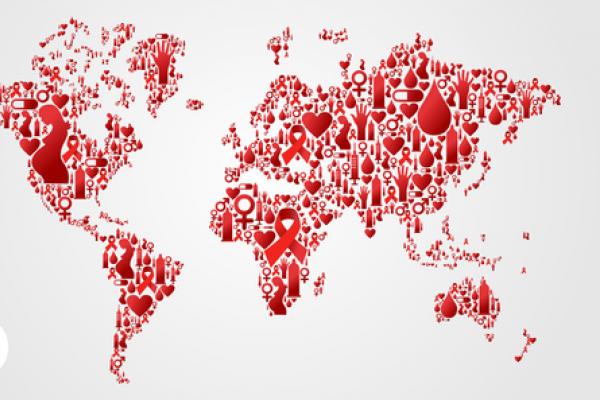
A palpable feeling of hope and urgency hung heavy in the air of Washington, D.C., this week as thousands of activists descended on the nation’s capital to encourage and inspire colleagues and decision-makers to “turn the tide on AIDS.”
The International AIDS Conference 2012 has returned to the United States, thanks in part to the lifting of the HIV/AIDS travel ban by the Obama Administration in 2010, which followed work from President George W. Bush also to lift the ban.
As part of the Conference, faith leaders from across the world were invited Tuesday morning to a forum hosted by the White House. It was an opportunity to hear from U.S. and international experts and officials, as well as come together as a community of faith, standing up against the stigma and isolation which have been two of the biggest roadblocks to achieving the goal of an AIDS-free generation.
Tuesday’s event centered around two panel discussions — one examining what the faith community uniquely brings to the table in tackling the HIV/AIDS epidemic, and the other focusing on the relationship between governments and people of faith in building the effective partnerships needed to tackle it.
The tone of the discussions was, in many ways, extremely positive. We heard about vast improvements in treatments and holistic care, services often administered by faith-based organizations around the world.
“Hope,” as White House Office of Faith-based and Neighborhood Partnerships Executive Director, Joshua DuBois, noted, is overcoming “fear.”

When I was a sophomore at Bethel University, I was the top 1,500-meter runner on my track team. Then, my junior year, a transfer student came, and she was really fast. She quickly took my place as the fastest miler on the team, winning multiple national championships in the process.
I’ll admit to having felt a little bit frustrated because she came in from the outside and passed me up. But training with her is one of the key reasons I was ultimately able to finish sixth at the national meet, good enough to earn All-American honors.
She pushed me to become better. She gave me someone to chase. She brought more attention to our school and our team, resulting in more fast recruits. In short, she made me and our whole team better.
As the London Olympics begin this week, the United States counts many “transfers” — immigrants from all over the world who are now U.S. citizens — among its top athletes. Some people may feel threatened by these immigrants because they are potentially taking the place of others who were born here.
But I think our immigrants make us better, just like my transfer teammate made me better. They continually push us to do better, work harder and find new ways to improve.

Biblical literalism, and the corresponding idea of the inerrancy of scripture, has been bumping up against the sciences for a long time.
Way back in the Renaissance, the church insisted that the Bible taught that the sun revolved around the earth, and charged Galileo with heresy for claiming otherwise. Today, the debate between the Bible and natural science continues, most notably in the evolution/creation debate.
While discussions of religion and science usually revolve around conflicts with natural science, I'd like to propose that the place we really should be placing our attention is the relationship between faith and the social sciences.
As our understanding of all science grows, it becomes harder and harder to maintain the position of biblical literalism without seeming absurd.
Maybe we haven't all heard the thunder clap yet, but the lightning bolt struck a while ago. We are going to have to adjust our reading of the Bible to coincide with a modern scientific understanding of the universe. In broad strokes, that shift has already happened.
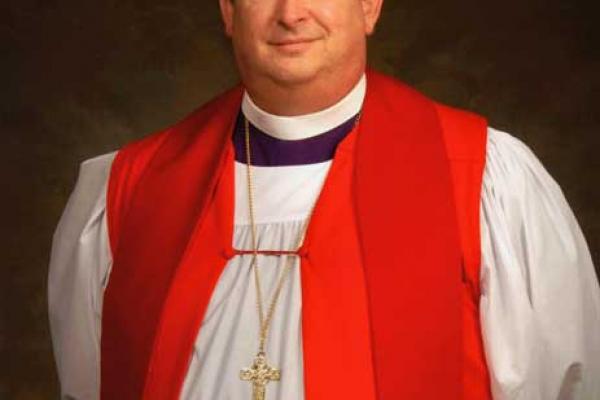
BIRMINGHAM, Ala. — Episcopal Bishop Kee Sloan of Alabama voted in favor of his church's new ritual for blessing same-sex unions — but he won't allow priests in his diocese to perform it.
“For the time being, I will not give permission,” Sloan said.
The blessing of same-gender unions is still too divisive an issue for Alabama, he said.
“It’s not good at this time in this place,” Sloan said. “I’m trying to avoid any further division.”
Episcopalians overwhelmingly approved the new rite for same-sex couples July 10 at the denomination's General Convention. Bishops do not have to allow them, however, and about 10 active bishops have said they will not. The denomination has 110 dioceses in all.
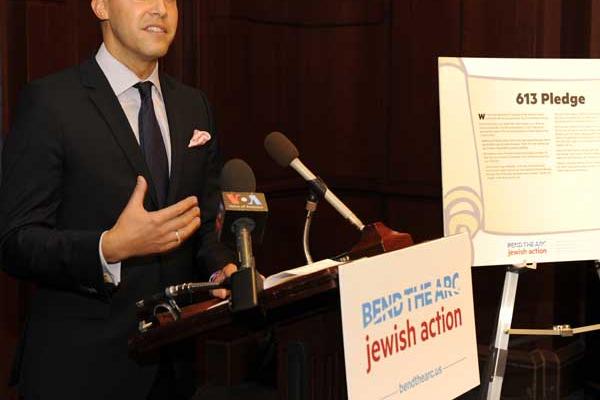
WASHINGTON — Bend the Arc, a liberal Jewish group that has advocated for social justice causes for more than 30 years, last week launched a lobbying arm and political action committee to give it more weight on Capitol Hill and across the nation.
The move is unusual, if not unique. There seem to be no other Jewish groups with a broad agenda that have such lobbying tools at their disposal, said Rabbi David Saperstein, who heads the Religious Action Center of Reform Judaism.
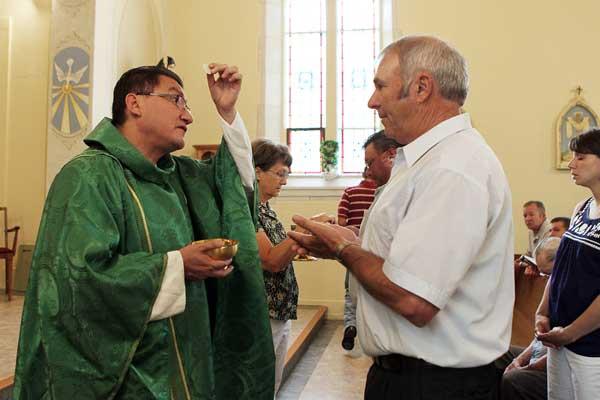
MARINE, Ill. — Joseph Haegele remembers going to the church across the road from his grandparents' house on Windmill Street in this farm town in 1956, when he was 5 years old.
Haegele has attended other Catholic churches in the area. But St. Elizabeth's remains special to the former General Chemical employee and his wife, Lynn. The annual church picnic has been part of family tradition for decades. And after their 25-year-old son died of a brain tumor 15 years ago, Haegele said, the couple adopted a priest's flower garden behind St. Elizabeth's rectory as a memorial.
But a Madison County Circuit Judge Duane Bailey has ruled that Haegele can worship at St. Elizabeth's only on the last weekend of each month.
Legal experts say the judge's order illustrates the conflict between orders of protection and religious liberty. And prior cases have affirmed the rights of courts to issue restraining orders on individuals even if it affects their ability to attend a house of worship.
Bailey's order is extraordinary in that it imposes not only distances of separation, but specifically bars access to a church on particular days.
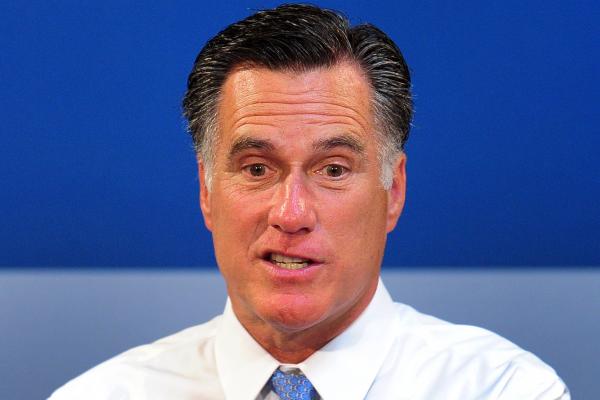
WASHINGTON — Neither Mitt Romney’s trip to Israel Saturday nor President Obama’s Middle East policies will have much effect on Jewish voters this fall, according to a new report that says Jewish voting patterns are predictable and unchanging.
The report, “Making Sense of the Jewish Vote,” predicts Jewish Americans will follow historical precedent and largely vote Democrat this fall. Moreover, Jewish voters will have a negligible effect on the presidential election’s outcome, even in swing states, said Jim Gerstein, a pollster with polling firm GBA Strategies who compiled the report.
Still, the Republican Jewish Coalition recently announced a multimillion-dollar advertising campaign targeting Jewish voters in swing states Pennsylvania, Florida and Ohio. “My Buyer’s Remorse” features testimonials decrying Obama’s posture toward Israel and economic policies.