WASHINGTON — Foes of same-sex marriage are warning the Supreme Court that lifting state or federal restrictions would threaten their own economic and religious freedoms and lead to social and political upheaval.
In about three dozen briefs filed in recent weeks, groups ranging from U.S. Catholic bishops and evangelicals to state attorneys general and university professors argue that upholding gay marriage could lead to penalties against objecting employers, military officials, and others.
Briefs from supporters of gay marriage are due by early March.

 The fragility of life. The servanthood of love. The (im)morality of war. The fundamentals of mercy and justice. The power of grace and forgiveness. The oneness of creation. The personal (and spiritual) toll of climate change. The nature of God and faith.
These are some of the spiritual themes explored in the mostly august field of nine contenders for the 2013 Academy Award for Best Picture -- Amour, Argo, Beasts of the Southern Wild, Django Unchained, Les Miserables, Life of Pi, Lincoln, Silver Linings Playbook, and Zero Dark Thirty.
2012 was an extraordinary year for film. This year's Best Picture field is perhaps stronger than it's been in recent memory, replete with nuance and substance, each film presenting a uniquely compelling and memorable tale that both informs and reflects our culture, sensibilities, and challenges.
A few of the nominated films employ overtly religious ideas and language (Life of Pi, Les Miserables, Lincoln), while others tackle daunting ethical issues that speak to our deepest identities and values (Argo, Djano Unchained, Zero Dark Thirty), or explore the sacred landscape of friendship, family, and unconditional love (Amour, Beasts of the Southern Wild, The Silver Linings Playbook.)
For the next three days, we'll look at each of the Best Picture nominees, the stories they tell, and the spiritual questions (and answers) they offer.
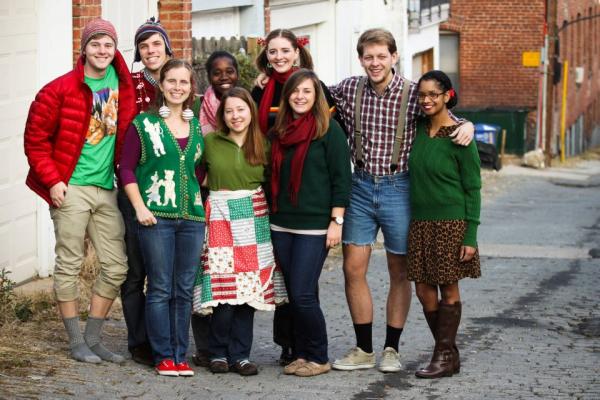
While the new year is just beginning for most, our intern year at Sojourners is halfway up.
Applications for next year's program are due March 1st, and if you or anyone you know is on the bubble in regard to applying, here are a few thoughts from this year's interns as to why you should apply.
Dennis Sadowski at Catholic News Service has a good summary of the moral and ethical concerns about drone warfare from a workshop at the annual Catholic Social Ministry Gathering. One participant, Charles Camosy, assistant professor of Christian ethics at Fordham University, suggested that it should be viewed as a pro-life issue:
"It involves violence and violent killing. It involves the killing of the innocent in a way that doesn't follow the church's teaching. It's an exercise of raw violent power in a way that I think should get pro-lifers really, really upset," Camosy explained to CNS.
“Marie Dennis, co-president of Pax Christi International, suggested that drones have led to 'a battlefield without borders.' "We have a global battlefield, which completely undercuts any possibility of talking about just war. There are no boundaries on this thing," she said.”
As the drone debate continues, it should go deeper into these concerns rather than only discussing legalities.
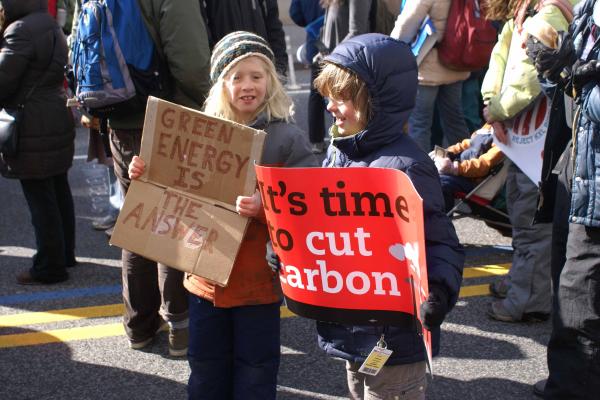
This past Sunday an estimated 35,000 people gathered in Washington, D.C., to push for legislative action in response to climate change. In addition to speaking out against the proposed Keystone XL pipeline, the “Forward on Climate” rally organizers urged President Barack Obama to limit U.S. greenhouse gas emissions and transition to larger levels of renewable energy. In addition to the mass assembly near the White House, environmental groups held similar rallies in cities across the nation, including a significant turnout in Los Angeles. All together, some have described the events of the past weekend as the largest collection of climate change rallies in U.S. history.
The president has recently emerged as a potentially strong ally in the struggle against climate change, for his inaugural address included a renewed commitment to environmental leadership, as he stated: "We will respond to the threat of climate change knowing that the failure to do so would betray our children and future generations.”
President Obama also addressed ecological concerns during his State of the Union speech, as he said: “We can choose to believe that Superstorm Sandy, and the most severe drought in decades, and the worst wildfires some states have ever seen were all just a freak coincidence. Or we can choose to believe in the overwhelming judgment of science – and act before it's too late." While conversation surrounding climate change was notably absent during his recent re-election campaign, the president appears to be making environmental concerns a top priority for his second term of office.
While President Obama seems to be a more visible environmental advocate, many are doubtful of his sincerity and question whether such statements are motivated by political calculation rather than genuine policy priorities. For example, in what can be described as a thought-provoking twist of irony, while thousands marched past the White House to move the president “Forward on Climate,” he was out golfing, which just so happens to be a sport that many environmentalists perceive as an ecological tragedy.
While we have been focusing on drones as weapons of war – killing by drone – controversy over the domestic use of drones is also growing. Police forces across the U.S. have become enamored by surveillance drones that can be used in law enforcement. But that has led to a rise in local governments beginning to strictly regulate their use or banning them. The New York Times reports on these efforts:
“To me, it’s Big Brother in the sky,” said Dave Norris, a city councilman in Charlottesville, Va., which this month became the first city in the country to restrict the use of drones. “I don’t mean to sound conspiratorial about it, but these drones are coming, and we need to put some safeguards in place so they are not abused.” … Last week, the Seattle Police Department agreed to return its two still-unused drones to the manufacturer after Mayor Michael McGinn answered public protests by banning their use.”
Some states have adopted moratoriums on drones pending further study, others are considering proposals that would require search warrants for their use. It is heartening that the objections are coming before drones are flying over all of us, rather than attempting to stop them when it is already too late.
VATICAN CITY — As of 8 p.m. on Feb. 28, Pope Benedict XVI will no longer be pope and the Vatican will go into “sede vacante” mode — a Latin expression that means that the seat of St. Peter is vacant.
So who’s in charge until a new pope is chosen? The “interregnum” between two popes is governed by ancient rituals and by institutions half forgotten even within the Vatican.
But it is also the only time that the Catholic Church comes close to vaguely resembling a democracy, with the College of Cardinals acting somewhat like a Parliament with limited powers as it prepares to choose the new pontiff in a closed-doors conclave.