The U.S. Senate has just failed to get 60 votes on a bipartisan proposal to expand gun sale background checks. Politico reports:
“The vote was 54-46, with only four Republicans crossing the aisle and voting with the Democrats in favor of the bipartisan proposal by Sens. Joe Manchin (D-W.Va.) and Pat Toomey (R-Pa.). Sixty votes were needed.”
Four months after the Newtown massacre, a compromise measure that would have banned no guns, no magazines, is apparently still too strong. And what is especially outrageous is the continued abuse of the filibuster, requiring 60 votes for anything to pass the Senate. Is there any other legislative body in the world where a proposal can pass by 8 votes and lose?
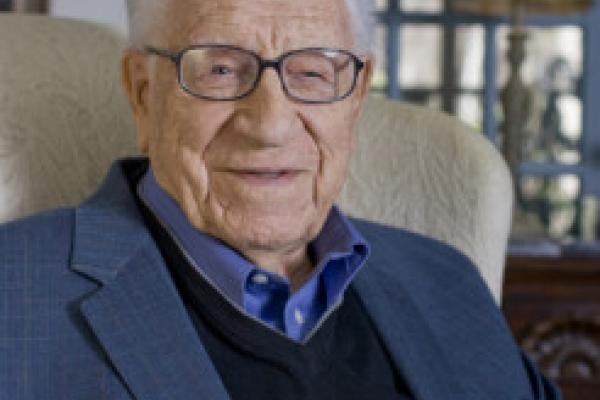
George Beverly Shea, whose signature baritone voice was a standard feature of Billy Graham crusades for more than half a century, died Tuesday at age 104.
He died after a brief illness, the Billy Graham Evangelistic Association announced.
Shea, who was 10 years older than Graham, met the famous evangelist seven decades ago when he was working at Chicago’s WMBI, a Moody Bible Institute radio station. The evangelist heard him singing on the program “Hymns from the Chapel” and asked Shea to sing on his new radio program.
“I’ve been listening to Bev Shea sing for more than 70 years, and I would still rather hear him sing than anyone else I know,” the ailing Graham said in a statement. “I have lost one of the best friends I have ever had, but he and I look forward to seeing each other in Heaven relatively soon.”
Shea, who lived about a mile from Graham in Montreat, N.C., sang before Graham preached as they traveled the globe, often “I’d Rather Have Jesus” or “Victory in Jesus.”
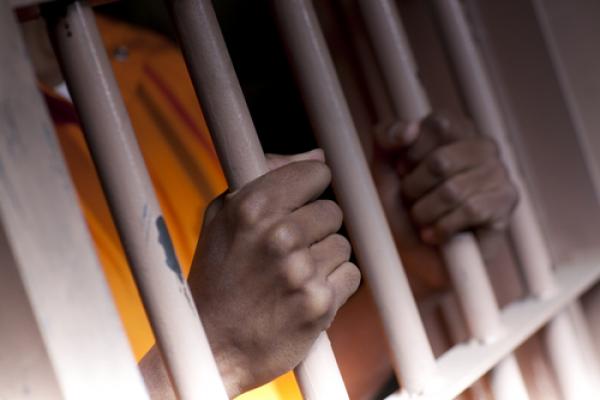
The United States has the highest incarceration rate in the world; one third of those incarcerated are serving long-term sentences for petty, non-violent crimes. One out of three African-American men will serve some sort of time under present law enforcement practices and the current criminal justice system. In Washington, D.C., that number jumps to an estimated three out of four. The United States imprisons a larger percentage of its black population than South Africa did at the height of apartheid.
More than 50 people gathered at Emmanuel Church of God in Christ in southeast Washington, D.C., on Sunday afternoon to hear the Rev. Louis Hutchinson remind them of these facts. Rev. Donnell Smith called the trend: “legalized discrimination.”
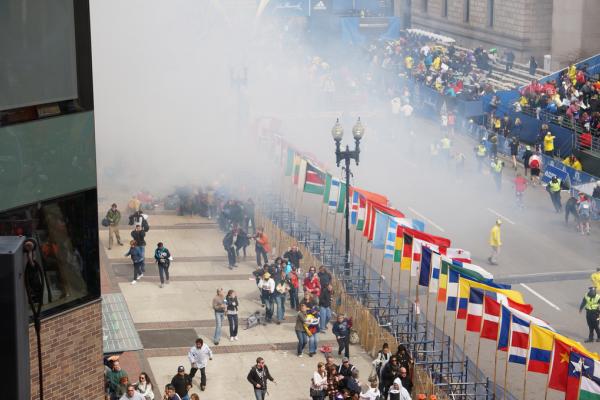
What do you say in the face of evil?
The stories from Monday’s attacks at the Boston Marathon are heartbreaking, gut-wrenching. One in particular stands out to me. A woman was waiting for her husband to cross the finish line when the bombs exploded. For three hours she searched frantically for him, not knowing if he was alive or dead, not knowing if he was frantic and looking for her. Her voice cracked and tears flowed with the raw memory as she told of the moment when she and her husband embraced.
Moments like this, even when they end happily, remind us of our vulnerability. As hard as we try to protect ourselves with heightened security measures, we know that complete invulnerability is impossible. I am vulnerable. My wife is vulnerable. My children are vulnerable. We cannot escape it.
In the face of gun violence and bombings, gender violence and rape, we would be irresponsible not to ask big questions about evil and human vulnerability.
A few hours after the bombing, President Barack Obama addressed our natural desire to carry out justice after these events.
[M]ake no mistake; we will get to the bottom of this. We will find out who did this, we will find out why they did this. Any responsible individuals, any responsible groups, will feel the full weight of justice.
Like the president, I want to take action against evil and I want to know I am secure. I hate admitting that I’m vulnerable. But the president’s words didn’t reassure me. They made me feel more vulnerable because the phrase “full weight of justice” is always a veiled call to violence.
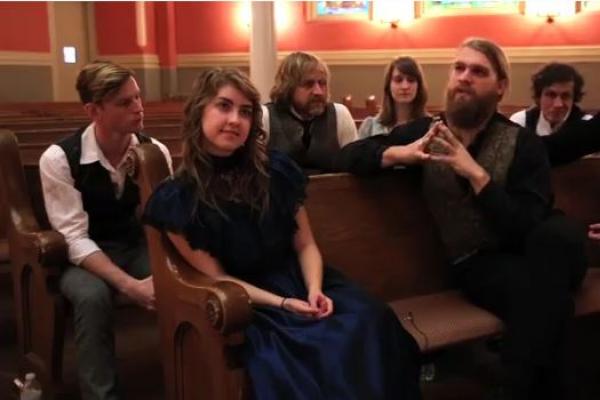
Chesapeake, Virginia-based folk band The Last Bison talked with Sojourners about music, creativity, and God before their show in Washington, D.C. a while back. Be sure to listen to their recently released debut album Inheritance and catch them while they're on tour in the U.S.! Their music is definitely worth a listen.

I spent an entire day a couple of months ago in an outpatient clinic (I'm fine; thanks for asking). I met a lot of nurses, and every one of them was excellent.
When Velda came to take away the remains of my lunch, I offered her my untouched can of ginger ale.
"I don't drink soft drinks," she replied. Since I rarely do either, we started chatting.
Velda grew up in Tanzania, moved to Belgium, spent several years in London, and finally came to the United States. She returns to Tanzania regularly, and she is not happy with what she sees.
"I grew up eating lots of vegetables," she told me. "We might have had ice cream once every three years. But now people are eating American-style junk food. They don't know it's not good for them."
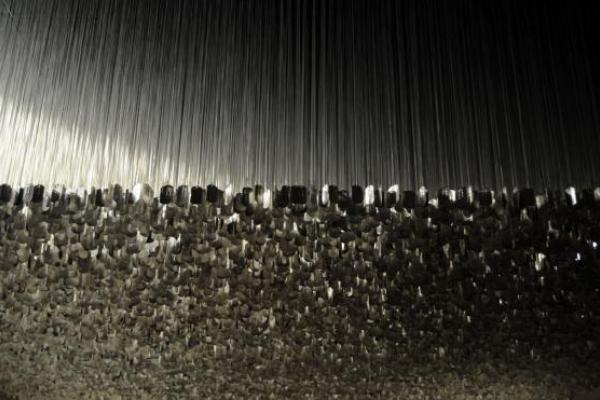
The National Veterans Art Museum in Chicago has an unusual work of art.
When visitors first enter the museum, they hear a sound like wind chimes coming from above them. Their attention is drawn upward 24 feet to the ceiling of the two-story high atrium.
The metal dog tags of the more than 58,000 service men and women who died in the Vietnam War move and chime with shifting air currents. The 10-by-40-foot sculpture, titled “Above and Beyond” was designed by Ned Broderick and Richard Steinbock.
Family and friends locate the exact dog tag of a loved one as a museum employee uses a laser to point to the tag with the name imprinted on the dog tag, now part of a chorus of wind chimes.
After the horror and tragedy in Boston, our heads have been down. This work of art serves as a reminder to look up to hear the sound of the spirit of goodness, compassion, and creativity that can turn tragedy and death into wind chimes played in silence by the air.