
NEW YORK — The ancient dream of making money by simply moving money took a hit last week when Citibank announced plans to lay off 11,000 workers.
Across town, the dream of making money by actually making things – a dream that had seemed lost to foreign labor – got a boost when Apple's boss Tim Cook announced plans to make some computers in the U.S.
Citibank's move sent shock waves among people educated to take meetings, crunch numbers, and parlay networking into fees for passing money through their hands. There's no actual creation of wealth; just dipping a large ladle into wealth as it flows past.
Apple's small and somewhat symbolic move, by contrast, stirred hope that manufacturing might return again to American shores and stimulate the manufacturing wages and productive attitudes that once built a middle class.

Among my must reads are the Sunday New York Times Book Review and other book reviews I come across in various media outlets. There are too many books being published that I would love to read, but just don’t have the time. So, I rely on reading book reviews as one way of keeping in touch with what’s being written. Here are my picks from this week’s books.

"Blessed is she who has believed that what the Lord has said to her will be accomplished!" - Luke 1:45
I'm thinking about promises this morning. Conceptually, that is — I've not yet progressed to specifics.
At church Sunday, the sermon was on joy. The pastor noted how much of our joy is anticipatory: we feel joy when we get great Celtics tickets, even though it's weeks before tip-off and we have no idea how the game will go. He described the joy he felt in waiting at the alter for his bride, even though he didn't know how their marriage would unfold. What we have in these moments, he said, is the promise of something we're excited to witness and be part of. And we have joy in those promises.
I have all kinds of promises from God, both the ones in the Bible and the personal ones He whispers in my ear. It's hard to believe these promises sometimes. (I tend to have more confidence that the Celtics will show up and play than I do that God will.)
The religious implications of climate change are becoming evermore clear, as the topic makes its way into mainstream America.
The Huffington Post reports:
Indeed, what role do religion and theology play in the accelerating conversation about climate change? This has been a banner year for extreme weather events -- from severe drought in the American Midwest to the wildfire siege in Colorado to the "Frankenstorm" of Hurricane Sandy fueled by a warming Atlantic Ocean -- which have helped the reality of climate change to register on the consciousness of most people.
Read more here.
Post fiscal-cliff, both President Obama and the Congress are expected to take on comprehensive immigraiton reform. Politico discusses the influential Republicans who will insert themselves into the debate.
Politico reports:
They lack the stature of the Big Three Republicans in the immigration reform debate: Marco Rubio, John McCain and Lindsey Graham.
But just below that senatorial trio, there’s another group of lesser-known GOP lawmakers expected to play an outsize role — both within the party and negotiating with Democrats — as Congress delves into an issue that could consume much of its bandwidth next year.
While most news of drones is their use abroad by the U.S. military and CIA, they are also increasingly used for surveillance in this country. A report in the Washington Times shows that the Department of Homeland Security and its Customs and Border Protection agency are using their drones to assist local law enforcement agencies.
“The practice is raising questions inside and outside government about whether federal officials may be creating an ad-hoc, loan-a-drone program without formal rules for engagement, privacy protection or taxpayer reimbursements. The drones used by CPB can cost between $15 million and $34 million each to buy, and have hourly operational costs as well.
“In addition, DHS recently began distributing $4 million in grants to help local law enforcement buy its own, smaller versions of drones, opening a new market for politically connected drone makers as the wars overseas shrink.
“The double-barreled lending and purchasing have some concerned that federal taxpayers may be subsidizing the militarization of local police forces and creating new threats to average Americans’ privacy.”
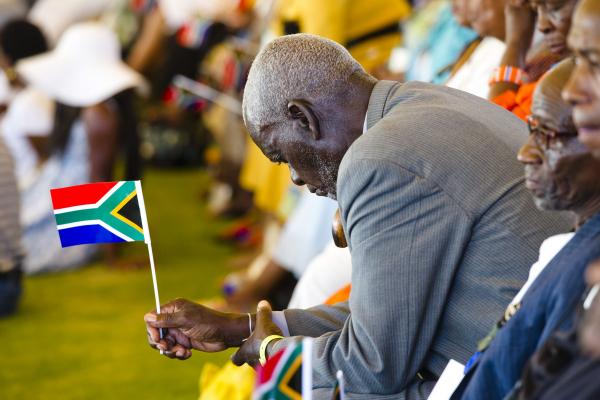
Instead of celebrating a victory in war or recognizing the founding of an armed unit, South Africa renamed Dec. 16 as “The Day of Reconciliation” for the purpose of transformation, empowerment, and multi-racial national unity. In what can now be described as a dramatic conversion of symbolism, the newly redefined public holiday was celebrated for the first time in 1995.
The Day of Reconciliation is appropriately placed within the Christian liturgical season of Advent, for this period of expectation and longing for Jesus’ birth is a reminder of the ways that God’s presence heals wounds and redefines relationships. As the people of South Africa renovated their national holiday to embrace a transformed national identity, the Season of Advent prepares us to be made new through the birth of Jesus, and thus moves us to promote restored local and global communities through the practice of radical hospitality, as is written in 2 Corinthians 5:19: “God was in Christ, reconciling the world to himself, and entrusting to us the ministry of reconciliation."