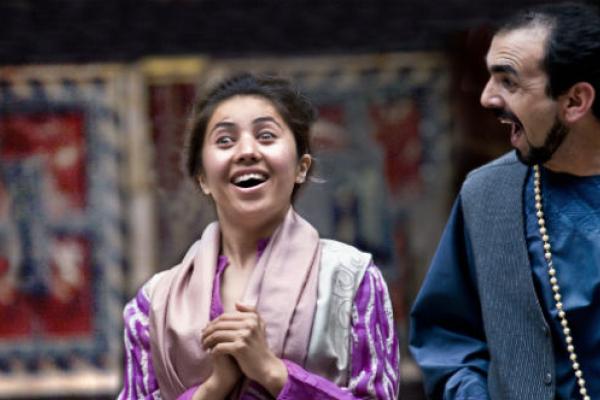
“Stop fighting,” suggests Farzana, a brave 22-year-old Afghan stage actress.
Significantly, her statement is in sharp contrast to what seems to be the democratic world’s unquestioned modus operandi of today, exemplified by U.S. Secretary of State Hillary Clinton’s pet-phrase for Afghanistan, ‘Fight, talk and build.’
What Farzana and the Afghan Peace Volunteers are sensibly suggesting is a ceasefire.
A ceasefire — like the one called for in Kofi Annan’s Six Point Peace Plan for Syria that Farzana and the Afghan Peace Volunteers also supported — is a first step towards ending the equally sectarian war and incendiary global politicking in Afghanistan.
It is crucially needed to stop the color-code chaos of ‘green-on-blue’ attacks in which 45 coalition security forces, mainly Americans, have been killed by "allies," Afghan security forces, or insurgents posing as soldiers or police.
It is what is needed to end the four Afghan decades of using mutual killing as a method of conflict resolution. The U.N. is uniquely well-positioned to do this, empowered by their original Charter to "remove the scourge of war from future generations."
[Note from the author: Yesterday I wrote about part of the discussion that took place around our Wild Goose Festival panel on masculinity and male identity. A few folks asked about the story I told during the panel, so I thought I’d share it here. It’s a bit long, so I’ll offer it in two parts, with part two coming tomorrow.]
Every guy has that one car they either always wanted or got and for which they will always have an irrational love. Mine was a 1966 Mustang.
I first saw it sitting with the “for sale” sign in the parking lot of the apartment complex where I had a summer job, cleaning out trashed, vacant units. They wanted $3,200 for it, but they took $2,700, which was almost every penny I’d earned for a whole summer’s work. The guy who sold it to me, a bartender with a mullet and a fine collection of sleeveless T-shirts, assured me that I would love that car more than life itself.
He was right, but as I mentioned, it was a completely irrational love. I spent more time underneath that car than I did in it for more than a year, replacing seals, radiators, starters, alternators and a host of other barely-functioning parts I only learned existed as they broke. But when it worked, man, I was transported, both literally and figuratively.
The mustang gave me more confidence too. I asked a girl out I had wanted to hook up with for some months, and after checking out the ride, she readily agreed. I took her to a concert, and on the way home, her smile broadened as she ran her hand seductively across the burgundy interior.
“This is a really sweet car,” she cast a feline glance my way. Every manly fiber in my being puffed up, taking in the intoxicating elixir of car exhaust and her perfume. Life was good.
Five minutes later, while cruising down the highway, I threw a rod. We sat in the parking lot of a gas station for about forty-five minutes until my mom got there to take us both home.
I said the love was irrational.

Hello fellow Sojourners!
This is a brief missive for your enjoyment. I just returned from the Wild Goose Festival in Corvallis, Ore.
Yes, Oregon and not North Carolina. You see, in a fit of wisdom, the good people of Wild Goose found a west coast location. I hope it worked well for them because I'm sold on the place.
I wish you could have been there. It was amazing. To tantalize you into attending next year, here (in no particular order) are Nine Good Reasons to Attend The Wild Goose Festival.
1. There are no bugs.
None. Well, some flies, but this is Oregon and not North Carolina and though the nights are chilly and the mornings moreso (I awoke the last morning to see my breath in the air), the sun arose and everything warmed up to make for some of the most beautiful weather you'll ever experience.
2. All the notables are there.
Rachel, Richard (and Richard), Brian, Nadia, Gareth, Bruce, Christian, Amy, Yvette, Hilary, Greg, Steve...So many people to meet and to know.

Every so often I hear the insinuation that women (like me) who advocate for "normal" childbirth are inordinately self-focused (even selfish) and that women who are dissatisfied with the treatment they’ve received in hospitals during labor are “uncheerful” and, possibly — according to the women in controversial pastor Douglas Wilson’s life — confused theologically.
Don’t get me wrong: Ricki Lake’s memoir, at least as it concerns childbirth, definitely looks at the birth experience as if it is all about her. But while there’s no question that medical advances (and, yes, c-sections!) save lives, it’s also hard to contest the fact that medical interventions occur at rates that are simply unjustified.
September 3 (Labor Day) launched “Empowered Birth Awareness Week,” which, sponsored by ImprovingBirth.org, aims to raise people’s consciousness concerning the notion of “evidence-based maternity care,” the less than radical notion that what happens during birth (ie, continuous fetal monitoring, mandatory IVs, NPO rules that prohibit eating and drinking) should be medically indicated, not routine, and supported by sound medical research.
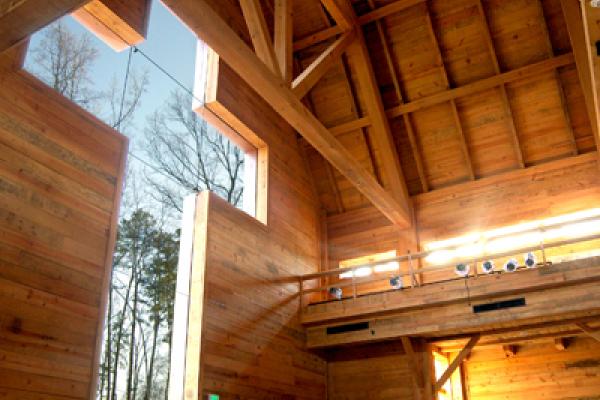
The host city for the Democratic National Convention is not a particularly political place. Charlotte, N.C., is known for three things: banking, NASCAR, and religion.
And when it comes to religion, Billy Graham’s spirit looms large.
America’s most famous evangelist of the 20th century was born on a dairy farm just outside of town and was raised in Charlotte, home of his ministry.
For the Democrats – labeled disparagingly by some Republicans as the party of secular humanism – Charlotte is not a bad place to try and raise their religious profile.
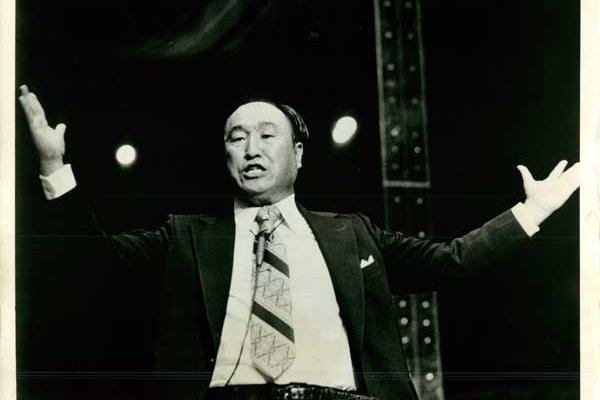
The Rev. Sun Myung Moon, revered as a messiah within his Unification Church but regarded by many others as a vain and enigmatic man who blessed mass weddings, built a sprawling business empire and presided over a personality cult, died on Monday in South Korea. He was 92.
Moon had been in intensive care at a Seoul hospital since Aug. 7, according to his church. The cause of death was complications from pneumonia, including kidney failure.
Moon was born in 1920 in what is now North Korea, and rose from a home in which five siblings starved to death to become an ambitious man who harbored a lifelong hatred of communism, craved respect from the rich and powerful and professed a divine mandate to restore a fallen world.

We are connected with people and places through ways and means unlike any previous generation. We live in a “global village."
We are connected through worldwide round-the-clock television networks, rapid international travel, mobile phones, Skype, and wonders of the Internet. But while such connections are indeed profound, the bonds of our global village run far deeper, for we are also linked through global events and international endeavors. Whether it is sporting events like the Olympics, a royal wedding, or various natural disasters that capture worldwide attention and compassion, the reach and depth of our global village passes through time zones and crosses national boundaries.
While these characteristics of the global village are astounding, our connections run even deeper as a result of the global process of production, distribution, consumption, and waste. In other words, the architects of our global economy intentionally linked local communities with others that are thousands of miles away. And so, while these massive multinational connections are often unnoticed in daily North American life, once we take a deeper look, we recognize that they are not only evident, but are also far from impartial.