Years ago on a bright Tuesday in March, I was driving to seminary and I found myself stuck in traffic on I-25. Sitting in a dead stop on the interstate I stared up into the clear blue Colorado sky and thought, “What in the world am I doing? I don’t believe a word of this Jesus stuff. I mean, It’s a fairy tale.”
But then in the very next moment I thought, “Except…throughout my life…I have experienced it to be true.”
I experience the gospel to be true even when I can’t believe it. And honestly sometimes I believe the gospel even when I don’t experience it. And I suggest to you today that this is why we have and even why we need Word and Sacrament. Because see, we are a forgetful people.
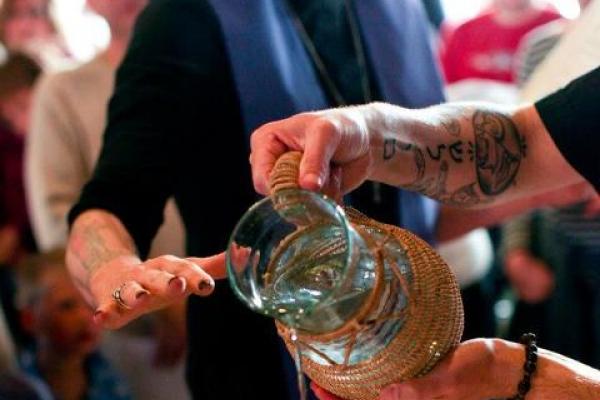
And it is to this office of Word and Sacrament that you have been called Matthew and I feel like in an ordination sermon, the preacher should in some way address the level of preparedness of the ordinand in question, and I am in a position to do just that.
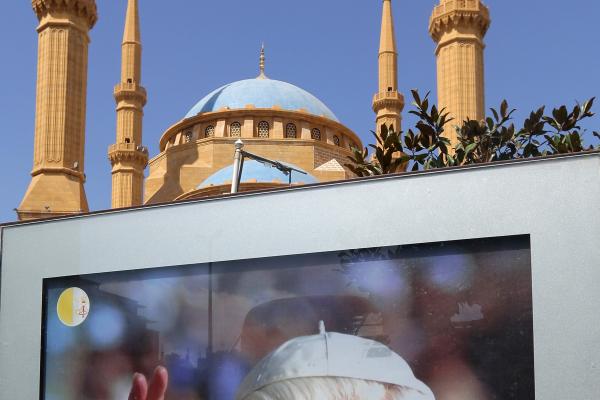
BEIRUT — As violent protests against an anti-Islam film spread to much of the Muslim world on Friday, Pope Benedict XVI arrived in Lebanon to a warm welcome from Christian and Muslim leaders.
The pontiff's appeal for peace and reconciliation in the region, however, stood in jarring contrast with violent clashes in the northern Lebanese city of Tripoli, which left one dead and 25 injured.
Landing at Beirut's airport in the early afternoon, Benedict praised Lebanon as an example of "coexistence and respectful dialogue between Christians and their brethren of other religions."
Without referring expressly to the unrest, the pope warned that the country's "equilibrium" is "extremely delicate."

Worshippers at Toronto's Salahuddin mosque were bracing for protests Friday as part of "Walk Your Dog in Front of a Mosque Day."
The event is being organized by supporters of a man who claims Muslim protestors kicked his English mastiff, Cupcake, during an anti-Israel rally last month.
While claiming that they wanted to draw attention to Muslim attitudes toward dogs, the organizers' Facebook page is replete with hostilities. One man wrote that he would throw protestors into a "lake of fire" and shoot their dogs, and the event has been promoted on a white supremacist website, StormFront.org.
Some Muslims responded with their own "Good Muslims Love Dogs" Facebook page, including at least one photo of a veiled woman with a veiled dog.
Muslims' alleged canine-phobia is often cited by critics of Islam as an example of how the faith is incompatible with Western values. Some Muslims have perpetuated that narrative, such as when a Somali cab driver in Minneapolis made national headlines in 2007 when he refused to let a blind man bring his seeing-eye dog into his car.
Yet many Muslims all over the world have dogs, and dogs figure prominently is some Islamic countries, such as Turkey, famous for its Kangal and Akbash breeds.
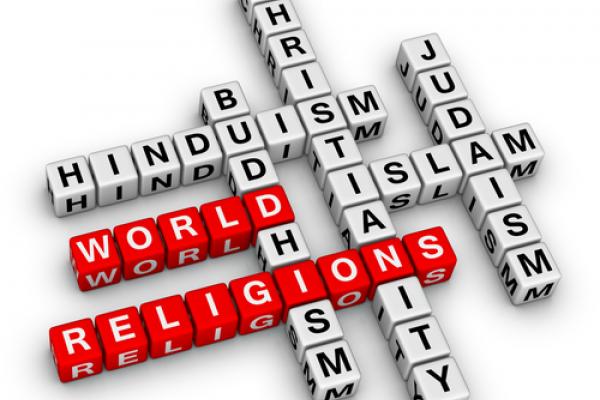
The typical American underestimates how many Protestants there are in the U.S., and vastly overestimates the number of religious minorities such as Mormons, Muslims, and atheist/agnostics, according to a new study.
Grey Matter Research and Consulting asked 747 U.S. adults to guess what proportion of the American population belongs to each of eight major religious groups: Protestant, Catholic, Jewish, Mormon, Muslim, atheist/agnostic, believe in God or a higher power but have no particular religious preference, and any other religious group.
The average response was that 24 percent of Americans are Catholic, 20 percent are Protestant, 19 percent are unaffiliated, 8 percent are Jewish, 9 percent are atheist or agnostic, 7 percent are Muslim, 7 percent are Mormon and 5 percent identify with all other religious groups.
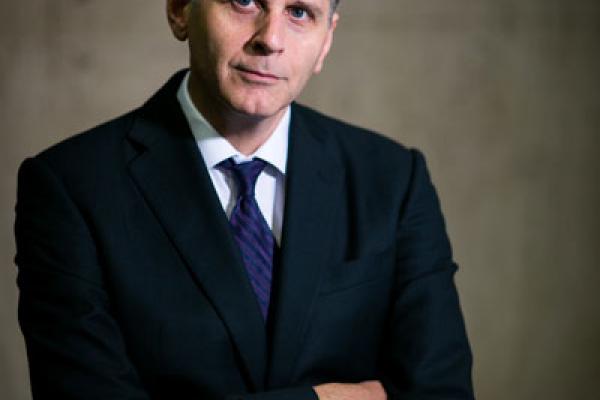
Jacques Berlinerblau wastes no ink in his new book trying to flatter his fellow nonbelievers.
"American atheist movements, though fancying themselves a lion, are more like the gimpy little zebra crossing the river full of crocs," he writes in How to Be Secular: A Call to Arms for Religious Freedom.
Ouch.
"In terms of both political gains and popular appeal, nonbelievers in the United States have little to show. They are encircled by cunning, swarming [religious] Revivalist adversaries who know how to play the atheist card."
Berlinerblau, a Georgetown University biblical scholar who teaches a course on secularism, wants to rescue that little zebra. But his plan may be a hard-sell with some atheists — he wants atheist groups to drop their black-and-white opposition to religion and its adherents in order to preserve the Constitution's guarantee of freedom of religion.
"The gimpy zebra remark was a little goofing on this over-the-top chest-thumping that emerges from Movement Atheists," he said in an interview, referring to atheist organizations with political goals, like American Atheists. "They wildly overestimate their numbers. They tend to overestimate the efficacy of their activism. They underestimate how disciplined and organized their adversaries in the religious right are, too."
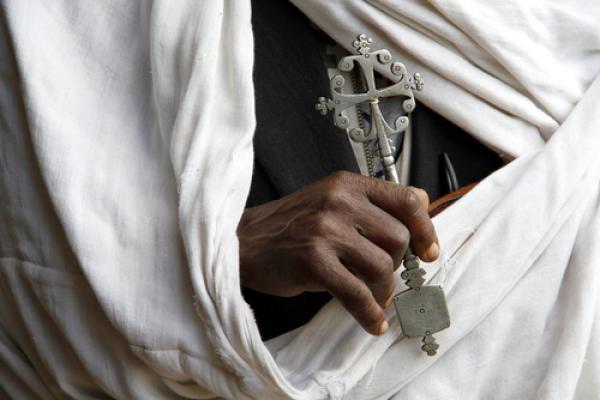
Coptic Christian leaders in the United States distanced themselves from an anti-Muslim film that has sparked protests in more than 24 countries, and denounced the Copts who reportedly produced and promoted the film.
"We reject any allegation that the Coptic Orthodox community has contributed to the production of this film," the Coptic Orthodox Archdiocese of America said in statement on Friday.
"Indeed, the producers of this film have taken these unwise and offensive actions independently and should be held responsible for their own actions."

AP Intelligence Writer Kimberly Dozier reports
“WASHINGTON (AP) - The U.S. is sending more spies, Marines and drones to Libya, trying to speed the search for those who killed the U.S. ambassador and three other Americans, but the investigation is complicated by a chaotic security picture in the post-revolutionary country, and limited American and Libyan intelligence resources. The CIA has fewer people available to send, stretched thin from tracking conflicts across the Middle East, Africa and Asia.”
…
“To fill in the gaps in spies on the ground, the U.S. intelligence community has kept up surveillance over Libya with unmanned and largely unarmed Predator and Reaper drones, increasing the area they cover, and the frequency of their flights since the attack on the consulate, as well as sending more surveillance equipment to the region, one official said.”
“Largely unarmed?”

The Associated Press reports
“BENGHAZI, Libya (AP) — U.S. drones hovered over the eastern city of Benghazi on Friday and militia forces fired toward the crafts, prompting authorities to close the airport for several hours for fear a commercial aircraft could be hit, Libyan officials said.
“Abdel-Basit Haroun, the head of the militia in charge of city security, said the drones could easily be spotted from the ground. He says men angry over perceived foreign intervention fired in the air and authorities closed the airport.
"The drones are like bees," he said, referring to the long hours the drones were seen, with their buzzing noise heard in different neighborhoods of Benghazi. Militias, known as brigades, fought regime forces during Libya's eight-month civil war that led to Moammar Gadhafi's fall last year. Since then, many have roles in keeping security, though they have not been integrated into government forces.
“An airport official confirmed the firing on the drones was the reason for the airport shutdown.”