FOR MY GRANDFATHER’S first death anniversary, my mother wanted me to design a thank-you card for those who supported our family throughout the year. The card featured a poem I wrote recounting one of my treasured memories with him: feeding his chickens as a rooster crowed in the wee hours of the morning. Upon reading it, one of my uncles smiled and asked, “Did you include this because your Lolo was a poet?” I didn’t. The 8,441 miles between Dallas, Texas, and Daanbantayan, Cebu, Philippines, left me bereft of the more intimate details of my grandfather’s life, including that we shared an affinity for the written word. This unexpected link soothed my suffocating sadness at our now permanent separation, thanks to a medium that is often at the crossroads of mending what is broken.
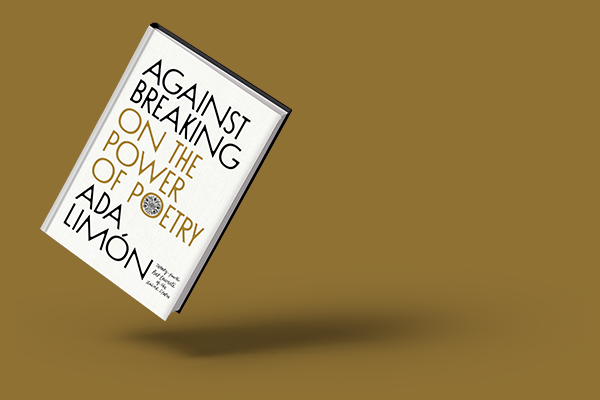
While serving as the U.S. poet laureate from 2022 to 2025, Ada Limón elevated the ways poetry connects humans with each other and the land. With a project titled “You Are Here,” Limón installed poems across seven national parks and published an anthology of 50 poets to encourage communion with the natural world. Her latest book, Against Breaking, is a tribute to poetry, adapted from her closing lecture at the Library of Congress. She dedicated it to the librarian who appointed her, Carla Hayden, who would be unceremoniously dismissed by President Donald Trump three weeks later.
By incorporating lines from stalwarts such as Langston Hughes and Lucille Clifton, Limón makes a case for the art form’s role in public life. She points to formally displayed poems such as Emma Lazarus’ “The New Colossus,” which announces an idealistic embrace of exiles at the feet of the Statue of Liberty, and Adam Zagajewski’s “Try to Praise the Mutilated World,” a mantra often reshared during times of crisis.
Poetry is not a product to be sold but a boon to be given.
Limón also shares anecdotes about exchanges she had with people across the country: people who entrusted her with confessions about translating their own verses to learn English, people who shared poems only meant to be kept “in the darkened corners, in desk drawers, back pockets.” To Limón, these works are just as valuable to the human experience as those openly lauded. There’s even a cheeky argument that poetry subverts economic and oppressive systems because it doesn’t make money. Poetry is not a product to be sold but a boon to be given, to travel through the air like pollen in hopes of germinating new forms.
Limón’s strongest argument on poetry’s behalf is that it does not merely affect individual readers; by fostering a shared emotional understanding of human suffering and injustice, poetry can gather the collective strength for social change. In her eyes, the merits of poetry are linked to the visceral emotions it can evoke and the necessary ability to grasp and process complex feelings in a world often dismissive of them. When we allow ourselves to unite under possibility, “to feel not just seen but beheld,” we discover how to persist against breaking.
“We need a secular sacred language,” Limón proposes, “something that is galvanizing without certainty, that gathers us without gathering under one ruler—but under the connection that we all have to the human spirit, to each other, to the earth.” Poetry teems with potential to be a language we make together, to hold us as we navigate the liminal space between isolating grief and action that echoes.

Marjorie Rose T. Lim is the social media and communications assistant at Sojourners.
Did this article have an impact on you? Tell us how! Whether you’re moved to take action, have a question, or want to share a comment (good or bad), we value your feedback!