WHEN I READ Acts 2, I imagine that those first Christians experienced both profound beauty and aggravation. On Pentecost, disparate people came together to serve each other and bear one another’s burdens: “They would sell their possessions and goods and distribute the proceeds to all, as any had need. Day by day, as they spent much time together in the temple, they broke bread at home and ate their food with glad and generous hearts” (verses 45-46). It’s a beautiful portrait, and yet anyone who has lived in intentional community knows that such tight-knit bonds can be as draining as they are rewarding; sharing meals in large groups is fun, until it’s time to do the dishes.
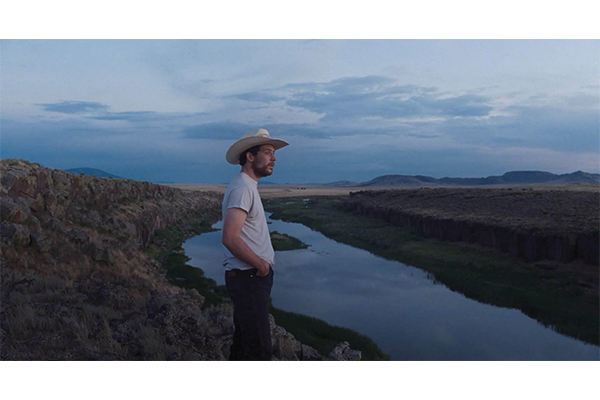
When, because of a shared mission, people who might not normally associate with each other become each other’s community, that’s powerful; in a broad sense, that’s church. Director Max Walker-Silverman’s contemporary Western, Rebuilding (2025), offers a glimpse of that mutuality. In the film, we meet Dusty (Josh O’Connor), a rancher displaced to a Federal Emergency Management Agency camp in the aftermath of a wildfire. He uses this time to connect with his daughter, Callie Rose (Lily LaTorre). The film luxuriates in the slow process of community reformation, as Dusty and Callie Rose bond with others who have also had their homes affected by fire.
Walker-Silverman wanted to celebrate the unique way people come together during a crisis. “After fires and floods and hurricanes, time and time again, almost without fail, people care for each other who did not necessarily take care of each other beforehand,” he told Sojourners. “How to make that last and make that an ongoing part of life rather than sort of an immediate response is the bigger and harder question.”
Early in the film, Dusty tells Callie Rose not to interact with others at the FEMA camp, saying, “We don’t need to bother anybody ... [they’re] not real neighbors anyway.” As the film progresses, Dusty begins to ignore his own advice. He can’t help but advocate for his temporary neighbors when officials tell them to vacate the camp.
This vision of mutuality is one that Walker-Silverman hopes will resonate in these divided times. “I do think that imagination and hope are very connected,” he said. “It’s hard to hope for something that you can’t imagine, and of course it’s impossible to fight for something that you don’t actually have hope in.”
Indeed, Rebuilding reminds us that hope and imagination aren’t just mindsets to enter; they’re muscles to cultivate. When it becomes difficult to imagine, may we enmesh ourselves in a community that encourages us to hope—even when it’s aggravating. Even when we’re not quite sure who our “real” neighbors are.
Did this article have an impact on you? Tell us how! Whether you’re moved to take action, have a question, or want to share a comment (good or bad), we value your feedback!