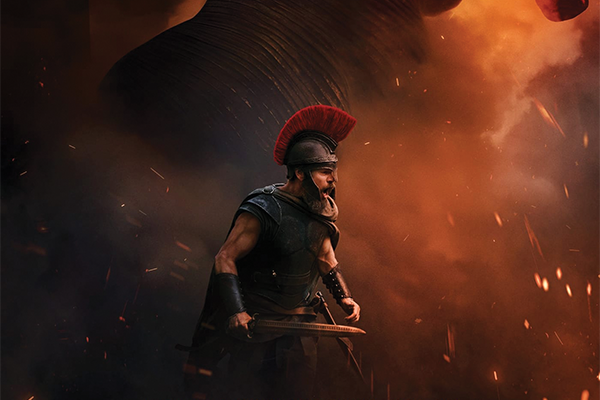
IN CHRISTOPHER NOLAN’S film adaptation of The Odyssey, the Greek gods are notably quiet.
The opening intertitle in Nolan’s homage to Homer’s epic reads, “In a time of apparent magic,” signaling that we should meet any supernatural elements we see on screen with some skepticism. It’s a curious choice given that the poem, which traces Trojan War general Odysseus’ treacherous journey back to his home in Ithaca, is rife with all sorts of supernatural mythology. The Greek gods themselves often play pivotal roles in the story, with the likes of Poseidon, Zeus, and Athena appearing as beings who either help or hinder Odysseus on his journey.
While Athena manifests in corporeal form, she’s the only on-screen god we see. Plenty of other gods—Zeus, Poseidon, Apollo—are named, but their presences are perceived as acts of nature: lightning and raging storms.
Has Nolan done a disservice to Homer by limiting the role of the divine, as some critics raise? I find his choice to be a poignant one. The muted divinity reflects Odysseus’ own spiritual state and captures a natural human temptation to want God to speak on our terms.
Throughout the film, Odysseus is defiant toward the gods. He deflects the fears of his crew, who view every obstacle as a sign that Poseidon is against them. In one scene, while storms threaten to split the ship in half, Eurylochus, the second in command, pleads with Odysseus to “pray to Poseidon” and “ask for forgiveness.” Odysseus will not comply. Throughout the film, he defiantly refuses to acknowledge the supernatural in the mundane.
This isn’t an arbitrary creative decision on Nolan’s part, but an intentional choice to put viewers in the headspace of a man who wishes the divine forces that seemingly govern his world would just speak clearly. Late in the film, Odysseus asks Athena why the gods don’t speak to people “in ways we understand.” She retorts, “Who doesn’t understand thunder, fire, a child’s smile, a good harvest?” This is how the gods speak, she says, and it’s to our peril if we choose to ignore the signs and demand they encounter us differently.
I rarely look to the natural world as evidence of God’s voice; it can be dangerous—even politically manipulative—to assume a destructive hurricane is evidence that a city has fallen to some specific sin. Yet, I remember the promise of God’s constant provision in the sparrows that are fed and the lilies that are clothed. As tempted as I am to defiance, buoyed by my frustration at divine silence, The Odyssey is a reminder that a greater conversation is going on around me. I just have to open my ears.

Zachary Lee is a former online editorial assistant at Sojourners and part of the inaugural Sojourners Journalism Cohort. You can find him on Letterboxd @zlee729.
Did this article have an impact on you? Tell us how! Whether you’re moved to take action, have a question, or want to share a comment (good or bad), we value your feedback!