Grain of Salt
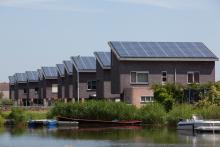
EARLIER THIS YEAR, 14 solar panels were installed on my roof. Each day since—in fact, multiple times a day—I've eagerly checked our online meters, as the sun replaces coal and nuclear plants as the provider of my home's electrical needs.
I've waited a long time for this. I attended my first energy conference in the late 1970s, when I joined several other students from the hunger action group at our Jesuit college, Seattle U., for the 20-hour van ride to Denver—even then, the connection between poverty and energy issues was clear.
That conference was one of several conducted by the U.S. Catholic bishops to gather input for what became a major and still-relevant document published in 1981 under the unassuming name "Reflections on the Energy Crisis." The statement noted that "solar power can help open the way to permanent energy security, pointing beyond the end of fossil fuels."
So last summer I was thrilled to sign a contract with a company called SolarCity, which installed the solar panels on my rooftop under a lease arrangement—they own the panels, and I buy solar power from them whenever the sun shines. And there's sure a lot of sunshine to tap: Every hour of daylight on earth, the sun releases the amount of energy consumed by the entire population of the planet in one year.
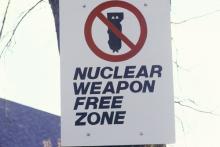
HOW MANY NUCLEAR weapons make us "safe"?
At the height of the Cold War, both the U.S. and the Soviet Union had tens of thousands of nuclear warheads, aimed at each other's cities, towns, and military targets. Not many felt that the world was somehow made safe by this hair-trigger, apocalypse-risking standoff.
The Soviet Union is long gone, but the Cold War mentality that fueled the era's nuclear arms race seems to linger on. According to a December report by the Federation of American Scientists, the world's combined stockpile of nuclear warheads is still more than 17,000. Of these, the report continues, "some 4,300 warheads are considered operational, of which about 1,800 U.S. and Russian warheads are on high alert, ready for use on short notice."
President Obama, for his part, has laid out what he called his "vision of a world without nuclear weapons." In a speech last March in Seoul, South Korea, Obama said the goal of a nuclear-free world "would not be reached quickly, perhaps not in my lifetime," but that it must begin "with concrete steps." He continued, the "massive nuclear arsenal we inherited from the Cold War is poorly suited for today's threats," and "we can already say with confidence that we have more nuclear weapons than we need." (That could be considered a gross understatement, since the next leading nuclear threat—China—has only about 50 warheads on ICBMs that could reach the U.S.)
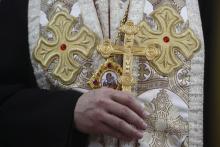
FATHER JACK MORRIS was one of those Catholic priests who ruined a lot of people for life. I'm one of them.
Father Morris passed away Sept. 30 in Spokane, Wash. He was working with the Catholic sisters and others who ran the highly regarded Copper Valley School in Alaska in the late 1950s when he took the idea of young people volunteering their time with and for Native Alaskans and helped turn it into the Jesuit Volunteer Corps. Since then, more than 12,000 people have served in the JVC, whose motto "ruined for life" reflects the fact that voluntary service often makes enduring changes in the way participants view the world. (A few years ago, Father Morris told Sojourners that the motto is "a resurrection statement"—through volunteering, he said, "you're transformed.")
I spent my first two years after college as a Jesuit Volunteer, first at the Oregon Center for Peace and Justice in Portland and then at Georgetown University's Center for Peace Studies. My mentor and boss in Portland was the center's director, Sister Michele Phiffer. She worked for years helping Catholics in Oregon understand the church's social teaching on the common good and the preferential option for people who are poor.
Perhaps needless to say, the local bishops weren't always on her side. In fact, it often appeared—even to my young eyes—that the bishops were more interested in protecting their own privilege and power than in genuinely working for the marginalized. And Sister Michele's gender seemed to be a factor in the lack of support she received from the episcopal powers that were.
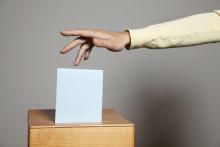
ELECTIONS CAN BE challenging times for nonprofit organizations, especially those of us deeply committed to social change. Sojourners is incorporated under the IRS Code as a 501(c)(3) organization, which means that we are prohibited from “directly or indirectly participating in, or intervening in, any political campaign on behalf of (or in opposition to) any candidate for elective public office.”
While scrupulously avoiding “intervening” in any partisan activities, we of course remain committed to our mission, which is to “articulate the biblical call to social justice, inspiring hope and building a movement to transform individuals, communities, the church, and the world.”
Those two poles—staying neutral in partisan campaigns, on the one hand, and working to build a movement to “change the world,” on the other—define the space within which we work, during an election year and at any other time.
We believe that elections matter—especially, from a biblical point of view, because they profoundly affect those that scripture calls the “least of these,” the likelihood of war or peace, and the health of our planet. (See Jim Wallis’ article “How to Choose a President” for more on that theme.) And many of us have strong convictions about which candidates, and which party’s approach, better reflect those biblical commitments.

HEY PRESIDENT OBAMA: The Nobel Peace Prize committee is calling. They want their medal back.
The coveted award, which many felt was premature, at best, when bestowed during the president’s first year in office, was seriously tarnished in the eyes of many by his escalation of the war in Afghanistan and other military endeavors.
But Obama’s role in waging drone warfare—particularly in Pakistan and Yemen—has made a mockery of the prize that Alfred Nobel said should go to the person “who shall have done the most or the best work for fraternity between nations.”
Obama’s drone attacks—according to a May investigation by The New York Times, Daniel Klaidman’s new book Kill or Capture, and other sources—are arguably in direct violation of U.S. and international law, and immoral to boot.
The drone attacks started out with clear rules: Only target those who represent a direct threat to the United States. Those rules soon went out the door—a senior U.S. official called it a “little liberalization that went on in the kill lists,” according to The Washington Post, while a former counterterrorism official said that “the elasticity of that has grown over time.”
It’s a good sign we’ve entered the election silly season when pundits are arguing against “fairness.” What’s next, apple pie? (Motherhood, of course, is already a battleground of the “mommy wars”—Lord help us!)
The Democrats are trying to take the pro-fairness side of the debate, in particular around the issue of tax rates for the wealthiest Americans. The so-called Buffett Rule—named after billionaire Warren Buffet, who pointed out the injustice of his paying a lower tax rate than his secretary—became a key talking point the week before April 15.
Here’s how President Obama put it: “Right now, the share of our national income flowing to the top 1 percent has climbed to levels we haven’t seen since the 1920s. And yet those same people are also paying taxes at one of the lowest rates in 50 years. That’s not fair.” (The Occupy movement arguably deserves most of the credit for that framing of the issue.)
The president’s political opponents were quick to dismiss the focus on tax fairness as campaign rhetoric aimed more at the fall elections than any meaningful policy goals. It’s a safe assumption that pretty much anything between now and November has that partisan goal in mind, and—perhaps not surprising—fairness polls well.
But the critics didn’t stop there. Conservative columnist Charles Krauthammer, for instance, called the Buffett Rule “nothing but a form of redistributionism,” and said that focus on the tax fairness issue “is an exercise in misdirection.” Minority Leader Mitch McConnell said that having the rich pay a higher tax rate “won’t take a single person off the unemployment line.” (It also won’t end the war in Afghanistan, he didn’t add.) Others brought out the tired accusation of “class warfare.”
IT’S EASY to make the assumption that obesity is an individual problem, having more to do with personal health than with social justice. After all, people make their own decisions about what they put on their plates and how much they put in their mouths.
But many people—and many churches—are starting to see not only the public health consequences of the obesity epidemic, but also the broader forces that contribute to it.
And “epidemic” isn’t too strong a word for the growing problem of obesity. The numbers in the U.S. are unsettling, with startling increases over the past few decades. But the worst may be yet to come, as billions of people in formerly developing countries are gradually globalized into “fast-food nation” lifestyles.
The transition has already begun. According to a recent U.N. report, more than 1 billion people around the world are overweight. Each year excess weight and obesity cause 2.8 million deaths—65 percent of the world’s population now lives in countries where being overweight kills more people than being underweight. And it’s only going to get worse: According to Olivier De Schutter, the U.N. special rapporteur on the right to food, by 2030 as many as 5.1 million people in poor countries will die each year before the age of 60 from unhealthy diets and diet-related diseases such as diabetes, 1.3 million more than today.
The definitions of hunger and malnutrition are changing, and as a result so are the responses—but perhaps not quickly enough.
More than 5 million voters could be affected by new Voter-ID laws and (coincidentally?) a disproportionate number of them are people of color.
Occupy has already succeeded, its legacy already established: It has changed the conversation.