“YOU HAVE MADE us for yourself, O Lord, and our hearts are restless until they find their rest in you.”
These oft-quoted words, delivered from pulpits, books, and classrooms through the centuries, came from the theological giant St. Augustine. Augustine is widely noted as one of the most important theologians in Western Christianity. His acclaimed works, most notably Confessions and City of God, have shaped the thinking and spirituality of pastors, scholars, and regular church-going folk.
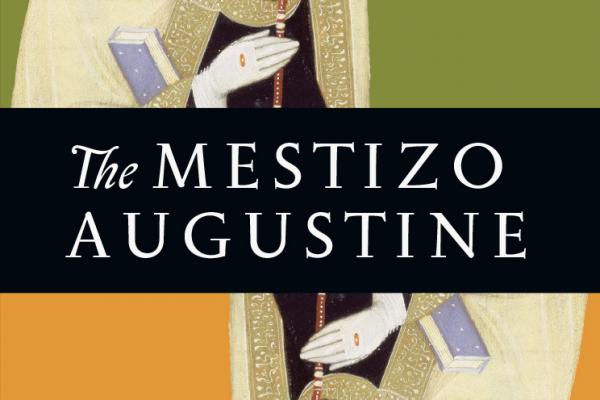
However, even with all the pages written about Augustine, there’s been a missing element that hasn’t been significantly excavated, namely, Augustine’s mestizo makeup. This is why historical theology scholar Justo González’s new book, The Mestizo Augustine: A Theologian Between Two Cultures, is a welcome and much-needed contribution to Augustinian theology.
The central thrust of The Mestizo Augustine is the exploration of the “mestizo” nature of Augustine and his theological journey. The word “mestizo” (which flows out of Latino/a theology) is a Spanish word that captures what it means to be of mixed heritage. Being mestizo is a recognition of hybridity or, as González notes, “to belong to two realities and at the same time not to belong to either of them.” This mestizaje lens is needed to better understand Augustine.
González unpacks the African/Roman hybridity of Augustine. This hybridity manifested in language, philosophical frameworks, and traditions. For example, being mestizo, Augustine lived in two worlds as it pertained to understanding the concept and practice of authority. González notes that in African culture, authority rested in the holiness, wisdom, and charisma of a leader. In Roman culture, authority did not rest on individual character but “in the function to which that person had been assigned.” Being mestizo meant Augustine needed to wrestle with the implications of these two worlds.
As a U.S. Latino (of Puerto Rican descent, born in New York), I found myself deeply identifying with Augustine’s narrative and Sitz im Leben (his social context). While he lived in two cultures, he favored the language of one (Latin), while remaining loyal to his Northern African heritage. With my limited Spanish, I regularly experience an “in-between-ness” similar to Augustine’s.
This bicultural portrayal of a theological giant is necessary for a few reasons. First, it serves as an accessible primer for anyone looking to explore the core focus areas of Augustinian theology.
Second, González importantly normalizes the mestizo nature of history. He notes, “whether we realize it or not, all cultures and civilizations have arisen out of various forms of mestizaje—the Greco-Roman mestizaje, the Latin-Germanic mestizaje, the Saxon-Norman mestizaje, the Iberian-Amerindian.” Historically, to be mestizaje has been seen pejoratively, as somehow contaminating the notion of purity. However, González helps us to see the inherent beauty and ubiquitous nature of hybrid culture.
Third, The Mestizo Augustine reminds us that theology needs to be seen in the light of space and time, not through a gnostic acultural and ahistorical lens. It’s ironic that many approach the great theologians of history without a careful consideration of context. In light of Augustine’s rejection of Manicheanism, it makes sense that readers should consider the concrete reality that shaped his thinking and practice. In this respect, González helps us see that theology is always geographical and biographical. The local narrative perspective that Augustine presents is a gift. His North African/Roman context doesn’t limit the impact of his theology, especially when one recognizes that all theology flows from a particular locale.
Due to the richness of González’s articulation of history, I was hungry to hear more of the bicultural implications of Augustine’s theology.
The Mestizo Augustine provides much-needed nuance to understanding one of the church’s most influential figures.

Rich Villodas (@richvillodas) is lead pastor at New Life Fellowship Church in Queens, N.Y.

Did this article have an impact on you? Tell us how! Whether you’re moved to take action, have a question, or want to share a comment (good or bad), we value your feedback!