The recent botched attempted executions of Christa Pike and Tony Carruthers in Tennessee have laid bare what it is we are doing in my state in the name of justice—and people of faith are horrified by it.
As an anti-death penalty advocate, I have noticed a growing concern about the death penalty within many Christian communities here. Jury decisions in predominantly Christian Tennessee reflect that, with only five new death sentences since 2013.
These most recent, ghastly failed executions have lifted the veil of decorum imposed by the state to demonstrate the truth about lethal injection. As long as the process looks sanitized, it is much easier for people to accept. But when things go wrong, it suddenly becomes clear what we are doing. On that human level, it has shaken people.
The death penalty inflicts trauma on everyone—victims’ families, correctional officers, lawyers, media members—each person in contact with this system is being hurt in some way. This is not acceptable. We know that violence does not heal us. Only love can do that. The death penalty is a perpetuation of harm.
As followers of Jesus, we are called to live into his way of being in the world—loving without condition, showing mercy even to those who have not shown it themselves, welcoming the outsider, the vulnerable, and yes, the sinner—all of us claimed as God’s own. We pray, “Forgive us our debts, as we forgive our debtors,” recognizing that the mercy we receive is only as impactful as the mercy we extend. The gospel message at its core demonstrates that God’s love has the power to make us all new. And that truth applies to the greatest saint and the worst sinner alike, thanks be to God.
I have seen that newness in many of those sentenced to death in Tennessee. For some, because of the care of their attorneys, spiritual advisors, and others incarcerated with them, they finally experience the love and support that they need to even contemplate that they too are worthy of change. As Christians, this change is something to be celebrated. We can simultaneously provide space for God’s love to transform those who have done terrible things while also demanding accountability for the harm they caused. One does not negate the other.
READ MORE: The Death Penalty Is a Failed Experiment in the U.S.
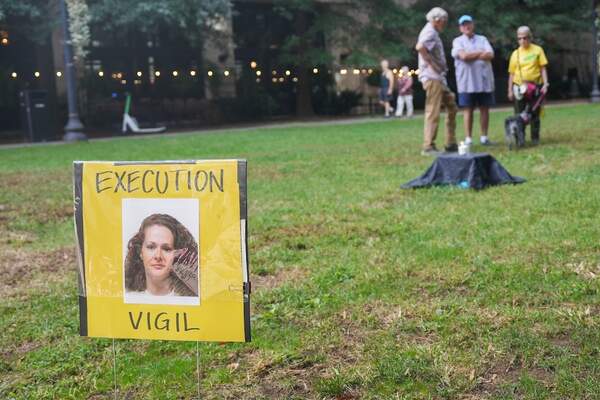
An 18-year-old Pike did a terrible thing in beating, torturing and, finally, taking the life of Colleen Slemmer in 1995. That harm cannot be undone, and Slemmer’s family needs all the love and support that we can provide them for their healing journey. But nothing about what happened to Pike in that execution chamber was healing for anyone.
Pike is not asking for freedom. Over the years in prison and after being properly diagnosed and treated for her mental illness, she understood the severity of the crime and felt a deep remorse for what she did. She was prepared to die in prison, where she only hoped that could spend the rest of her life trying to do some good for others. Women who were held at the same prison as her have recently shared about the ways in which she befriended them—young, scared, and alone.
When asked, “Which commandment in the law is greatest?” Jesus replies, “The first is, ‘Hear, O Israel: the Lord our God, the Lord is one; you shall love the Lord your God with all you heart, and with all your soul, and with all you mind, and with all your strength. The second is this, ‘You shall love your neighbor as yourself. There is no other commandment greater than these.’”
In such love, there is no space for the death penalty.
These most recent, ghastly failed executions have lifted the veil of decorum imposed by the state to demonstrate the truth about lethal injection.
Did this article have an impact on you? Tell us how! Whether you’re moved to take action, have a question, or want to share a comment (good or bad), we value your feedback!