Muslim surveillance

As my kids have grown into teenagers, their behavior has changed. My daughter is less interested in hanging out with me and prefers sitting in her room glued to her computer. My son plays Nintendo war games. When current events are discussed in our home, we sometimes disagree vehemently. According to Homeland Security adviser Lisa Monaco, I should be on my guard because these might be signs that my kids are about to head off to join the Islamic State.
Sounds absurd, right? But that’s the message to Muslim communities as part of the administration’s initiative to “counter violent extremism.”
In September, the Justice Department announced it was launching the program and piloting it in Boston, Los Angeles and Minneapolis. The stated aim was to bring together community, religious leaders, and law enforcement to “develop comprehensive local strategies and share information on best practices” for countering violent extremism. Although the initiative doesn’t mention the word “Muslim,” those adherents are clearly the targets. The secretary of the Department of Homeland Security has promoted it to Muslim communities across the country. It has the support of the White House, which is hosting a summit on the topic this week.
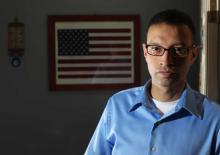
At 26, Syed Farhaj Hassan was a devout Muslim, and a man who took a lot of pride in being one of the relatively few Muslim Americans to join the military and then go to war in Iraq.
He dropped out of Rutgers University and enlisted in the U.S. Army in 2001. He was sent to Iraq two years later, where he served with a unit that assessed and planned the rebuilding of places like the war-torn city of Hillah, where he even slept some nights in one of Saddam Hussein’s palaces.
Born in Chicago and raised in New Jersey, he’d grown up engrossed in military-themed TV shows like “M*A*S*H” and “G.I. Joe.” And nearly a decade after his war service, he’s still patriotic — he’s even an active reservist in a civil affairs brigade.
But these days, Hassan is also frustrated and upset with an arm of the U.S. government. Hassan said that he’s been “betrayed” by the New York City police department for its years of post-9/11 spying on Muslim communities in New Jersey.
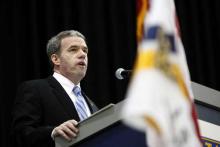
Islamic leaders say they are shocked that a review by New Jersey's state attorney general into the New York Police Department’s secret surveillance operation targeting Muslim businesses and mosques in New Jersey found the NYPD did nothing wrong.
The three-month probe, ordered by Attorney General Jeffrey Chiesa, concluded there was no evidence to show the NYPD’s activities in the state violated New Jersey’s civil or criminal laws.
"Based on what we saw, their conduct was permissible," said one of the officials involved with the review who was not at liberty to discuss the report publicly. "There was no evidence of illegal wiretaps or search and seizures. We’re not seeing any violations of law."