extractive industries
POLITICAL SCIENTIST Thea Riofrancos has written extensively on the politics and economics of mining. “Extraction is a very old practice. We can say that it is as old as human history,” said Riofrancos in a Granta interview this year. With the rise of European empires in the 15th century, extraction led to conquest in search of valuable minerals. Conquest led to territorial occupation, consolidation of forced labor, and centralized foreign control over resources. And it is all still happening — now, on a planetary scale. This is why Pope Francis describes the Earth as the “new poor,” and thus as a locus of liberation.
The logics of extraction and occupation are entwined. Driven by economics, both view certain human lives, and any part of nature, as marketable and disposable by the cheapest means of violence and destruction. These logics thrive on the constant retraumatizing of the environment and of Black and brown bodies, to keep them compliant and prevent them from consolidating power. These are presented as necessary sacrifices for civilization to “advance.” Colonial laws remain in many post-colonial nations, and elite communities in those countries continue to benefit from resource control, perpetuating the violence and oppression of the colonial project.
In the age of climate collapse, these sinful logics come back to haunt us. For example, as the geographer Kenston Perry has highlighted, the Caribbean region has faced enormous losses from climate-induced natural disasters. This is a result of colonial systems that prioritized extractive plantation agriculture instead of protective ecosystems and disregarded Indigenous practices and knowledge of the environment. The fate of the poor, the marginalized, and those on the wrong side of western colonialism is inextricably tied up with the fate of the planet.
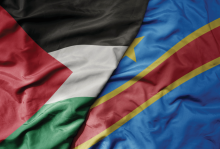
The environmental crises in Congo from mining and in Gaza from war provide two examples of how extraction and occupation are twin sins.
Bishop Kevin Dowling, the Catholic bishop of Rustenburg, South Africa, is co-president with Marie Dennis of Pax Christi International, representing the global Catholic peace movement. The massacre by South African police of 44 striking miners at British-owned Lonmin's platinum mine in Marikana is in Bishop Dowling's diocese. He is an active leader in the Catholic nonviolence movement.
Agenzia Fides reports from Johannesburg:
"Maybe tomorrow, August 29th, there will be the signing of an agreement between the unions and the managers of the platinum mine in Marikana (North West Province, in South Africa). This was reported to Fides Agency by His Exc. Mgr. Kevin Dowling, Bishop of Rustenburg.
"We hope the efforts of the government to sign a reconciliation agreement tomorrow among four trade union organizations and the management of the mine is successful," said Mgr. Dowling.
"Negotiations are still in progress and relate in particular to an increase in wages. Tension is still very high and workers who want to return to work are blocked with threats by strikers," said the Bishop, who is participating in efforts to negotiate with the other Christian leaders who are part of the South African Council of Churches.
On August 16, a union protest in the Marikana mine degenerated into violence: the police shot and killed 34 miners. In the fighting a total of 44 people died. In a statement sent to Fides Agency the Southern African Catholic Bishops'Conference (SACBC) called for a thorough investigation into the massacre and condemned the violence.
Read the rest here.