extinction of species
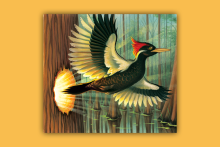
The ivory-billed woodpecker has been called “Lord God Bird,” for its massive size; “Grail Bird,” for the fervor with which people seek it; and “Ghost Bird,” for the way it hovers on the murky edge between existence and extinction. But Cornell ornithologist Tim Gallagher, author of The Grail Bird, calls it “Lazarus Bird,” after the story of Jesus resurrecting his friend Lazarus four days after he died.
Growing up in the church, I was never sure what to do with resurrection. My father’s faith didn’t emphasize the idea that Christ died for my salvation, or that Christ’s believers would be raised from the dead, but these beliefs were everywhere—in the hymns we sang in the various United Methodist churches where he served as pastor, in the creed we recited every Sunday: I believe in ... the resurrection of the body, and the life everlasting.
From my seat in the pews, the promise of everlasting life rang hollow. I did not expect decomposed bodies of believers would one day be reconstituted, nor did I see this as desirable for myself or the people I loved. But metaphorical interpretations of resurrection also fell short: A body raised symbolically from the dead is still very much dead. In graduate school, I read about Thomas Jefferson’s excision of miracles, including the resurrection, from his Bible with a sense of relief. The stories I couldn’t believe literally or understand figuratively, could be simply cut away. But as I’ve grown older, these stories resist neat excision. To dismiss resurrection entirely feels increasingly fraught: Why did faith matter if it did not transform real bodies, real lives, here on earth?
For the past 30 years, through my work with Maryknoll and Pax Christi International, I've come to know grassroots communities around the world in situations of war and poverty. My mission focus base been largely international, but people, were in the "center of my screen." The environment, I thought, would have to wait.
A few weeks ago, I went with two of my grandchildren, Lauren (10) and Bobby (9), to see the documentary Hubble, which is about NASA's final shuttle expedition to repair a a broken part of the Hubble telescope. We watched in awe at the spectacular photos of the expanding universe. What an amazing sense these photos give of our own location as humans who are part of a larger earth community, who are part of a cosmos with which our own future is inextricably linked.