Missouri
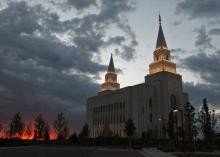
In 1831, Mormon founder Joseph Smith declared that the righteous would gather in Independence, Mo., to greet the Second Coming of Jesus Christ — just one of the prophecies that estranged his faith from traditional Christianity.
Thousands of converted Mormons moved from Ohio and upstate New York to claim their New Jerusalem. Disputes with Missourians led to a bloody Mormon War that ended only when the state's governor issued an "extermination order" to expel Smith's followers.
Today, few places are better to contemplate the evolving — but still uncertain — relationship between Mormonism and the country where it was founded.
On the one hand, Missouri symbolizes how far Mormons have come. At least 66,000 Mormons now live in the state, more than triple the number of just three decades ago. Most recently, the LDS church has built a temple in Kansas City, Mo., near the epicenter of the Mormon War.
But Missouri also serves to highlight the intractable differences between mainstream Christianity and Mormon theology.

ST. LOUIS — Don Hinkle stands out among the serious, conservative men of the Missouri Baptist Convention. Not that Hinkle isn't conservative or serious. He is both. But Hinkle prefers bow ties, which — along with his white, furry mustache and thatch of white hair — give him a sort of plump Mark Twain air.
Late last week, a church-state watchdog group in Washington filed a complaint with the Internal Revenue Service accusing Hinkle, who is also his organization's director of public policy, with violating federal tax law by intervening in two campaigns for public office.
Those were the Republican primary campaigns of U.S. Rep. Todd Akin for U.S. Senate, and Ed Martin for Missouri attorney general.
The 500,000-member Missouri Baptist Convention is the state arm of the Southern Baptist Convention, the largest Protestant denomination in the country, with about 16 million members.
In his column in the May edition of the Pathway, the state convention's newsjournal, Hinkle wrote that while he did not want an American theocracy, "when it comes to public policy, Southern Baptists must be motivated by love for our fellow citizens, believing that God's way is the best way."
For that reason, Hinkle continued, "I personally support candidates like U.S. Rep. Todd Akin, a Republican who wants to challenge Democrat Claire McCaskill for her U.S. Senate seat, and Republican Ed Martin, the St. Louis attorney who is running for state attorney general."
"From a scientific standpoint, what's legitimate and fair to say is that a woman who is raped has the same chances of getting pregnant as a woman who engaged in consensual intercourse during the same time in her menstrual cycle," said Dr. Barbara Levy, vice president for health policy at the American Congress of Obstetricians and Gynecologists.
One widely accepted study suggests a 5 percent pregnancy rate following rape, resulting in 32,000 pregnancies each year.
The report was from the Medical University of South Carolina and was published in the American Journal of Obstetrics and Gynecology and cited by the U.S. Centers for Disease Control and Prevention.
But placing an exact figure on post-rape pregnancy is problematic, primarily because rape is thought to be underreported. Another factor is the availability of over-the-counter emergency contraception, which can prevent fertilization when taken after intercourse.
One study from the journal Human Nature in 2003 suggests pregnancy rates are higher after a rape when compared with consensual sex because of the inconsistency of birth control use.

Voters in Missouri overwhelmingly approved a "right to pray" amendment to the state's constitution on Tuesday, despite concerns about the measure's necessity and legality.
Amendment 2, which supporters said would protect the freedom of religious expression in public schools and other public spaces, received nearly 80 percent of the vote.
The language on Tuesday's ballot stressed the rights of citizens to express their religious beliefs and the rights of children to pray and acknowledge God in schools. It also stated that students could be exempted from classroom activities that violate their religious beliefs.
State Rep. Mike McGhee, a Republican who sponsored the amendment, said it would remind people about their religious freedoms, such as reading religious books at school. "It's OK to bring your Bible to study hall," he said.
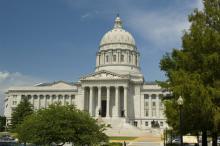
Missourians will vote on Tuesday on a proposed amendment to the state constitution that supporters say would protect residents' right to pray in public. If a recent poll is any indication, it could pass by a mammoth margin.
Supporters say the so-called "right to pray" ballot measure — known as Amendment 2 — better defines Missourians' First Amendment rights and will help to protect the state's Christians, about 80 percent of the population, who they say are under siege in the public square.
Opponents, meanwhile, say that the religious protections Amendment 2 would offer are already guaranteed by the Bill of Rights and the U.S. Constitution, and that it will open the door to all manner of unintended and costly consequences including endless taxpayer-funded lawsuits.

DES PERES, Mo. — More than 100 Lutherans streamed into the basement classroom at St. Paul's Lutheran Church in Des Peres recently for a Bible study called "Islam Through a Lutheran Lens."
It was a better-than-expected showing, and people carefully balanced their Styrofoam coffee cups as they rearranged extra folding chairs into rows to capture the overflow crowd.
"We're going to be looking at (Islam) though the lenses we have been given through God's word, the Scriptures and the Lutheran confessions," the Rev. Glen Thomas told them. The executive director of pastoral education for the Lutheran Church-Missouri Synod had taught a similar series of classes in the fall called "Mormonism Through a Lutheran Lens."
"How many people here know a Muslim?" Thomas asked.
Three hands went up. Thomas pressed on.
It was an eventful night in the GOP primary race last night, with some surprises in the results.
See the best of the reaction to what happened right here:
In The New York Times, Rick Santorum’s trifecta of victories was called “another twist to an unruly nominating contest that has seen Republican voter veering among candidates and refusing to coalesce behind anyone.”
Former Senator Santorum’s victory has been put down to the voting preferences of “evangelicals and Tea Party adherents”, who make up a significant percentage of the electorate in all three states. One pundit noted that when it comes to voting:
“evangelicals, they get out. Cold, wind, rain or snow, they get out.”