local politics

THE THREE SHORT rows of folding chairs for the public were not full, but this was the highest attendance I had seen at a city council meeting. I was curious how the mayor and council members would respond this time. Community members had showed up to support a couple fighting what they felt was an unfair $20,000 building code violation fine.
After some preamble, the floor opened for public comment. A handful of residents of the small midwestern city where I live came to the podium for their allotted three minutes. “We’ve lost the adult in the room,” one woman said. “I implore the council to consider the human aspects,” a man said. He asked if the building board of appeals would be seated to review this case.
The mayor blinked, expression unchanged, “We can’t comment, and your time is up.”
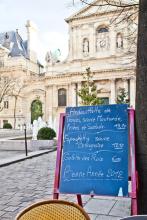
You can tell from its menu whether a restaurant expects to serve tourists, locals or regulars.
At a tourist-centered eatery like those near Times Square, the menu typically is huge: many pages, difficult to scan, sometimes difficult even to hold. There's something for everyone and it's designed to please customers who are strangers.
A restaurant catering to locals will have a much leaner menu, maybe just four or five items in each category. They will all be of a certain type—no words like "Asian fusion" to disguise lack of focus. If the joint is Korean, it will serve Korean.
A third and much rarer type is the restaurant that offers just one multi-course meal each night. Regulars go expecting to be served the chef's whim of the day, not handed a long menu.
When customers are strangers, the owner must imagine what will please a patchwork of German tourists, Chinese tourists, families from Iowa, young techies on the prowl, and marketers in town for a convention.
The better an owner knows the customers, the more focused the menu can be. If not the actual customer, at least the type of person who will come in.
Voting isn't all that different. When politics is local, candidates tend to know their people or at least know their interests, worries and hopes. This is the level at which democracy tends to work best. Leaders know their people, people know their leaders, and known interests are at stake.