leaving church

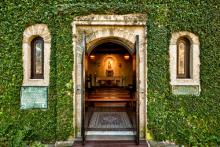
Churches are obsessed with doors. Churches bless these doors, paint them red, hold them open, photograph them, and put welcome signs on them. We tell the frightened person, the estranged child, the gay man, the addict, the doubter, the refugee, the person who has been made to feel impossible: Come in; there is a place for you here.
I believe in that sentence. But to the end of that greeting we should add: “and you can leave whenever you want.”

Even in the depths of high-control religion, there were moments of being fed and cared for that I did not know I missed until I did.

I DID NOT leave my church on a whim.
It actually took me and my spouse two years to slowly rip the bandage off and leave. After more than a decade of sitting on the left side of the sanctuary, serving on the worship team, starting a drama group, learning the language of the denomination and congregation, pricing countless items at the annual rummage sale, and teaching confirmands, we decided it wasn’t the church. It was us.
It wasn’t about what was said or wasn’t said on a single Sunday after yet another national tragedy or shocking event. It wasn’t one sermon or one congregational prayer. It was a long silence over years—silence from the pulpit, silence from the hymns and contemporary love songs to Jesus and God, silence from the congregation even when the denomination tried to make a sound, silence as #BlackLivesMatter trended, silence after #Charleston.
The silence was so loud, it almost drowned out the painful words that were spoken. They attempted to diminish and ignore the pain that was real for us and our family, week after week, month after month, year after year. We were asked to bring a dish for the cultural potluck, but not too much, so our feelings wouldn’t be hurt if people didn’t like what we brought.

SALT LAKE CITY — For years, Matt Duff was an uber-Mormon.
At 17, he ran away from home and moved in with the only black Latter-day Saints family in his New England town.
Two weeks shy of his 18th birthday, he joined the Utah-based Church of Jesus Christ of Latter-day Saints.
By 19, he was on a Mormon mission in Denver, and two years later he enrolled at Brigham Young University-Idaho, where he met his future wife, Kylee, a multigenerational Mormon with a winning smile and a guileless faith. The two married in the Salt Lake LDS Temple.
Eight years and three children later, Matt Duff stopped believing.
I’ve written a couple of pieces recently that have gotten a lot of attention about why younger people tend to walk away from church.
If you haven’t seen them yet, here are the links:
Seven Reasons Why Young Adults Quit Church
Four More (BIG) Reasons Why Young Adults Quit Church
Some readers suggested I might also post a piece about why young adults come back to church. Though I can’t say for sure why ALL young adults in church do so, I can share a few reasons why I, as a young adult, returned to church after an absence of ten years.