
To start, a story.
A few years ago a female student wanted to visit with me about some difficulties she was having, mainly with her family life. As is my practice, we walked around campus as we talked.
After talking for some time about her family situation we turned to other areas of her life. When she reached spiritual matters we had the following exchange:
"I need to spend more time working on my relationship with God."
I responded, "Why would you want to do that?"
Startled she says, "What do you mean?"
"Well, why would you want to spend any time at all on working on your relationship with God?"
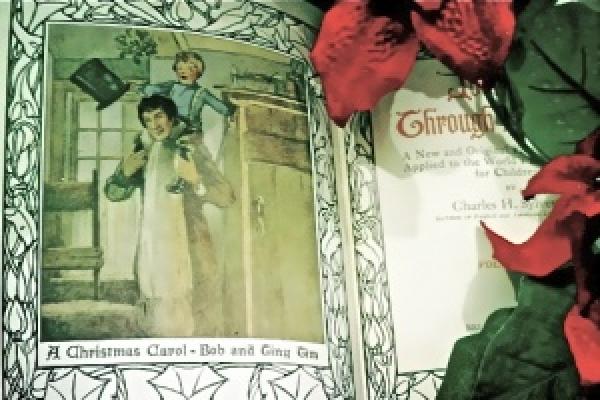
Scrooge repented, promised to “honor Christmas in his heart” all year long and to never forget the lessons of the three spirits.
He celebrated Christmas day with his nephew, sent the Cratchit family a prize Christmas turkey and then given Bob Cratchit a raise. He became a second father to Tiny Tim, was known as a good man in the city and was remembered for his ability to keep Christmas well.
But, as Dickens pointed out, this didn’t come without some laughter and derision.
Some people who knew Scrooge as a misanthrope before, now saw the old, mean man as a fool. The radical conversion Scrooge underwent caused some to question whether this new Ebenezer was still of sound mind.
This is as it should be.
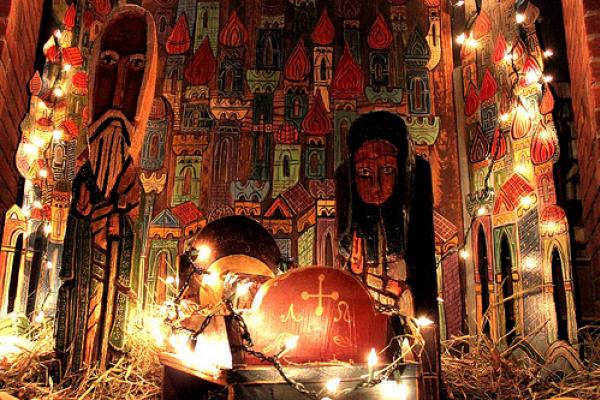
At the center of the nativity picture is that baby in the manger.
That baby Jesus will be many more things as his life, death, resurrection and eternity continues but here in the straw, and central to everything he will do and be, he is a symbol of grace.
This is what Christianity boils down to. This is it at its most naked. Shed the tragedies of Christian history, the boredom of what you’ve experienced in Church (how was that possible!), the legalism that has oppressed your youth or whatever else has damaged your perspective of God and you are left with this amazing concept of grace.
Put most simply, grace is the “unmerited favor” of God.
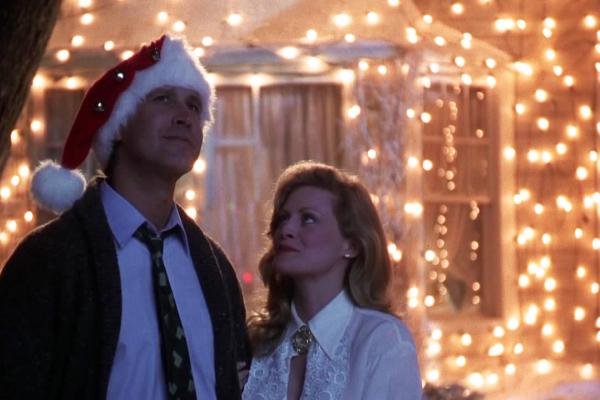
On this Christmas Eve, as you gather with "kith and kin" on the threshold of the Christ Child's birth, we give you a moment of familial rejoicing from the Clark W. Griswold family of Chicago's North Shore and the great Christmas light miracle of 1989.
JOY TO THE WORLD! (Drum roll, please...)
It is with death that Dickens begins his story and it is with death that Scrooge completes his journey with the Ghost of Christmas Yet to Come.
Scrooge hears other businessman saying that they wouldn’t attend the funeral unless there was sure to be lunch served. Men for whom he had great business esteem gave no more thought to his death than they did the weather. There were thieves who stripped the clothes off his dead body and the curtains from around his bed.
He begged the Spirit to show him a scene in which some person, any person, was moved to emotion at his death. The Spirit brought him to the house of a debtor who rejoiced with his wife at the death of Scrooge because now they might have time enough to pay back their loan. When he was shown the Cratchit household there was no mention of Scrooge at all, only mourning for the passing of Tiny Tim.

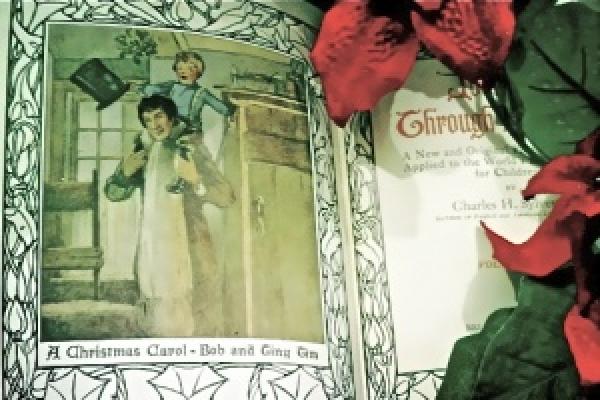
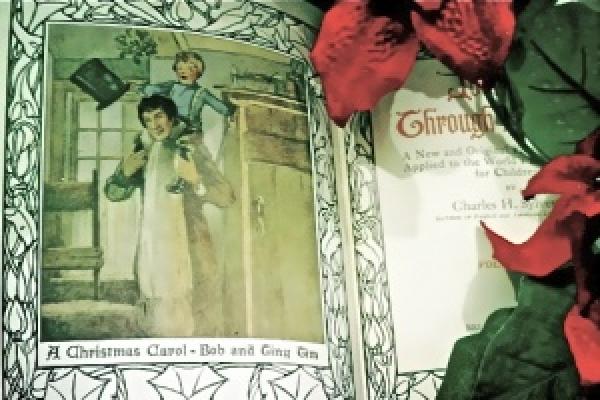
When I imagine Jesus telling his disciples, “Let the little children come to me,” I have a vision of the adults moving aside and Tiny Tim with his crutch crawling into the lap of Christ.
In the scene where Tiny Tim is introduced, his father tells this story of him:
“Somehow, he gets thoughtful, sitting by himself so much, and thinks the strangest things you ever heard. He told me, coming home, that he hoped the people saw him in the church, because he was a cripple, and it might be pleasant to them to remember upon Christmas-day who made lame beggars walk and blind men see.”
It is this child like faith that moves Scrooge to ask the Ghost of Christmas Present if the boy would live to see another Christmas. The spirit answers that he sees an empty chair at the next Cratchit Christmas. Scrooge begs for the future to be changed and the boy spared.

The Ghost of Christmas Past showed Scrooge a total of five visions. It is only the last two which are dark. The first three show the seeds of Scrooges own repentance.
The first vision shown to Scrooge by the Ghost of Christmas past is that of a young Scrooge reading alone, neglected by his peers, just before Christmas. Scrooge, watching his old self, begins to cry.
“What’s the matter?” asked the Spirit.
“Nothing,” said Scrooge. “Nothing. There was a boy singing a Christmas Carol at my door last night. I should have given him something: that’s all.”
The specter of Jacob Marley entered Scrooge’s room. It had been seven years to the day since Marley died.
Before he sees them, Scrooge hears the clanking of the heavy chains his old business partner now carries with him.
Scrooge asks how it is that Marley became thus fettered.
“I wear the chain I forge in life,” replied the Ghost. “I made it link by link, and yard by yard; I girded it on of my own free-will, and of my own free-will I wore it.”
Marley did not realize in life that he was a slave. He assumed that his wealth and the absence of external restraints meant he was free, when in fact his miserly and selfish ways were forging the means of his own bondage.
Scrooge calls Christmas a “humbug.”
When his nephew tries to convince him otherwise, Scrooge responds:
“Merry Christmas! What right have you to be merry? What reason have you to be merry? You’re poor enough.”
The nephew retorts:
“What right have you to be dismal? What reason have you to be morose? You’re rich enough.”
The nephew concludes with this famous line about the holiday:
“Therefore, uncle, though it has never put a scrap of gold or silver in my pocket, I believe that it has done me good, and will do me good; and I say God bless it!”
Each day leading until Christmas we will post a different video rendition of the "Hallelujah Chorus" for your holiday enjoyment and edification.
Today's entry is a traditional orchestration and performance of Handel's famed chorus by The Cathedral Choir of New Jersey. The video is taken from the 66th rendition of the "Hallelujah Chorus" performed by the choir on Dec. 5, 2009 at Hawthorne Gospel Church in Hawthorne, NJ.
Hallelujah Chorus from RVR Video Productions on Vimeo.