USA Today has a weekly opinion column featuring Cal Thomas, a conservative columnist, and Bob Beckel, a liberal Democratic strategist. As longtime friends, they can  often find common ground on issues that lawmakers in Washington cannot. This week’s dialogue was on the domestic use of drones.
"Cal: Do we want our government collecting a constant stream of information on our whereabouts? Drones equipped with Tasers and beanbag guns could fly over political demonstrations, sporting events and concert arenas. The ability of these machines to collect information is almost unlimited — and if we allow it to happen, we will have accepted the Orwellian vision of Big Brother. Trying to recover liberties after losing them is like trying to regain your lost virginity.
Bob: In fact, drones have already been deployed to assist local police departments, which on its face may seem like a good idea. But local police don't control the drones; that's done by trained drone pilots in the U.S. military. So police departments may request assistance on a local crime issue, but who knows what other information is being collected by the U.S. government while the drone is flying over a particular area? On the subject of using drones for domestic purposes, Cal, we have found complete common ground."
The escalating campaign of drone attacks in Yemen is having the opposite effect from what the U.S. intends:
"Across the vast, rugged terrain of southern Yemen, an escalating campaign of U.S. drone strikes is stirring increasing sympathy for al-Qaeda-linked militants and driving tribesmen to join a network linked to terrorist plots against the United States. After recent U.S. missile strikes, mostly from unmanned aircraft, the Yemeni government and the United States have reported that the attacks killed only suspected al-Qaeda members. But civilians have also died in the attacks, said tribal leaders, victims’ relatives and human rights activists."
Despite the arrest of Pope Benedict XVI's butler two weeks ago, leaks of confidential documents continue to dribble out of the Vatican as “moles” vow to continue their action until the pope's two closest aides are sacked.
The Italian daily La Repubblica on June 3 published a short handwritten note by Pope Benedict himself that was leaked from the Vatican. La Repubblica also said it had received two letters by the pope's personal secretary, Monsignor Georg Gaenswein, but chose not to publish their contents.
Novelists set down the typewriter and pick up the paintbrush -- cross stitching electrical circuts -- beautiful photos of colored ink underwater -- Improv Everywhere strikes again with a car alarm stunt -- Pulitzer-prize winning author Dave Eggers talks new novel. See these and more in Today's Links of Awesomeness...

A long-simmering conflict between the Vatican and American nuns erupted again on June 4 when the Vatican's doctrinal office issued a scathing critique of a popular book on sexual ethics by Sister Margaret A. Farley, one of the first Catholics to teach at Yale Divinity School.
After two years of study, the Vatican's Congregation for the Doctrine of the Faith published a “notification” on Farley's “Just Love: A Framework for Christian Sexual Ethics,” saying it contradicts Catholic doctrine on key issues such as gay marriage, homosexuality and divorce.
Coming just days after U.S. nuns rejected the Vatican's reasoning for a wholesale makeover, and a year after U.S. bishops sanctioned another nun theologian, the condemnation of Farley is the latest example of what critics see as a top-down attempt to muzzle women's voices and an obsession on sexual ethics.
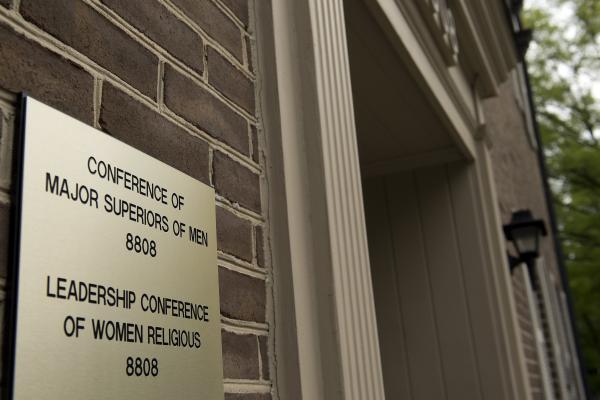
After four days of meetings, the LCWR board — which represents 80 percent of American Catholic sisters — on June 1 issued a four-paragraph statement that, in stunningly clear language, called the Vatican to “openness, honesty, and integrity.”
The same day, Seattle Archbishop Peter Sartain took 26 lengthy paragraphs to reflect in America magazine on the history of sisters in the United States and on his role as the Vatican’s point man to oversee the LCWR for the next five years: “No one expects that such a sensitive task will be accomplished quickly or effortlessly, but by God’s grace and with mutual respect, patience and prayer it can be indeed accomplished for the good of all. Challenges larger than this have been met before, with renewal and even deeper faith the outcome.”
The LCWR has a long history of standing with those on the margins of power, and now they find themselves in much the same spot. As Pax Christi noted when honoring the sisters in 2010, the LCWR is composed of “strong, prophetic, and compassionate women … always on the front lines where the weak and most vulnerable suffer at the hands of violent and unjust power.”
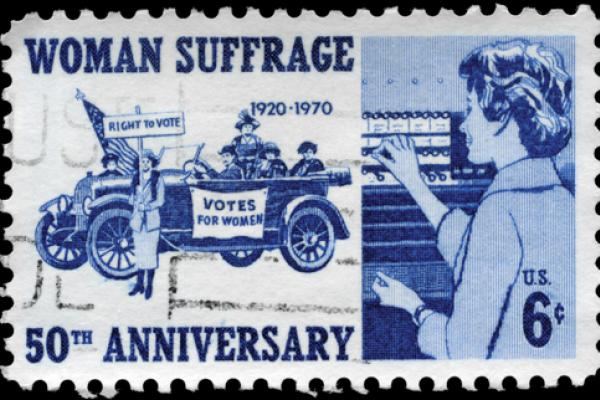
This anniversary may have passed you by, but on this day in 1919, The US Senate passed the 19th Amendment. Almost seventeen months after being introduced by the House of Representatives, women were given the right to vote.
It reads:
The right of citizens of the United States to vote shall not be denied or abridged by the United States or by any State on account of sex. Congress shall have power to enforce this article by appropriate legislation.
And after the 15th and19th amendment passed, voting rights are signed, sealed, delivered, right?

A group of Catholic monks who sued for the right to sell handmade caskets will head back to court this week, fending off an appeal from the state funeral industry after a federal judge last year struck down a state law that permitted only licensed funeral directors to sell coffins.
Three members of the 5th U.S. Circuit Court of Appeals will hear arguments June 7 n the case of the monks of St. Joseph Abbey versus Louisiana funeral homes.
The monks wanted to sell handmade cypress caskets that are made at their wood shop without paying the expensive fees and meeting the stringent requirements to obtain certification from the Louisiana Board of Embalmers and Funeral Directors. The abbey has said it counts on the casket sales to help finance medical and educational needs for more than 30 monks.
Last July, U.S. District Judge Stanwood R. Duval ruled that the state statute unfairly shielded a funeral industry monopoly to the detriment of consumers.
Writing for The Daily Beast today, Joel Kotkin argues:
The developed world’s youth shouldn’t expect much help from an older generation that has preserved its generous arrangements at the cost of increasingly stark prospects for its own progeny. Instead the emerging generation needs to push its own new agenda for economic growth and expanded opportunity.
Read more here
For The Huffington Post, Robert Gallucci writes:
Around the world, 35 million girls who should be in primary or secondary school are not; half of them are in sub-Saharan Africa, according to the World Bank. For those of us committed to addressing global poverty, improving education for girls may be the closest thing to a silver bullet.
Read the full piece here