According to Guardian, a third Taliban leader has banned polio vaccinations in the area he controls, citing fears that health workers are gathering intelligence for use in targeting drone strikes. From the report:
"Leaflets distributed in South Waziristan on behalf of Mullah Nazir, the leader of the Federally Administered Tribal Agencies (Fata) accused health workers who administer anti-polio drops of being US spies. "In the garb of these vaccination campaigns, the US and its allies are running their spying networks in Fata which has brought death and destruction on them in the form of drone strikes," the leaflet said."
It would seem that the concerns may have some merit. Shakil Afridi, a doctor who ran a hepatitis vaccination campaign, used it as cover to provide the CIA with intelligence that assisted in locating Osama bin Laden. Is that mixing of health care with intelligence gathering continuing?
In 2010, Shahzad Akbar, an attorney and founder of the Pakistani Foundation for Fundamental Rights, began filing lawsuits in Pakistan on behalf of drone strike victims. His work, according to MSNBC:
“has raised awareness of the strikes among the general Pakistani population – at the same time anti-American sentiment from a failing alliance with the U.S. is on the rise. He said his mission is to seek justice on behalf of innocent civilians killed in the drone attacks.”
When he began, little was known in Pakistan about the strikes, most of which take place in the remote, western tribal area. But now:
“Today, drones have become a political touchstone, regularly decried as part of politician's campaign speeches, prominently featured in fiery protest rallies, and sitting squarely at the center of a diplomatic war of words between the U.S. and Pakistan. … Though public perception may help him to gain traction, Akbar said his cases are based on the evidence he's gathering from strike locations in coordination with communities in North Waziristan, the tribal agency in which the overwhelming majority of strikes have occurred.”
What drives him to do this work?
"I believe in very simple principles that were taught to us by the West," said Akbar. "That everyone is presumed innocent unless proven guilty. So anyone who is killed in drone strikes, unless and until his guilt is established in some independent forum – that person is innocent."
The Economist reports on the growing tensions in the Middle East following the shooting down of a Turkish plane by Syrian forces:
"Turkey, a NATO member, was set to hold emergency talks at the alliance’sheadquarters in Brussels on Tuesday. Hillary Clinton, America’s Secretary of State, confirmed that the matter would be also brought before the United Nations Security Council. Meanwhile the European Union has agreed on new sanctions against Syria. These include banning insurance and re-insurance of arms shipments to Syria. Yet, in a further sign of western reluctance to intervene militarily Catherine Ashton, the EU’s foreign policy chief, stated “We will obviously be looking to Turkey to be restrained in its response.”
"The most Turkey can hope for is verbal condmenations," said a western diplomat in Ankara. Turkish officials insist that Turkey must respond forcefully otherwise its claims at regional leadership will be badly dented as will Mr Erdogan's image at home.
The Turkish media has speculated about an array of options including targeted airstrikes against Syrian military installations and the establishment of a buffer zone along Turkey's 900 kilometre wide border with Syria. But many observers say it is unlikely that Turkey will risk war with Syria."
Read more here
For CNN, Allison Brennan writes:
"After two years of protests, boycotts and lawsuits over Arizona's immigration law, Monday's Supreme Court decision leaves the state of immigration reform almost unchanged with states frustrated and Congress avoiding the debate. "I would guess [Congress] won't touch this with a 10-foot pole until after they come back after the election," Charles H. Kuck, managing partner at Kuck Immigration Partners in Atlanta, told CNN."
Read her full analysis here
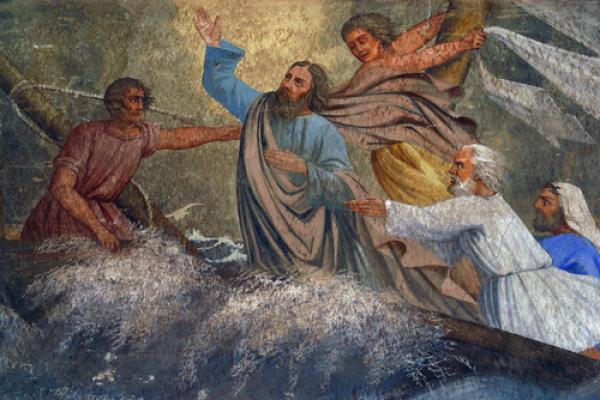
This might come as a shock to all of you, but I have not always gotten everything I’ve wanted. And I’m sure unlike all of you … sometimes I blame God for that.
As a matter of fact, there are things in life that I prayed like hell to either get or to keep – because I knew if I could have them I would be happy and all would be well. And yet, I did not get them. Some of these were slightly more critical than others.
When I was 9, I wanted a ventriloquist’s dummy I saw in the Sears catalogue and didn’t get it; when I was 14, I wanted my disfiguring auto-immune disorder to go away and it didn’t; when I was 22, I wanted to be able to drink like a lady and I couldn’t.
I had reasons, good reasons for God to do these things for me. I had a certain way I wanted things in my life to work out, and when God didn’t make these simple things happen—things I deserved, things that would make me happy—I wondered why God was not doing what I wanted God to do. I wondered why God didn’t seem to care. And by the way, why has God abandoned me?
The sexual abuse scandal has tarnished the image of the priest and contributed to a crisis of priestly vocations in the Roman Catholic Church, the Vatican said on June 25, while also faulting a widespread “secularized mentality” and parents' ambition for their children, which leaves “little space to the possibility of a call to a special vocation.”
The “Pastoral Guidelines for Fostering Vocations to Priestly Ministry” were prepared over the last seven years by the Vatican's Congregation for Catholic Education.
The document says candidates to the priesthood shouldn't be accepted if they show “signs of being profoundly fragile personalities,” and says future priests should learn the “importance” of their future commitments, “in particular with regard to celibacy.”

How do you know when someone has a Prius?
Don’t worry; they’ll tell you.
We got a Prius about four years ago, and immediately we bought into the hype about milking every gallon of gas for another tenth of a mile. We read the hyper-miler blogs about how to employ the gas and brake pedals most efficiently. We competed against each other for the best MPG. It was nerdy but fun, and we felt like we were doing something at least a little bit socially redeeming.
I haven’t seen the research, but I’m convinced that a significant chunk of the Prius’ reputation as a gas miser stems from the way its users are trained to drive it.
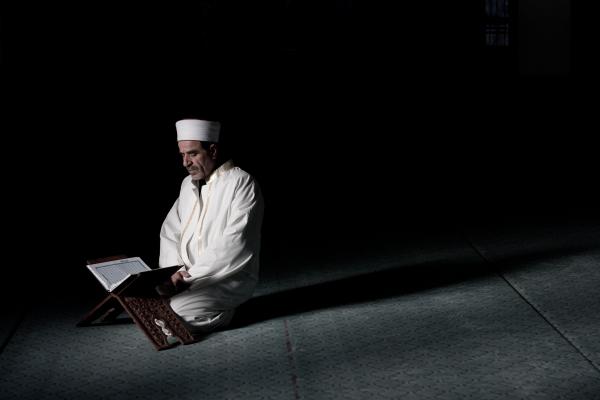
American-born imams are nearly impossible to find. Ads from mosques seeking imams who are fluent in English are readily found in Muslim-American magazines and newspapers. The North American Imams Federation, an advocacy group founded in 2002, gets more than 100 requests for help every year from mosques seeking religious leaders.
Hossam AlJabri, a former executive director of the Muslim American Society, estimated that about 80 percent of America’s 2,200 mosques were led by immigrant imams, although the majority have been in America for at least 10 years, many much longer.
According to a 2011 report from the Pew Research Center, 63 percent of America’s estimated 2.75 million Muslims are immigrants — with as many as 90,000 new Muslim immigrants arriving each year. Experts say it will be years before the pool of American imams becomes large enough to meet demand from mosques.
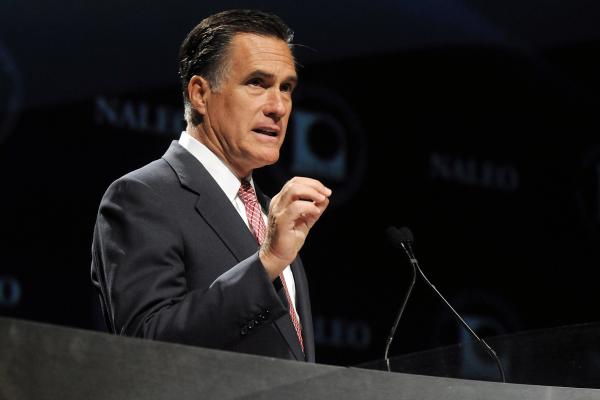
Most Mormons in Utah believe that Mitt Romney’s rise to become the likely GOP presidential nominee is a good thing for the Church of Jesus Christ of Latter-day Saints. But many do not trust the media to cover the church fairly, according to a new poll released on June 25.
The study, conducted by Key Research and Brigham Young University’s Center for the Study of Elections and Democracy, is believed to be the first to gauge Mormons’ reaction to Romney’s barrier-breaking achievement. He is the first Mormon to clinch the presidential nomination of a major U.S. political party.
More than eight in 10 Utah Mormons said they are “very excited” or “somewhat excited” about Romney’s feat. Nearly as many (77 percent) said his nomination is a good thing for the LDS church; just 2 percent told pollsters it was a negative development.

For me, intellectual exploration was one of the primary ways I connect with God. My writing, teaching, and graduate studies have not come out of a desire to attain a “deeper” faith, but rather out of a unique conviction that I must pursue these things out of faithfulness to the faith I ascribe to. God has created me for this stuff and it is a significant way I hope to edify the Church global.
Now, while this is an important reality to acknowledge and foster as I come to better understand my wiring and its relation to my Kingdom contribution, I have to hold this reality in tension with some recent experiences and convictions that have come about as a result.