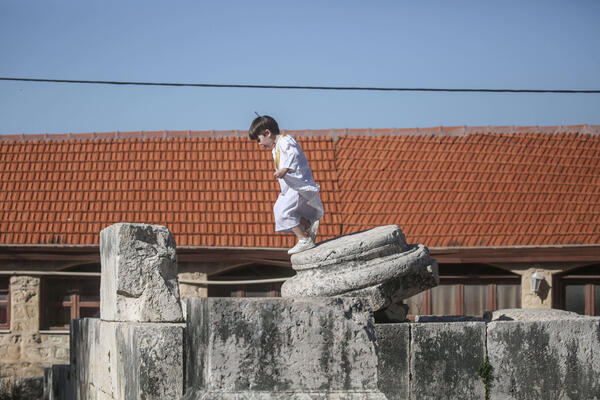
On Feb. 15, Israel’s Cabinet approved a measure that would allow the state to exert more control over the occupied West Bank. The measure makes it easier for settlers to occupy Palestinian territory.
Last spring, I traveled to Sebastia, an ancient Palestinian village outside Nablus in the occupied Palestinian West Bank. It is among the oldest continuously inhabited places in the region. Beginning over 5,000 years ago during the second Iron Age, the residents of Sebastia have lived through the ancient Roman, Byzantine, and Ottoman eras. Sebastia is home to significant religious sites for Muslims, Jews, and Christians, including a Byzantine church and mosque said to be the burial site of St. John the Baptist, also known as the Prophet Yahya.
Read the Full Article