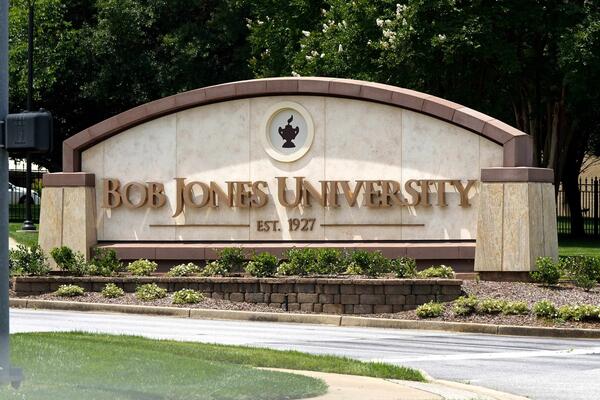
In the fall of 2013, my family drove from the city of Boston to Greenville, S.C. We visited Charleston, S.C., where Confederate flags could still be seen at government buildings and all over Fort Sumter. As I walked through the city in the humid southern heat, I thought about the negative aspects of white culture in the South—racism, misogyny, and homophobia. I continued thinking about those things as we pulled into the school my parents chose for me: Bob Jones University. A little less than a mile away, at a Jack in the Box, I had stepped into the restroom to trade my shorts and tank top for a tan maxi dress and sweater, well aware my knees and shoulders would not be a tolerated sight at the ultra-fundamentalist university. Besides knowing about the dress code, I went in unprepared for the dynamic cultural shift I was about to experience.
I grew up Catholic until the age of 12, when a self-titled “Bible-basher” met my father during a business trip and convinced him to meet with a pastor who was planting a church just outside of Boston. Over the course of a year, my father became “born-again,” and my mother followed with a similar religious rebirth three years later. Despite this, I went to Catholic school from kindergarten through 12th grade and attended an Independent Fundamentalist Baptist church with my family that, although far from progressive or evangelical, lauded itself as academic and open-minded when it came to its members’ lives outside of church. I could wear pants to church, and I know the pastor likely didn’t love my Paramore T-shirts that I donned for prayer meeting, but the important thing to him was that I was “saved” and respected his authority.
This authority was brought up when it came time for me to apply for college. The pastor invited my parents and me to his home and, along with his wife, detailed the benefits of attending his alma mater, BJU. My shy and hopeful, not-yet-fully-realized queer self thought that a college that sounded like our teen group didn’t sound too different from attending church and living at home; in fact, it sounded like I would have more freedoms there than I did in my strict household when it came to spending time with same-age peers. Later, when I saw the rule book, I panicked. I begged my parents to allow me to attend Gordon College, a local, less fundamentalist, more evangelical option. But they insisted I go somewhere that would enforce stricter religious formation. So, with no other choice, my unaware queer 18-year-old self got shuttled into a waking nightmare.
I know this is not a unique story, and many young queer Christians are sent to these institutions every year. Sometimes, parents send their kids to these colleges in the hopes that these institutions will “fix” their kid’s sexuality. This is something many people do not understand: Why would a queer person subject themselves to somewhere like Bob Jones University? For many, there is no other choice. Financially dependent on their parents and sheltered as a child from the outside world, these young adults are closed off to the world, and forsaking their parents’ demands means losing everything.
Why would a queer person subject themselves to somewhere like Bob Jones University? For many, there is no other choice. Financially dependent on their parents and sheltered as a child from the outside world, these young adults are closed off to the world, and forsaking their parents’ demands means losing everything.
If this sounds familiar and you are still at a Christian higher education institution, whether evangelical like Gordon College or fundamentalist like Pensacola Christian College or Bob Jones University, this piece is for you. I know you might not be able to leave yet, and my heart aches for you. But, in the meantime, here are four things you can do.
1. Keep secrets
Outing yourself can go from uncomfortable to unsafe depending on your institution. It may result in faculty stares or even mandatory conversion therapy (often called “biblical counseling”). Be very cautious about who you tell and how you express your queerness. I have seen others’ internalized homophobia cause them to report their own attractions and actions. During my time at BJU, many people came out to me and expressed who they were. Some were already in “biblical counseling” and were counting down the days until their escape, and others were still in the closet. If you decide to talk to someone about your sexual identity, be very careful. If the other person is a current student or faculty member, consider the fallout if they break your trust. Sometimes, for students and faculty to stay at these institutions, they must swear allegiance to an ideology that views any LGBTQ+ person as an enemy. And if someone tells you something, keep it secret, keep it safe.
2. Research safe places
Walk through town or go online and try to find places that openly support the LGBTQ+ community. Is there a Pride flag in the bookstore in the city center? Does the library have a queer display or a librarian wearing an affirming pin? Did a restaurant make a Pride Month post on social media? If you connect with local queer people, chances are they can name the places where being out feels the safest and most accepted.
If you are looking to be involved in a church, check out this Q Christian Fellowship resource to help you find a community. Q Christian Fellowship explains that “the language a church or worshiping community uses in its marketing says a lot about where they are on the affirming spectrum. What words are used on the church website, brochures, bulletins, social media bios, etc. can give a picture of who they are as a community.”
3. Consider what it would take to leave
Have you considered transferring to a different school? Some universities have scholarships for queer students. Can you get away from your current school’s Wi-Fi by going to a cafe or restaurant and apply to one of these schools? Do you know anyone outside of the institution who is a safe person and will allow you to crash on their couch long enough to leave your Christian college so that you can save money for relocation? Can you contact a local, secular counselor—who would be bound to patient confidentiality—who can help you plan an escape?
READ: Protests, Pride Flags, Lawsuits: Inside a Christian University’s Fight for LGBTQ Inclusion
Another option is to consult the Anti-Trans Legal Risk Assessment Map. States with protections for transgender people may be safer for other queer people. Use the map as an aid to help you relocate, if that is safest and doable for you.
4. Contact a queer-affirming organization
At BJU, people would whisper about the group BJUnity—a queer group of BJU alumni that opposed the school’s stance toward LGBTQ+ people. However, when I contacted the former founder and executive director of BJUnity, Jeffrey Hoffman, through Facebook, he told me that when he stepped down from his role in 2020, the group became inactive. Hoffman told me that during BJUnity’s eight years in operation, they pressured Bob Jones III to offer an apology to gay people for saying that they should be stoned. Hoffman told me that before BJUnity became defunct, it helped many alumni and students access counseling and psychotherapy, supported students whose lives were upended by BJU’s disciplinary actions and/or family rejection, and built a network of queer and/or affirming alumni.
Are you unsure if your school has an LGBTQ+ support group? Or maybe there was a support group, but the school shut it down? Use this resource from Parents, Families and Friends of Lesbians and Gays—which will help you find Christian support groups for LGBTQ+ people.
Is there an affirming church nearby you could contact? Do you have a relative who may be able to help you out financially or connect you with a support group? Find safe allies.
I cannot emphasize how much love and respect I have for closeted and out students who are at these Christian institutions today. My heart is with you. Until then, be safe and know that there are millions of people out there who will respect and affirm you just as you are.
Did this article have an impact on you? Tell us how! Whether you’re moved to take action, have a question, or want to share a comment (good or bad), we value your feedback!