interview
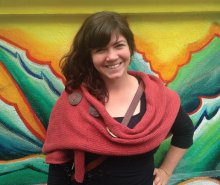
Bio:
Katerina Friesen is studying theology and peace studies at Anabaptist Mennonite Biblical Seminary in Elkhart, Ind.
1. How would you describe your current vocational role?
I see my role as both revaluing what has been cast down and degraded and building resilient communities. So far this has taken shape through land-based ministries of farming and community gardening, inviting people to work together and celebrate the sacramental in soil, food, and one another.
2. You spent several years with the Abundant Table Farm Project in Santa Paula, Calif. Can you describe the project and your role there?
The Abundant Table Farm Project is a working farm and young adult internship program that has evolved into a Christian community. I joined the project in 2009 and lived in community with four other women. My daily work of farming gave me a bodily understanding of farm workers’ labor and the need for justice and wholeness in our incredibly disconnected food system.

“I AM A storyteller,” says Daniel Beaty, “and my purpose in the world is to inspire people to transform pain to power.”
He was first inspired to share his stories when his third-grade teacher showed a videotape of Martin Luther King Jr.’s “I Have a Dream” speech. Now as a writer, actor, singer, teacher, and motivational speaker, his storytelling is expressed in a dizzying array of different forms and outlets. The week in April that Sojourners’ editorial assistant Rebecca Kraybill interviewed him, Beaty was doing daily performances in Los Angeles of a one-person play he wrote on the life of performer and activist Paul Robeson, “The Tallest Tree in the Forest” (in which he plays 40 characters and sings 14 songs) and, during the day, taping for a Ford Foundation-funded documentary on work he does with children of incarcerated parents.
This was just a fortnight after Beaty finished a six-week speaking tour in support of his memoir, Transforming Pain to Power: Unlock Your Unlimited Potential (Penguin-Random House). He’s also the author of a children’s book released in December 2013 by Little, Brown and Company, Knock Knock: My Dad’s Dream for Me, with graphics by award-winning illustrator Bryan Collier, which is an adaptation of a poem Beaty wrote about his experience growing up with an incarcerated father. “Knock knock down the doors that I could not” is one especially poignant line the father in the book writes to the son; it carries a call to healing and liberation that is found in all of Beaty’s work.
Kraybill talked with Beaty about the effects of mass incarceration on families, the power of a “theater sanctuary,” and how the arts call us toward “the capacity to do better.”
Matthew Vines sits down with Sojourners to discuss his first book, "God and the Gay Christian: The Biblical Case in Support of Same-Sex Relationships."
“THE CHURCH radicalized me,” celebrated author and ordained Episcopal deacon Denise Giardina once said, describing how she sees herself as both social activist and servant minister. “The phrase in the prayer book is ‘Interpret the world to the church and the church to the world.’ It’s a totally different way to advocate, with a spiritual point of view.”
This philosophy has shown up in her bestselling novels, published over her long career, such as Storming Heaven (1987) and The Unquiet Earth (1992), which chronicle the history and social impacts of coal mining in Giardina’s native Appalachia; Saints and Villains (1999), which tells the story of Dietrich Bonhoeffer’s resistance against Hitler and the Nazis; and, most recently, Emily’s Ghost (2010), a reimagining of Emily Brontë’s story and how her life was changed by her encounter with an ardent member of the clergy.
Shortly before her recent retirement from teaching creative writing at a West Virginia college, Giardina talked with Jason Howard, author of A Few Honest Words and coauthor of Something’s Rising, about her literary career, social justice activism, and her time in the late 1970s in Washington, D.C., as a member of Sojourners community (the intentional Christian community that founded Sojourners magazine and other ministries).
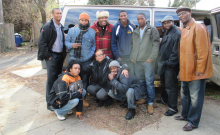
Bio: Tyrone Parker is the executive director of Alliance of Concerned Men (ACM), a nonprofit that works with youth living in high-crime areas in Washington, D.C.
1. What event or episode in your life has most informed your passion for working with urban youth and families?
One was the loss of my son, Rodney [who was killed in 1989]. The other was the record number of homicides within the District of Columbia. The District was once considered the “murder capital” of the United States.
When we first got started with the intervention program, it was due to a 12-year-old kid who was shot in the nation’s capital on the day of the Clinton inauguration. If you would’ve gone 10 minutes on East Capitol Street, you would’ve seen the inauguration with a major celebration. And 10 minutes down the same street, you had a whole community under house arrest. After that, we came together as a group to form the Alliance of Concerned Men.
2. What sorts of services and programs does ACM provide?
We teach a number of skills to at-risk youth, including gang intervention/prevention and mediation, workforce development, life skills training, leadership development, coaching for re-entry, and youth gang conflict resolution.
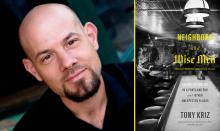
Tony Kriz is, in many ways, the definitive postmodern Christian. He’s a Christian writer, teacher, and he even lives in intentional community with fellow Christ-seekers. He comes from an evangelical background, and, though he claims portions of the theology of his youth, he also continues to reinvent himself as he forges the path of Christ in his cultural context.
Known first in the public eye as “Tony the Beat Poet” from Donald Miller’s bestselling book, Blue Like Jazz, he is a voice and a presence unto himself. He’s more inclined to meet friends over a beer than he is to join a particular congregation in worship every Sunday. He is both deeply embedded in the Christian conversation and cultural identity and, at the same time, a stark contrast to what tradition dictates a “good Christian” should look and act like.
I shot a handful of questions his way after a recent book discussion we conducted at First Christian Church in Portland. Here’s what he had to say.
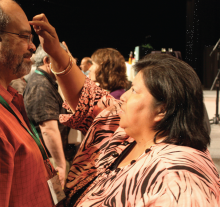
Bio: Carol Roth [Choctaw] is staff leader for Native Mennonite Ministries, a group that does liaison work between Native Mennonites and the broader Mennonite church. www.mennoniteusa.org/about/structure/related/
1. What are you most passionate about in your vocational role?
I’m passionate about working with the Native Mennonite people and helping them find a place in the Mennonite church. Unfortunately, some of the Native churches aren’t close to the Mennonite conferences, so you have to drive 800 miles to be connected to a conference, especially when you live on a reservation without internet or telephone. So my role is to connect the conference ministers and the conference with the Native churches and get them involved.
2. How did you come to straddle the Mennonite and Choctaw traditions?
When my twin sister and I were born [on a Choctaw reservation in Mississippi], my mom felt like she couldn’t give adequate care to two newborns. It happened that there were Mennonite missionaries who had moved nearby to help with the Choctaw group, and my parents asked if they could care for us for the winter. My parents realized how well they were taking care of us, so they asked if they could continue to care for us. My parents didn’t want them to adopt us, because they wanted us to keep our culture. So we grew up with the Mennonite missionaries, and then pretty much for all our lives attended one of the Choctaw churches.

Cynthia Bourgeault explains how we can both seek social justice and do justice to our souls.
Listen as Sojourners CEO Rob Wilson-Black asks Jim Wallis about his recent fast for immigration reform.
Bio: "Khaipi" (real name withheld) is a peace studies professor in Thailand and a Chin religious freedom activist who served as researcher for the Chin Human Rights Organization's 2012 report detailing abuses against ethnic and religious minorities in Burma.chro.ca
1. What is at the root of the persecution of Christians in Burma?
There is an unwritten policy called “Burmanization,” which means that to be Burmese you have to be a Buddhist and you have to speak Burmese. The Chin people are not allowed to practice Christianity, and we are not allowed to study our own ethnic languages. But it’s not all about religion: They are attacking our ethnic identity because Christianity has become our identity.
Before Christianity came to the Chin people, they practiced an indigenous religion. In this religion, they believed in an Almighty One who created the world. In 1899, the very first American Baptist missionaries came to Chin state, and when they talked about the Christian God, our forefathers could adopt it very easily because it was very close to that indigenous belief. Today, when the Burmese military junta persecutes us, they say, “Okay, we want to take out this kind of Western religion.” But for us, once we believed in God, it became our religion, not a Western religion anymore.
THE MAXIM states that the road to hell is paved with good intentions. But what happens when well-meaning Christians construct and lead others down that road? In her new book The Child Catchers: Rescue, Trafficking, and the New Gospel of Adoption (PublicAffairs), investigative journalist Kathryn Joyce explores how some evangelicals have fueled the global adoption frenzy—and how adoption reform advocates are trying to stem the tide of trafficked children (and the rampant spread of misinformation) across borders. Sojourners contributing writer Brittany Shoot recently spoke with Joyce.
Brittany Shoot: Why do you think it’s been primarily evangelicals who have led the surge in international adoption?
Kathryn Joyce: The idea of the “global orphan crisis” needs some unpacking. People who talk about this crisis often cite UNICEF estimates that there are between 150 and 210 million orphaned children in the world. While the figures actually refer to a wide range of orphaned and vulnerable children in need of services, often people only hear the word “orphan” and presume these children are parentless kids in need of new homes. In fact, most of these children have a surviving biological parent or other extended family who may need some support.
Additionally, adoption has become a powerful metaphor in many evangelical churches studying and preaching what has become known as adoption or orphan theology. Many leaders within the movement teach that earthly adoption is a perfect mirror of Christian adoption by God, and it’s a way that Christians can put their faith into action in a very personal manner. Evangelicals have been encouraged to adopt by this theology as well as by other developments in their churches or denominations, such as the Southern Baptist Convention’s 2009 resolution that asked its members to prayerfully consider whether God was calling them to adopt.
IN 1900, long-simmering resentment over increasing foreign presence and exploitation in China boiled over into a full-scale uprising, the Boxer Rebellion. It was spearheaded by the “Righteous and Harmonious Fists,” a peasant secret society whose members practiced martial arts—Westerners, observing their exercises, dubbed them “Boxers.” The Boxers targeted foreign officials, merchants, and missionaries, as well as Chinese Christian converts.
Comic book author and artist Gene Luen Yang illuminates two very different fictional perspectives on this conflict in his new two-volume graphic novel Boxers & Saints: The first volume, Boxers, tells the story of Bao, a boy who becomes a Boxer leader after seeing ongoing abuse by Westerners; Saintsfollows Four-Girl, an unwanted daughter who converts to Catholicism, takes the name Vibiana, and must flee the Boxers.
Yang’s 2006 work American Born Chinese was the first graphic novel to both win the Michael L. Printz Award for excellence in young adult literature and to be nominated for a National Book Award. He lives in Oakland, Calif., and teaches in the Hamline University MFA program in writing for children and young adults. Sojourners senior associate editor Julie Polter interviewed Yang in July. Boxers & Saints releases in September from First Second Books.
Julie Polter: The characters in Boxers & Saints are driven by varied combinations of ideology (patriotism, cultural imperialism) and mysticism/faith. The flaws and virtues of different beliefs seem to mirror each other. What led you to this complicated story?
Gene Luen Yang: The genesis of the project was out of my own conflicts. I majored in computer science in college and minored in creative writing. I had a professor who was also a novelist, Thaisa Frank. I remember visiting her during office hours and talking to her about my struggles with writing about issues of faith. Faith, especially in college, became very important to me; it became a critical part of how I saw my place in the world. It was really hard for me to put something authentic on the page. Her advice to me was, essentially, you have to write your life and live your faith—you don’t ever try to write your faith, because it will come out funky. That’s the advice I’ve tried to follow ever since.
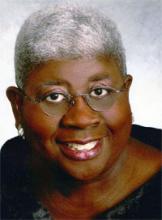
I suppose I could live my life saying, "I will never allow myself to try to understand white people. I will cut myself off from them. I will live my life as a black woman, and I'll just keep white people in boxes." But to do that means to keep myself cut off from a part of myself. And if white people do that about black people, I think the same is true: It keeps them cut off from a part of themselves.
For those of us who are Christians, I don't think we have any choice in the matter. I think God has made it clear that we're to be reconciled to God and each other. And if we're to be reconciled to each other, that includes everyone who happens to be in the world with us.
Reconciliation demands that you not take sides; it demands that you take a stand, I think—a stand that's maybe a merging of a lot of different pieces that represent several different kinds of philosophical stances. I think that one who chooses a road of reconciliation must be willing to look at more than one side of the coin.
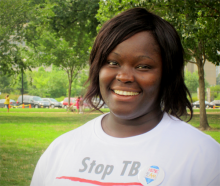
The Global Fund has a plan to win the fight against the three major diseases of poverty—and it's working.
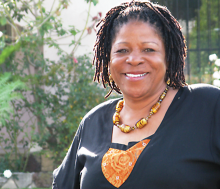
Bio: Founder of A New Way of Life Reentry Project in California, which has provided housing and support for more than 500 formerly incarcerated women. anewwayoflife.org
1. What motivated you to start A New Way of Life in 1998?
Through the kindness of a special person, I was able to access treatment services in Santa Monica [Calif.] after the sixth and final time I was released from prison. This was a new phenomenon for me. I am originally from South Los Angeles, and I was amazed that such resources were available in this more-affluent part of the city. I began to wonder why those same resources were not available in my home community—an area so heavily impacted by the “war on drugs.” I knew the need was desperate, and I wanted to bring those resources to South L.A. My work since then has been, and continues to be, a work of faith. I step out in faith, and God shows up.
I can’t think of a way that it’s good for anyone. The current system treats everyone inhumanely. It puts them into the category of slaves. It exploits their families. It kills their hopes and dreams. Our mission is to address the needs of people who have been negatively and cruelly treated by the criminal justice system and to restore their hopes and dreams by treating them with dignity and respect.
THE 2011 REVOLUTION that led to the ouster of Egyptian President Hosni Mubarak signaled hope and liberation for the people of Egypt. But many Egyptians and others fear that President Mohamed Morsi, in his actions to consolidate power and quell opposition, has become “Mubarak with a beard.”
Sen. Ehab El Kharrat, a psychiatrist and Christian member of the Shura Council, Egypt’s upper house of Parliament, still looks to his country’s future with hope. Kharrat talked with Mary Theresa Webb early this year while the senator was in Washington, D.C., for the National Prayer Breakfast. Webb is the founder of the GOAL Project, a U.S.-based organization that provides addiction recovery training for churches and communities around the world, including Egypt.
—The Editors
Mary Theresa Webb: You are one of three Christians elected to the Egyptian Parliament. Could you describe why you decided to run for office? How does your Christian faith influence your work?
Ehab El Kharrat: I was elected by both Muslims and Christians to serve the whole people. I stand for love and freedom, and I think these are the things my savior and Lord Jesus stood for. My political involvement is not about the rights of the Christian minority in Egypt, but about the rights and dignity of all.
We on the Shura Council have received threats from violent groups, Muslim extremists, and the secularist terrorist group called the Black Bloc, who wear black masks and defend secular protesters with violence. I once stood up in a human rights session and said that I may be threatened and killed, but I will not accept the Black Bloc members’ violence and pledged all to refrain from such violence. If I die, I die. But I want to keep our revolution peaceful.
I like to think that the spirit of Christ is the spirit of justice, freedom, and love. One of my heroes, Charles Grandison Finney, the 19th-century New England theologian and revivalist, said [paraphrase], “Revolution is inevitable if the virtue or wisdom of the people exceeds that of its rulers, or if the vice and ignorance of the people exceeds that of its rulers.” I like to think that the first half of his statement applies to the Egyptian revolution.
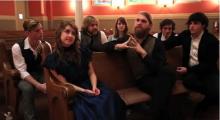
Chesapeake, Virginia-based folk band The Last Bison talked with Sojourners about music, creativity, and God before their show in Washington, D.C. a while back. Be sure to listen to their recently released debut album Inheritance and catch them while they're on tour in the U.S.! Their music is definitely worth a listen.

An extended interview with addiction-recovery worker Jim Balmer
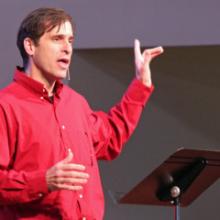
COLUMBIA, Mo. — Evangelical theologian David Lamb tackles some of the Bible’s most troubling passages in his book, God Behaving Badly: Is the God of the Old Testament Angry, Sexist and Racist? His answer: yes and no.
The book has received mixed reviews in the Christian blogosphere, but Lamb was well received when he recently spoke at a church here. Religion News Service sat down with Lamb, an Old Testament scholar at Biblical Seminary in Hatfield, Pa., to find out how believers’ long-held views of a wrathful Old Testament God might waver with his findings.
Answers have been edited for length and clarity.
Up-and coming-/singer-songwriter Noah Gundersen stopped by the Sojourners office to talk with our Brandon Hook about music, his new album Family, God, and creativity.
The Seattle-based folk artist was recently featured on Spotify’s Emerge app, which pits rising artists against each other based on play frequency, and is currently on a U.S. tour.
Special thanks to Noah for stopping by and being so open with us!