Immigration

“Are we going to have to worry about ICE agents swooping down on our clients on distribution day?” he said. “What if my congregation chose to offer sanctuary to an immigrant facing deportation? Would we have to worry about immigration officers and sheriff’s deputies kicking down our front door?”
Bishop Mark Beckwith, who heads the Episcopal Diocese of Newark in New Jersey, says at least 10 of the 100 congregations in his diocese have parishioners who are affected by the new policies. He described a heightened sense of urgency as his diocese investigates what its collective response should be.
“What is so upsetting about this is we don’t know what a safe space is,” he said, citing uncertainty about whether the traditional status of churches as sanctuaries will be respected. “We need to move as fast as these executive orders are moving. That’s the challenge. We are grounded in our biblical faith and we need to respond.”
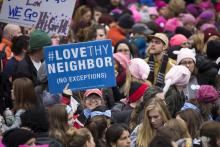
Many people in our nation, and indeed around the world, are scared by the things happening in Washington. Those most affected by the actions of this administration are especially afraid. But today, we announce a plan of action in response.
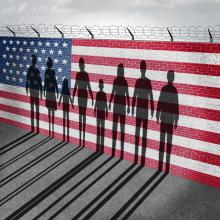
New policies also allow for easier immediate deportation by expanding the expedited removal process. This specific part of the policy allows U.S Border Patrol and Immigration and Customs Enforcement to deport people at a faster rate from anywhere in the country. DHS has also ordered 10,000 new immigration and customs agents, plus the revival of a program that qualifies local police officers to assist in deportation.
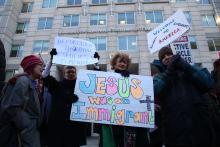
“The practices of Immigration and Customs Enforcement right now are not in line with who we say we are as a government and a country,” Kumpf said. “What they did was legally on the line of violating the Sensitive Locations Memo. That’s extraordinarily morally reprehensible.”
Drafted in 2011, the Sensitive Locations Memo places restrictions on ICE enforcement in sensitive locations such as schools, places of worship, and hospitals. Many at the gathering felt that the sensitive lines of sanctuary were crossed on the morning of the Feb 8.
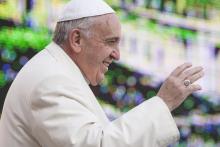
One year ago, Pope Francis visited the Mexican-U.S. border and prayed for migrants who have lost their lives seeking refuge in our country. His prayer transcended the dusty fences and united two countries in a silent cry for mercy on behalf of our brothers and sisters who died on their journey.

On Feb. 8, Guadalupe Garcia de Rayos went to Mass and said a prayer before voluntarily going to her biannual appointment at the immigration office in Phoenix.
Guadalupe knew that, because of President Trump’s executive order on immigration enforcement, she was now considered a high priority for deportation and could be sent back to Mexico, leaving her two teenage children, both of them U.S. citizens.
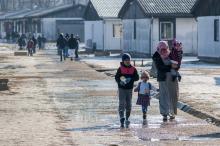
World Relief, a global humanitarian organization and one of the main non-governmental organizations involved in the U.S. refugee resettlement program, announced today that the organization is laying off at least 140 employees and shuttering five local offices "as a direct result of the recent decision by the Trump Administration to dramatically reduce the number of refugees resettled in the U.S. throughout fiscal year 2017."
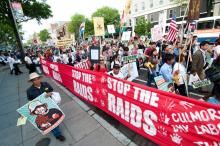
On Feb. 16 immigrants in Washington, D.C., plan to go on strike from work and other economic engagements, creating a “Day Without Immigrants,” just as immigrants in Wisconsin did on Feb. 13, reports the Washingtonian.
A flyer advertising the “Day Without Immigrants” calls for immigrants to avoid shopping, going to work, and eating at restaurants.

Receiving a prestigious human rights prize, an Iraqi lawmaker, who gained international attention for her oppressed Yazidi religious minority, decried the Trump administration’s “unfair” executive order on immigration.

While the ban remains inactive after the Ninth Circuit Court of Appeals denied the U.S. government’s request to resume travel restrictions, legal challenges by Trump’s administration will continue. Christians must join in solidarity with our refugee brothers and sisters and continue to denounce both the ideology and methodology of the ban.

This anti-Asian xenophobia is both individual and institutional in that it shapes our governmental policies. Although Japanese Americans as whole were unjustly incarcerated in World War II, an act deemed unconstitutional, Trump and his advisors employ historic internment as a rationale for detaining current minority groups.
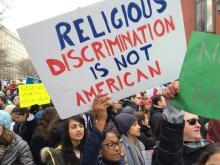
True, the executive order, which includes a restriction on travel to the U.S. for nationals of seven Muslim-majority nations for 90 days, does not directly refer to followers of Islam. But that doesn’t mean it’s not aimed at them, critics say.

President Donald Trump vowed to make good on a campaign promise to repeal the law that restricts political speech from the pulpit, speaking at his first National Prayer Breakfast as president.
“I will get rid of, totally destroy, the Johnson Amendment, and allow representatives of faith to speak freely and without fear,” he said on Feb. 2 to a gathering of 3,500 faith leaders, politicians, and other dignitaries from around the world, including King Abdullah of Jordan.
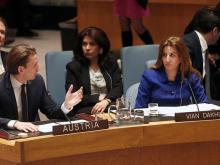
As the only female Yazidi in the Iraqi Parliament, Dakhil fought tirelessly for international assistance to stop the violence, including sexual slavery, targeting her beleaguered people.
Now she has been awarded the Lantos Human Rights Prize in Washington, D.C. But she is unlikely to make the ceremony on Feb. 8, since President Donald Trump banned all travelers from Iraq.
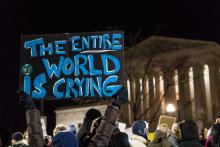
For Christians, in the 25th chapter of Matthew, Jesus makes clear that how we treat “the stranger” is how we treat him. That’s what the Gospel text says. And the “stranger” literally means immigrants and refugees — the citizens of other nations living and traveling among us. Therefore, this is a faith issue for us as Christians. Donald Trump’s executive order on “Protecting the Nation from Foreign Terrorist Entry into the United States” is in conflict with our Christian faith, and we will oppose it as a matter of faith.
1. What Will You Do if Donald Trump Deports Me?
“If you are an ally, a friend, or a decent human being who understands that immigrants and refugees work hard, play by the rules and are proud aspiring Americans, then read this guide.”
2. Here’s How Franklin Graham Justifies Trump’s Expected Refugee Ban
“It’s not a biblical command for the country to let everyone in who wants to come, that’s not a Bible issue.” :thinking:
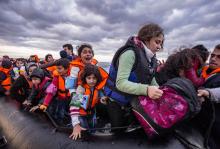
For the last few years Christians have been singing worship songs that include lyrics like “ keep my eyes above the waves, when oceans rise …” and yet have rejected refugees who’ve seen loved ones die beneath waves, who themselves have literally struggled to keep from drowning in oceans. Those American Christians — particularly white evangelicals — continue to sing the words: “Spirit lead me where my trust is without borders …” but fail to realize the shameful irony that they’re largely responsible for refusing shelter and opportunity to some of the world’s most helpless and oppressed people.

A Cincinnati area mosque announced it would join the burgeoning church sanctuary movement in the U.S., possibly becoming the first Islamic house of worship to do so.
The announcement came on the eve of the inauguration of President Donald J. Trump, who took a hard-line stance on immigration and proposed a national Muslim registry during his campaign.

Religion is increasingly viewed as highly politicized, not least due to the way that it is frequently covered in the news. Numerous studies have shown that news stories with emotional cues tend to both gain audience attention and prolong audience engagement.
It may therefore come as no surprise that online debates about religion are packed with emotional cues that evoke strong reactions from those who participate in them. This sets the stage for passionate online debates.
Currently there are an estimated 300 sanctuary states, counties, and cities across the U.S., but no model for sanctuary campuses. Calls for sanctuary campuses began in the wake of Donald Trump’s campaign pledges to repeal DACA and escalate deportations.