Technology

Some Minecraft users even “build” their own religious icons. Using blocky “skins” — Minecraft lingo for a character — they create Jesuses, popes, priests, rabbis, angels, and more to populate Minecraft worlds everywhere.

For Augustine and his followers, attention was a rare and valuable experience, perhaps even more than for us since they associated it with the divine. One might expect that as a result they should have simply dismissed distraction. But they didn’t.

News that scientists for the first time successfully edited genes in human embryos created a stir this week. In the experiment, outlined in a paper in the journal Nature published Wednesday, scientists essentially snipped a mutant gene known to cause a heart condition that can lead to sudden death.

America as a largely Christian nation is under scrutiny for its values and integrity. It’s an interesting time to be a person committed to faith in action. How does Christian faith inspire a response to these chaotic times?

Unplugging from social media or limiting one’s internet use for a set period such as during Lent can be helpful for some individuals. My research, conducted over two decades, however, shows that some core assumptions on which digital fasting is based can be problematic or misguided.

Science and education professionals are increasingly alarmed about the impact Donald Trump’s cabinet picks — many of them evangelical Christians — could have on science standards in public schools.
Candidate Trump repeatedly pledged to end the existing Common Core curricula standards for math and English. Critics worry that could open the door to rethinking science standards, and lead to the teaching of creationism and Intelligent Design, pseudo-scientific notions about Earth’s origins with little or no support from scientists.

If your church is suddenly overtaken by millennials with their heads stuck in their phones, you can thank Pokemon.
Yes, Pokemon. The Nintendo-owned franchise, which produced colorful cards and later video games, is back — this time luring young adults out of their apartments and into museums, parks, and places of worship.

When Laila Alawa woke up on a recent morning, her phone wouldn’t stop pinging with Twitter notifications.
“You’re not American, you’re a terrorist sympathizer immigrant that nobody in America wants and for good reason,” one user tweeted.

The Church of Scotland will launch a two-year investigation into the possibility of introducing online baptisms, Communion, and other Christian sacraments.
The church, known as The Kirk, has seen its rolls fall by almost one-third between 2004 and 2015, to just under 364,000 members.
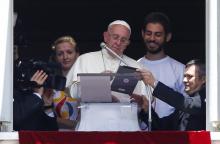
The pope of the digital age is set to attract even more followers with the posting of his first Instagram photo. Having already claimed the title of the world’s most influential leader on Twitter—with over 27 million followers across his nine accounts—Pope Francis has a new social media platform in his sights.

The bald eagle has been the symbol of the U.S. for over 200 years.
But we’ve never put an eagle to as good of a use as the Dutch are now: taking down drones.
In order to remove drones hovering above unauthorized areas, such as airports or political events, Dutch police are training eagles to snatch them out of the air.
We've put a man on the moon. Why haven't we done this yet?

Pope Francis on Nov. 11 urged Catholics to continue the tradition of a family meal, leaving smartphones aside, and switching off the TV to enjoy the “fundamental experience” of sharing food.
“The sharing of a meal — and therefore, other than of food, also of affections, of stories, of events — is a fundamental experience,” Francis said during his weekly audience in St. Peter’s Square.
Sitting around the table helps measure the health of relationships, the pontiff said: “If in a family there’s something that doesn’t work, or a hidden wound, at the table it’s understood immediately.”
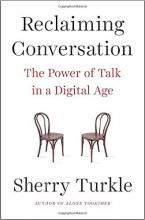
THE GLORY OF God is humanity fully alive, to paraphrase St. Irenaeus.
If Irenaeus is correct and Christian discipleship is centered on following Jesus toward a life that is more compassionate and more alive, then Sherry Turkle’s new book, Reclaiming Conversation: The Power of Talk in a Digital Age, is perhaps the most important Christian book of 2015. Granted, Turkle steers clear of the language of faith, but in calling us to become more fully human, she has penned a profoundly religious book that Christians need to read and reflect upon.
Western culture has long been losing the capacity for conversation. Embodied in the current partisan climate of Washington that competes at all costs, rather than converse and collaborate, this aversion to dialogue is symptomatic of cultural changes that have unfolded over the last 500 years. From Enlightenment philosophy to industrialization to automobility, these cultural shifts have disintegrated communities and diminished our capacity for open conversation. More recently, Bill Bishop’s 2008 book The Big Sort highlighted how the increasing homogeneity of our relational networks erodes our capacity to converse with those who differ from us.
Turkle focuses primarily on an even more recent concern, the ubiquitous tyranny of the smartphone. Although not a Luddite who would advocate abolishing phones, Turkle fiercely describes the ways our phones inhibit our capacity for connection, conversation, and empathy. “We are being silenced by our technologies,” she maintains. With joint Harvard doctorates in sociology and psychology, Turkle backs her claims with a vast body of research. Even a silenced phone sitting on the table during conversation, she notes, changes the dynamics of what we discuss and how.
Face-to-face conversation, Turkle argues, is the most basic human activity. In conversation, we learn to listen and to be empathetic. Our mobile devices also impede our capacity for solitude, a skill that is vital to our development from childhood onward. Turkle emphasizes that it is in solitude that our minds are formed and we develop a distinctive voice. In exercising this voice in private conversations with family, friends, and lovers, and in public conversations, it is refined and our capacity for solitude and self-reflection is further enhanced, drawing us ever-deeper in this virtuous cycle.

Do not be alarmed: there are no known bands of Jesus fish-sporting, vigilante hackers patrolling the cyber underworld.
But in 13 cities this weekend — including Jakarta, Bangalore, Addis Ababa, Guatemala City, London, Waterloo, Atlanta, and Raleigh-Durham — more than 800 Christian coders, developers, programmers, designers, pastors, and artists gathered together for a 48-hour simultaneous hackathon. They scripted, designed, collaborated, and competed to develop new apps and websites for global and local adherents to the faith.
Programmers speaking of transformational love, and pastors wielding code: Welcome to the first global Christian hackathon.

I think the reason why the Christian Internet is so exasperating is because it is filled with so many people. Sensational click baits trend because we love juicy scandals. We share angry articles and judgmental pieces because it satisfies our human desires to point fingers and be in the right. The Internet has exposed the basest of our human fears and aired out our dirtiest laundry with the lure of anonymity and protection from our screens.
The Christian Internet is all of us with our mess, our flaws, our brokenness, our hurts, our mistakes, and our pains. Which means that as hard as it is for us to see through the hazy noise pollution, behind every instigator of a mean meme is a person made in the image of God. And as long as I believe that is true, you can’t pry me away from the Christian Internet because I am not about to miss the astounding beauty that is sure to rise from the squabbling ashes.

As long as people have been praying, they have also been asking for prayer from one another. In the Bible, the New Testament is full of requests from Paul and others to pray for them; contemporary places of worship often offer time in their services to pray for the specific needs of their parishioners.
A new app called Instapray makes sense as a digital heir to that tradition.

Pope Francis has decried the “filth” of online pornography and warned people against wasting time on their computers.
Speaking aboard the papal plane after his visit on June 6 to Bosnia-Herzegovina’s capital of Sarajevo, the pontiff took a two-pronged approach to modern technology.
“There are two different elements here: method and content,” he said, according to Vatican Radio.
“Regarding the method or way of doing things, there is one that is bad for the soul, and that is being too attached to the computer.”
1. ‘A Rape on Campus:’ What Went Wrong?
Columbia University’s Journalism school released its report detailing the journalistic failures of Rolling Stone’s viral story ‘A Rape on Campus,’ which initiated, and later may have stifled, an honest conversation about the prevalence rape on college campuses. Read the full report. “[Writer Sabrina Rubin] Erdely and her editors had hoped their investigation would sound an alarm about campus sexual assault and would challenge Virginia and other universities to do better. Instead, the magazine's failure may have spread the idea that many women invent rape allegations.”
2. The Courage of Bystanders Who Press ‘Record’
“Despite the fact that the world can now see Eric Garner being killed by an illegal chokehold — despite the fact that New York City Police Department banned chokeholds years ago — film of the incident did not result in the officer, Daniel Pantaleo, being charged. But thanks to the efforts of Ramsey Orta, who filmed Garner’s death, we know.”
3. Hope but Verify: The Iran Nuclear Framework
“House Speaker John Boehner recently said this about the broader instability in the Middle East: 'The world is starving for American leadership. But America has an anti-war president.' In the context of our faith — or even in the context of conservative ideals — is leadership that prevents war something to be maligned?”
4. How the Presidential Candidates Found Their Faith
“This season’s crop of presidential candidates reflects this country’s many contradictions in faith.” Newsweek explores the faith backgrounds of the apparent 2016 field so far.

To be black in America is to listen to death daily. To hear mothers wailing at unnecessary funerals, to see fathers mourning lost sons, to offer graveside prayers that puncture the heart of God — this is the sorrow song of a people, and a nation, haunted by racism.
Over our heads however, I hear the sweet, dark sounds of freedom in the air, calling for the dry bones of democracy to arise from the segregated sinews of our society. The multiracial chorus of protestors chanting, "I can't breathe," the die-ins, the walk-outs, and the highway-halting actions of youth from New York to Chicago to Tallahassee to Los Angeles represent a thirst and hunger for righteousness that includes and yet transcends voting.
To join within this symphony of justice, I am calling faith communities to participate in a national #DialInForJustice during the month of December. The goal is to call the Unites States Department of Justice and local police departments, communicating our desire to see systemic reforms to policing in America. This initiative seeks to lift up faith-filled voices alongside the already existing trumpet blasts of groups like the Organization of Black Struggle, Dream Defenders, PICO, Sojourners, and so on.
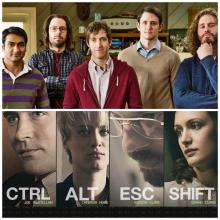
“THE COMPUTER’S not the thing. It’s the thing that will get us to the thing,” intones Joe MacMillan (Lee Pace), the enigmatic visionary at the heart of AMC’s new techno-drama Halt and Catch Fire. Set in the early 1980s in Texas’ “Silicon Prairie,” the series chronicles a small, fictional software company that enters the personal computing fray. This is the age of IBM dominance and the improbability of an underdog company taking down the computer Goliath is the premise of the show.
HCF is a kind of origin myth: a drama that tries to capture the spirit and personalities that drove the personal computing revolution that reshaped the world we now inhabit. Across the cable universe, HBO offers another riff on the same theme set in the present day. Silicon Valley is a satirical send-up of startup culture and the boy-men who rule the northern California empire to which we are all in thrall. In tone and style it is the antithesis of the self-consciously serious HCF. But the two shows share a similar preoccupation with exploring the humans who make technology even more than the technology itself.
This is partially a necessity of good storytelling. Nothing slows down a story like having to explain technical expertise. At best you can get a few gags out of the science geek spewing unintelligible jargon to the bewildered “everyperson” (think Sheldon’s whole persona on The Big Bang Theory). But this narrative limitation also hints at the enigma both shows are trying to explore: Who are the people who understand the jargon and create the technology that defines our new digital age? What is the nature of this kind of power?