bisexual
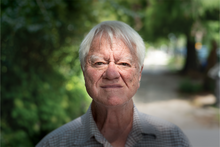
IN THE LATE 1940s, a 12-year-old George Lakey preached a sermon at his church declaring racial equality to be the will of God. He was never invited to preach at that Evangelical Congregational Church again. But that incident explains the life that followed.
While in college, Lakey became a Quaker. He graduated from the historically Black Cheyney University of Pennsylvania. He thought about being a musician. He considered teaching high school social studies. He pursued a Ph.D. in sociology, but instead of retaking his oral exams, Lakey used his schooling “to become an evidence-based social activist with skills to do homework for the movement,” as he writes in his autobiography Dancing With History. He spent more than six decades as an activist committed to practicing and training others in nonviolent direct action. (Music never left him, and he spent many years teaching peace studies classes to college students.)
In 1965, George and his then-wife Berit Lakey (who are both white) adopted Christina, a Black girl only a few months old. The Lakeys soon afterward purchased a house in West Philadelphia, where they also raised Peter, who was also Black and adopted, and their youngest daughter, Ingrid. George lives in that same house today.
And yet, rooted as he has been, a lot changed in his life over the years. In the early 1970s, he came out as bisexual at an annual Quaker gathering, in front of a thousand people. In 1985, after 26 years of marriage, he and his wife split up. Not long after, his son Peter died, “of poisoning,” at the age of 20.
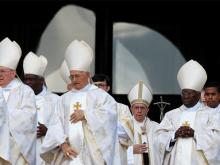
“Pope Francis has a lot of explaining to do by approving the newest Vatican instruction,” said Francis DeBernardo, executive director of New Ways Ministry, which campaigns for LGBT rights in the church.
“Francis’ famous ‘Who am I to judge?’ statement in 2013 was made in response to a question about gay men in the priesthood,” DeBernardo said. “That response indicated very plainly that he did not have a problem with a gay priest’s sexual orientation.
It’s safe to say that no Christian community I've been a part of has ever brought up the U.S. domestic crisis of HIV/AIDS. In fact, I can’t recall ever hearing an American Christian even utter the words.
And in conversation with others, I know that too many have only heard about it from pastors who preach that homosexuality is an unforgiveable sin and that HIV/AIDS is God’s wrath at work — despite the fact that HIV/AIDS affects people of many ethnicities and sexual orientations, and that the infection is often transmitted in ways other than sexual intercourse. Hearing Christians speak seriously and nonjudgmentally about HIV/AIDS, with the intent of acting to help eradicate the illness and protect the lives of those whom the illness has affected, is too rare.
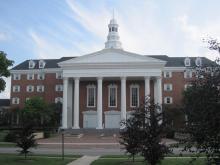
Exit polls suggest 81 percent of white evangelicals voted for President-elect Donald Trump.
But support for Trump may have been less decisive on Christian college campuses, where most students are also white evangelicals.
A Washington Post/ABC News poll, before the election, found the views of younger adults do not align with some older ones, when it comes to their beliefs about Trump supporters.

I hear from others that telling our stories is the way to freedom. I keep hearing that sharing our testimonies is how we grow and change, connect and love. I keep hearing LGBTQ people say that coming out was the best thing they ever did. I keep hearing that hiding and pretending is harmful, dangerous and unhealthy. I keep hearing that it’s so much better to be real and live out your identity.
I hope they’re right.

"Three congregations said they were uncomfortable playing our team because I am their pastor and I am an out bisexual person," said the Rev. James Semmelroth Darnell, 27, "which is surprising because I don't even play."
Darnell called the pastors' reaction ridiculous.
"It seems like my sexuality doesn't have anything to do with how my congregation plays softball," Darnell said. "It's frustrating because this is who is representing Christianity in our community, and this is the message youths in our community are getting."
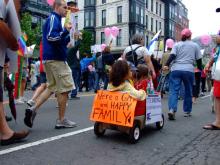
Failure to provide equal rights for LGBT people doesn’t just hurt those who are gay or lesbian, it also hurts the nearly 2 million children who now live in LGBT households.
Contrary to many stereotypes, children living in LGBT households are 50 percent more likely to live in poverty than those living in heterosexual households. Societal prejudice and discriminatory policies both have something to do with it. A recent report sponsored by the Movement Advancement Project, Family Equality Council and the Center for American Progress, explains why.