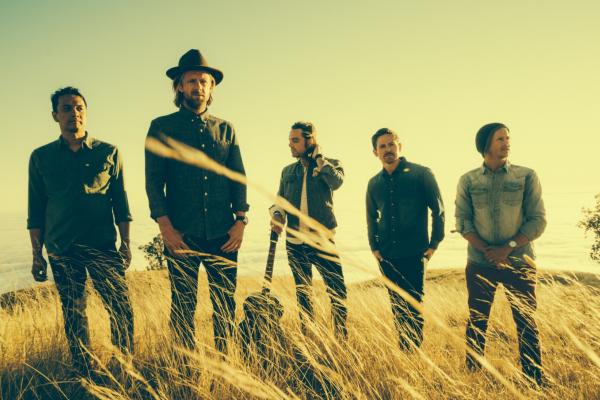
Way back in the day (circa 2004), Switchfoot's lead singer, Jon Foreman, was asked if the band is a “Christian” band. Even though it's been a while, his response is worth looking at again.

The American Family Association has been tracking major companies to see how they promote Christmas. It came up with the “Naughty or Nice” list where it has examined different company’s websites, circulars, commercials, and stores noting how many times they use the word “Christmas,” if at all. According to the association’s website, “If a company has items associated with Christmas, but did not use the word “Christmas,” then the company is considered as censoring “Christmas.” Its research has uncovered that if you shop at Radio Shack, Barnes & Noble, Family Dollar, and Foot Locker (just to name a few) then you are part of the problem and thus should be placed on the “naughty list.”
The American Family Association believes that there is a full out “war on Christmas.” Well, I would have to say that it is correct but not for the reasons it postulates.

I flew to Houston over the weekend to speak at the Conspire Conference. I stood on a stage looking out over a few hundred students in grades 6-12, telling them my story of having breast cancer in my 20s.
I talked to them about what a dark season of life it was for me. The chemo and radiation were difficult, but on top of that I also lost a good friend to cancer, I was out of work for seven months, while in my apartment building’s parking lot, my car was hit by a truck, and my boyfriend broke up with me. After all of that, I ended up in the hospital with a raging lung infection and a good chance that I would die.
On the nights I spent in the hospital, I’d lie awake and stare at the ceiling and wonder where God was. “Do you see me? Do you love me? Do you care about what’s happening in my life?” I prayed. “And if you see me and love me and care about my life, why don’t you come down and make this all go away?”
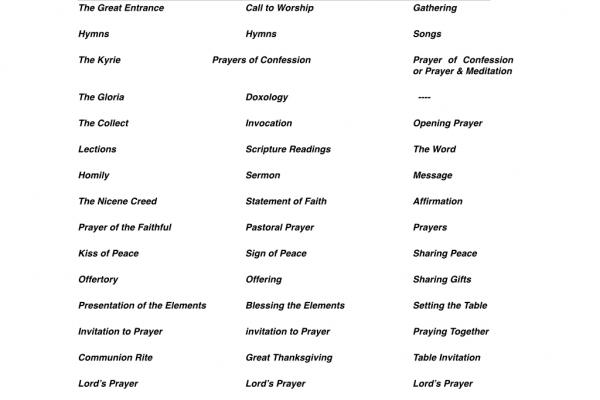
Star Trek’s High Chancellor Gorkon raises his glass: “I offer a toast to the undiscovered country.” And then Mr. Spock chimes in: “Hamlet, Act 3, Scene 1.” The scene goes on to reveal that each group does not understand the language and actions of the other, but is willing to be at table together, uncomfortable though it may be. Both realize that they must forge together. And then a Klingon asks Captain Kirk if he would be willing to leave Star Fleet, intimating that for the future to happen, something must be given up.
When I was a girl watching the various iterations of Star Trek with my daddy, I didn’t know that it would be helpful in church dynamics, much less worship planning. But often I return to my favorite Star Trek movie, The Undiscovered Country, and find that from early on I was being formed to bring people that have differing cultural assumptions — differing languages — together at the table.
“She wakes to the sound of breathing. The smaller children lie tangled beside her, their chests rising and falling under winter coats and wool blankets.”
So begins the New York Times story following Dasani, an 11-year-old girl living homeless in New York. Dasani lives with her parents and seven siblings in a family residence shelter. From school to dance class to home, Dasani feels the weight of poverty and an unstable family.
According to the story, one in five children in America live in poverty, “giving the United States the highest child poverty rate of any developed nation except for Romania.”
In this five-part multimedia story, life told through Dasani’s eyes offers an honest look at homelessness and the pursuit for a hopeful future.
Read the full story here.
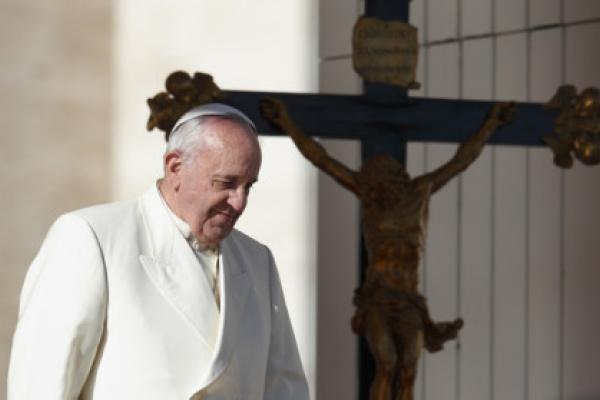
It’s one thing to say kind words about gay people and atheists while admonishing those who would bury them in stones.
It’s one thing to walk humbly and call the Catholic Church to compassion for the poor.
It’s one thing to kiss a horribly disfigured man from whom most people would run in disgust.
But apparently, it’s quite another to start calling out growing economic inequality and naive faith in capitalism. By doing just that in his recent encyclical, Pope Francis has touched a third rail in conservative American politics. So begins the backlash.
Yet in the new round of skirmishing around Francis and his supposedly “liberal” views, U.S. political pundits and news media wags — both progressive and conservative — are missing the point about the pope and what he’s up to. Their mistake? They see his words and deeds through the lens of American politics and ideology. What Francis is doing is prophetic, not political, and we should recognize that he’s playing, to his credit, in a whole different arena.
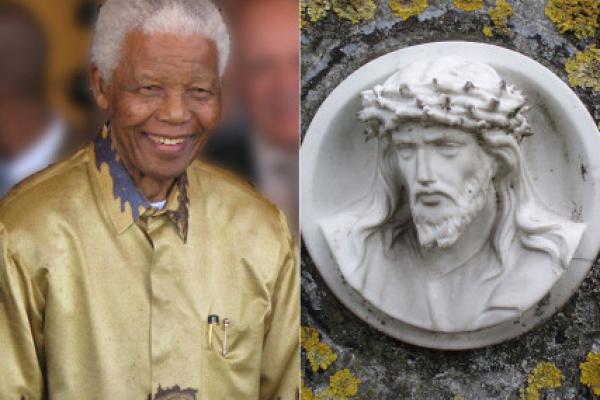
Few would deny Nelson Mandela’s greatness, but one of Britain’s best-known journalists, Dominic Lawson, has taken the media to task for comparing South Africa’s first black president to Jesus.
Writing on the eve of the departure of world leaders to Johannesburg to attend a memorial service for Mandela, who died last week, Lawson wrote in the Daily Mail: “He was a giant — but how absurd for the BBC to compare Mandela to Christ.”
Lawson singled out BBC presenter Evan Davis who told listeners on a Dec. 7 radio program that Mandela should be ranked alongside Jesus in “the pantheon of virtue.”
The BBC radio program included former U.S. President Jimmy Carter, who emphatically dismissed the notion of Mandela being on par with the founder of Christianity.