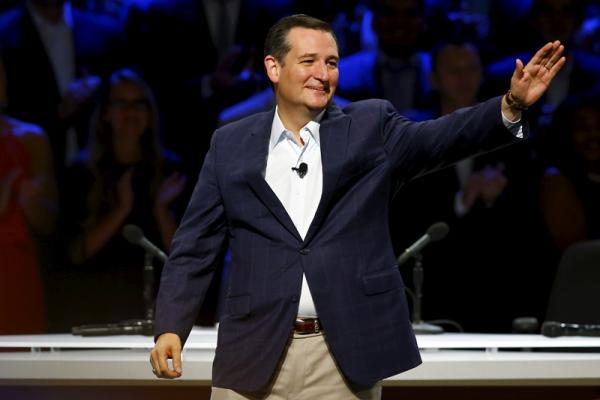
A half-dozen Republican presidential candidates hit all the hot buttons Oct. 18 while speaking to an influential audience: Religious conservatives, the kinds of voters who could decide many GOP primaries next year.
“It’s time for us to bring God back to our country,” retired neurosurgeon Ben Carson told a campaign forum at Prestonwood Baptist Church near Dallas.
From opposition to abortion and gay marriage, to support for Israel and the fight against the Islamic State, Carson and other Republican candidates — Ted Cruz, Jeb Bush, Carly Fiorina, Rick Santorum, and Mike Huckabee — drew repeated ovations at the event co-sponsored by the Faith & Freedom Coalition.
So here’s my question: Is it possible to fully embrace my religious tradition, to be able to articulate eloquently what is distinctive, and true, and holy, and meaningful, and beautiful and life-giving, and even genius about it without denigrating or playing off of another one? Does my tradition have to be superior to another in order to be true, holy, meaningful, etc.? Does it have to be the only one that conveys what is true, holy, meaningful, etc.? Do we have to compete or can we cooperate?
I’m a Christian. Not always a well-behaved or particularly perspicacious one, but a Christian all the same. I have intentionally been Christian for a long time now. Did I choose this tradition? Yes. Did I canvass all available religions before I chose, picking Christianity as the clearly superior one to all others? No. I am a mere mortal with limited time on this earth, so I have not explored all of the world’s religions, made a spread sheet to compare them like a Consumer Reports product search, and then chosen the “Best Buy.” Christianity rings true to my experience (except where it doesn’t) and gives me language to articulate what I’m experiencing and what I’m hoping for at any given moment. If you ask me, I can most certainly tell you what is distinctive, true, holy, meaningful, beautiful, life-giving, and even genius about it. You’ll need to set aside some time.
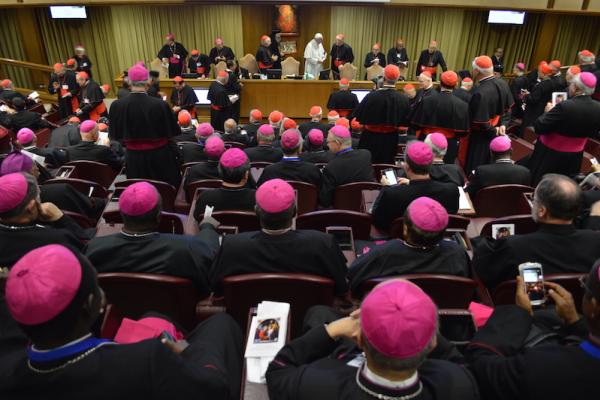
The morning prayer that starts each session of a major gathering of Catholic churchmen underway here is an important chance for the 270 cardinals and bishops from around the world to set a meditative tone for what are contentious debates about church teachings on sexuality and family life.
With Pope Francis leading the way, the prelates seated in a large Vatican lecture hall chant the traditional Latin prayers pausing near the end for a brief reflection on the day’s Scripture by one of the bishops at the meeting, known as a synod.
Yet even that moment of spiritual peace is not always a sanctuary from the tensions roiling the three-week meeting that ends Oct. 25.
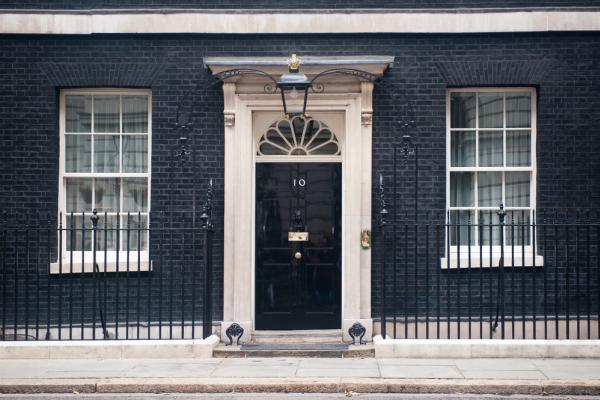
The bishops released the private letter they sent to Cameron last month after the Prime Minister’s office failed to reply.
In it they called on the prime minister to increase the number of refugees that Britain is prepared to take in over the next five years — the expected lifespan of the parliament.
Specifically, church leaders called on the prime minister to absorb an additional 30,000 refugees, far beyond the 20,000 Cameron had committed to, and to consider involving the church in a national effort to “mobilize the nation as in times past.”
David Walker, Bishop of Manchester told the BBC Oct. 18 that the figure of 50,000 was acceptable to his parishioners and was, he said, “sustainable” on a national basis.
These moments of wonder, beauty, and human connection — the simplicity of walking one foot in front of the other each day, open to conversation and observation of the time and space around you — are the elements of pilgrimage for which I am most grateful. As cliche as it sounds some 500 kilometers later, I really do feel like my pilgrimage is just beginning.
I believe pilgrimage, like God, is all around us and within us. And whether we are on this path for the first time or the 199th, there is still something here for us. Maybe not a revelation, but a noticing, a paying attention, a shifting our gaze from ourselves to the sky or the children’s laughter at the park.
If we approached this day as pilgrimage, a wandering toward creation, toward God, toward each other, toward the Earth and sky and stars, how might we see the world?

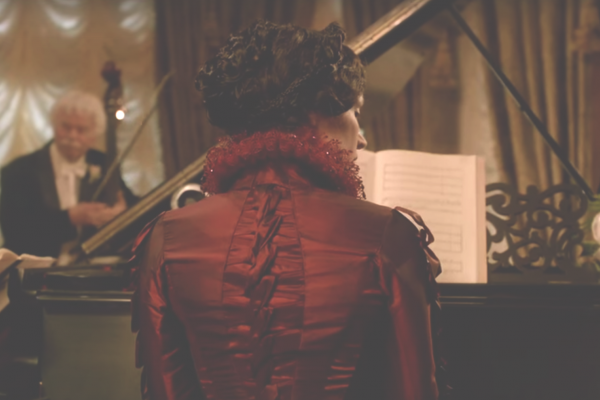
Guillermo Del Toro’s atmospheric horror movies usually exhibit an emotionally deep fascination with the supernatural. The director’s ghosts, while frightening in appearance, often don’t actually wish ill on the innocent people they haunt. Instead, they tend to be spectral echoes with unfinished business, who seek revenge and try to warn those still in harm’s way.
While actual discussions of God and religion don’t come into play much in Del Toro’s work, it’s still possible to find this approach deeply spiritual. In each of the worlds he creates, the audience is asked to take the supernatural world as a given — one that exists right alongside our own, with thin barriers that frequently give us brief views (both sublime and terrifying) into the other side. Those brief views throw our own world into sharp relief, showing us the beautiful and ugly realities of real life.
This same approach colors much of gothic literature — a genre that resonates strongly with Del Toro, particularly in his latest entry, the gorgeous, spine-tingling Crimson Peak. It’s a film riddled with characters whose lives are marked by ghosts, both real and emotional. Crimson Peak is not a perfect film, but it does many things well, including the patina of human tragedy it paints on top of its creaking floors.
This week's Wrap was guest curated by Sojourners contributor Tripp Hudgins. Read along for his top stories and notes from the week!
There’s a lot that could be said about this week and I’m genetically inclined to say All the Things, but that won’t do. I could talk about the Democratic primary debate, but there’s likely too much to sift through. Sojourners ran a story entitled, “Will Democrats Play the God Card at Their Debate?” It was a fun question and led to interesting results. But I don’t want to share a bunch of links about the debate.
Instead, I want to talk about music and technology and the fabric of society this week. So, put on your tin foil hats, spin your favorite disk, and let’s see what we can find out together.
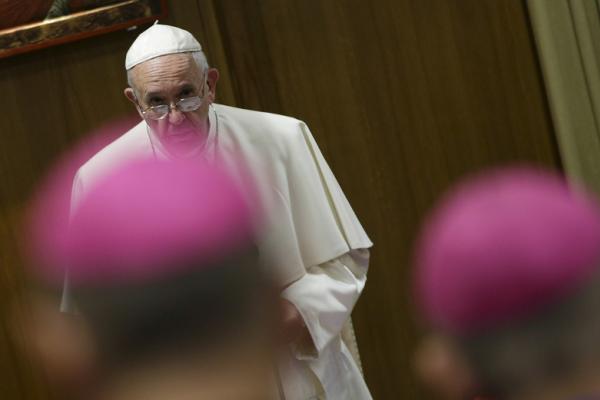
Bishops participating in the Vatican’s synod on the family have admitted they don’t know much about sex — and that they need the help of lay people to fully understand marital intimacy.
Lay people play an important part in the discussions at their Synod on the Family, the Rev. Thomas Rosica, English-language assistant to the Vatican press office, said on Oct. 16.
“At the heart of the synod is human sexuality. And oftentimes it’s muted and we don’t know how to talk about it, because most of us in the room are male celibates,” he said, citing comments of unnamed bishops.
Francis’ visit was said to have delighted around 30 homeless men hosted at the dormitory, who spoke to the pope, recounted their stories and asked to be blessed. The pontiff’s visit lasted around 20 minutes, Vatican Radio reported.
He was accompanied by his almoner (distributor of alms or charity), Archbishop Konrad Krajewski; the Jesuit superior general, the Rev. Adolfo Nicolas; and three nuns who work at the residence.
The “Gift of Mercy” (“Dono di Misericordia”) homeless shelter was inaugurated earlier this month and can host 34 people each night. The building, a former travel agency, was converted by Jesuits as a response to Francis’ call for more to be done to help poor people.