
I just read the Sojourners blog, The Most Ignored and Undervalued People Within Churches Today, challenging churches to reach out to marginalized people. I was saddened but not surprised there was no mention of the exclusion of the largest group of people excluded every Sunday morning: those with hearing loss.
I have always considered myself “progressive,” ready to take up the cause of those in society that needed advocacy. While I was a pastor of a church, I worked toward making our building wheelchair-accessible and dreaming of the day when we could hire an ASL captioner at least once a month.
Yet in my naivety I believed that adult-onset hearing loss could be countered by a good hearing aid, allowing the user to have comprehension close to that of a person with “normal” hearing.
That misguided belief was tested five years ago when, at 63, I became deaf after knee surgery. It was seven months before I received a cochlear implant, but soon discovered it was inadequate for situations I would encounter daily: meetings, restaurants, movies and — most ironically — churches.
At the time, my spouse, Sheryl, and I were awaiting her ordination to find an area where we could continue our ministry. Life, however, had other plans. As we struggled to come to terms with the full impact of my initially devastating deafness, we learned a lot about being deaf that we did not know before I tumbled head first into the community of people with hearing loss.
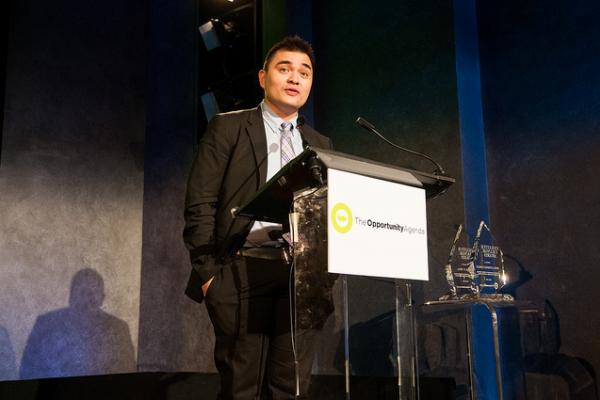
Last week, I attended a screening of Documented, Jose Antonio Vargas’ film about his coming out as an undocumented immigrant after winning the Pulitzer Prize. His journey is honest, poignant, and humorous. A lesser subject would have cut some of the material showing the strain of the situation on his familial relations, but the film never flinches from the raw story.
I sat in on a panel discussion after the screening filled with members of an organization featured in the film, “DREAMers Moms.” I had a chance to speak with several of them, and one story stuck out in particular. One mom left her country for the good of her children so they would have hope of a positive future in the United States. She hasn’t seen her mother in 13 years and won’t until immigration reform is passed into law. If she leaves the U.S., it’s likely she wouldn’t be allowed to return and care for her children. This would leave them essentially orphans who would be placed into foster care. Her mother is now in her 80s, frail and sick. This woman is losing hope of ever again touching the woman who cared for her, but still prays daily for a miracle.
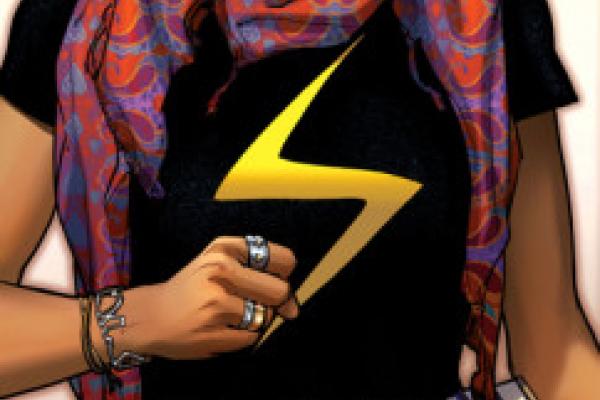
When Marvel Comics announced the debut of its latest superhero — a 16-year-old Pakistani-American Muslim from Jersey City, N.J. — it was correctly seen as a positive development. Created and written by two American Muslim women, Kamala Khan (aka Ms. Marvel) holds promise.
But while Khan is a comic book character, she should not become a caricature.
“Her brother is extremely conservative,” the editor, Sana Amanat, told The New York Times. “Her mom is paranoid that she’s going to touch a boy and get pregnant. Her father wants her to concentrate on her studies and become a doctor.”
American literature is replete with tales of assimilation, from “My Antonia” to “The Joy Luck Club.” The overprotective mother and the demanding father are staples of the genre. But with Khan, there is an additional twist: The “conservative” brother.

A federal judge has ruled that an Internal Revenue Service exemption that allows clergy to shield a portion of their salary from federal income taxes is unconstitutional.
The clergy housing exemption applies to an estimated 44,000 ministers, priests, rabbis, imams, and others. If the ruling stands, some clergy members could experience an estimated 5 to 10 percent cut in take-home pay.
The suit was filed by the Wisconsin-based Freedom from Religion Foundation on grounds that the housing allowance violates the separation of church and state and the constitutional guarantee of equal protection. The group’s founders have said that if tax-exempt religious groups are allowed a housing subsidy, other tax-exempt groups, such as FFRF, should get one, too.

A recent post by Sojourners’ Jim Wallis and Lisa Sharon Harper, Only 19 Percent Are Women, brought to light how most major evangelical conferences are still reluctant to feature qualified women as plenary speakers. In a quick survey of 34 such conferences, women gave only 19 percent of the main addresses. To Harper and Wallis, the paucity of females on these influential platforms is a serious problem.=
But I also know that some organizers actually do embrace that God originally charged women and men to lead together. And they believe that Christ’s work on the cross has destroyed the curse that’s led to systemic patriarchy — however benevolent — that has kept far too many women from being restored to their rightful place as coheirs of God’s kingdom. In their local settings, they gratefully serve together with female leaders. However, when it comes to pulling together a platform for their group’s conference, they choose not to include females for fear of backlash or boycott from the more conservative speakers and invitees.
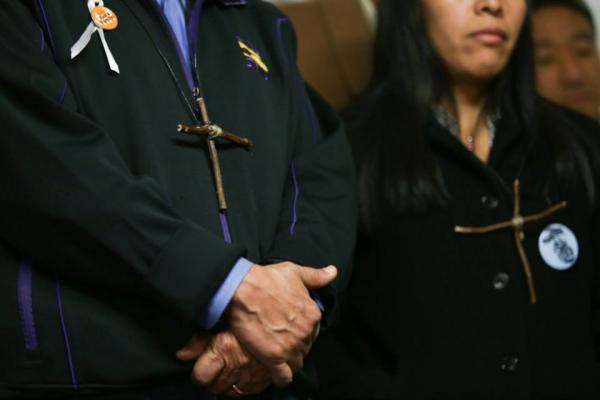
(Editors Note: This post continues updates from Lisa Sharon Harper, director of mobilizing for Sojourners, as she experiences the "Fast for Families: A Call for Immigration Reform and Citizenship," taking place on the National Mall.)
Entering Day 13 of my #Fast4Families. Day 12 was holy ground for me — a crossroads. I woke up that morning sensing God's call to move back into the tent during Thanksgiving week and through Thanksgiving weekend. I did that for the first two days and it was hard on my body. When I left the tent and went back to work, I continued the fast by drinking homemade clear vegetable broth twice a day and fruit juice in the morning. That made it possible for me to continue the fast and still work.
But now, we're talking about Thanksgiving week. There's no need to worry about being able to work. Sojourners office will be pretty much closed from Wednesday through the weekend. I talked with one of the leading organizers of the #Fast4Families tent yesterday. I told her I'm considering moving into the tent for the week, but I'd need to be able to take V8 a couple of times a day. This was her response: "In order to maintain the integrity of the fast that we have run so far, we can only allow water only fasting while in the tent."
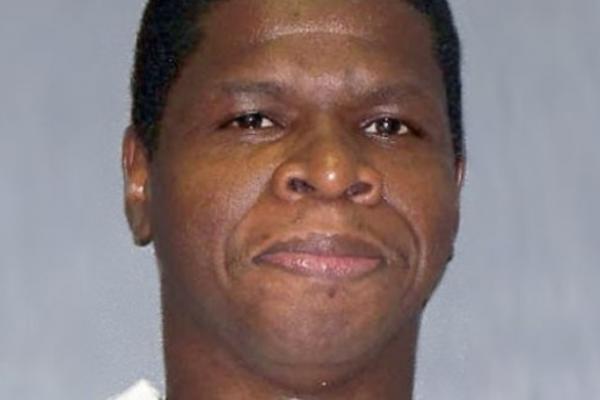
Twenty-seven evangelical Christian leaders across Texas and the United States are calling on Harris County District Attorney Devon Anderson to allow a new, fair sentencing hearing for Duane Buck. Mr. Buck is an African-American man who was condemned to death after his sentencing jury was told that he was likely to be a future danger because of his race. These evangelical Christian leaders oppose the setting of any execution date for Mr. Buck.
“We write to respectfully request that you support a new, fair sentencing hearing for death row prisoner Duane Buck,” the letter states. “Although opinions on the death penalty vary within each of our churches, we are strongly united in our view that no death sentence should be a product of racial discrimination, as it was in Mr. Buck’s case.”

I was raised bilingual and bicultural in New Mexico, the state with the highest percentage of Latino population, nearly 50 percent. In addition to working as an environmental advocate, I am also a member of the rising Latino generation, the fastest growing young demographic in the country. Fifty thousand Latinos turn 18 every month. To put this in perspective, Pew Research Center estimates that by mid-century, Latinos will comprise nearly 30 percent of the U.S. population.
When I was 18, I had just graduated from high school with several years of soccer at Santa Fe’s 7,000-foot elevation under my belt. I was on my way to college, and would go on to complete a master’s of science in an interdisciplinary environmental sciences program.
What my experiences do not include are those that are far too common among Latino 18-year-olds who are disproportionately affected by carbon pollution. Carbon pollution contributes directly to climate change, in turn endangering Latinos due to the resulting health and environmental repercussions. One expected climate impact in the U.S. is more smog in areas with poor air quality, translating to more asthma attacks for our young people. In fact, the Latino community is one of the hardest hit: Hispanic children are nearly two times as likely to be hospitalized for asthma as white children. Other illnesses related to poor air quality, such as chronic bronchitis, are also prevalent within Latino communities, yet nearly half of all Latinos in the U.S. live in counties that often violate ground-level pollution standards.

The nuclear agreement with Iran is a triumph of diplomacy. It stops the expansion of Iran’s nuclear program, rolls back some of its most worrisome elements, establishes more rigorous monitoring to guard against cheating, and suspends some sanctions on the Iranian people.
If implemented, this agreement will significantly reduce the potential nuclear threat from Iran and enhance the security of Israel and other states in the region. Secretary of State John Kerry and President Barack Obama deserve credit for supporting the diplomatic effort.
The agreement includes a commitment from the U.S. and its allies to “not impose new nuclear-related sanctions for six months.” This means that the U.S. Senate must defer any further sanctions measures to allow compliance to proceed.