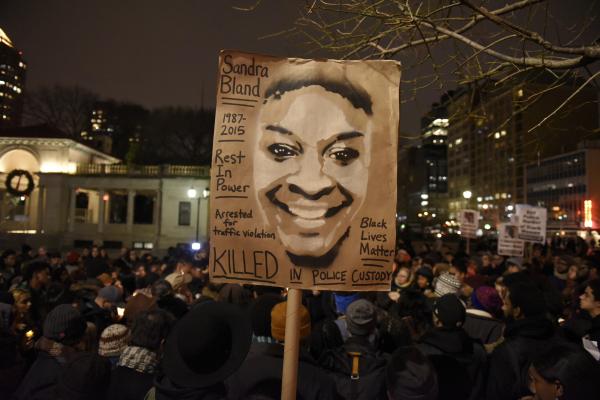
A wrongful death lawsuit filed by Sandra Bland’s family was settled for $1.9 million, a family attorney announced on Sept. 15.
Sandra Bland was pulled over by a state trooper in Waller County, Texas for failing to signal before she changed lanes.
When Bland made an attempt to record the state trooper’s interaction with her, she was arrested. Three days later she was found dead in her cell by hanging.
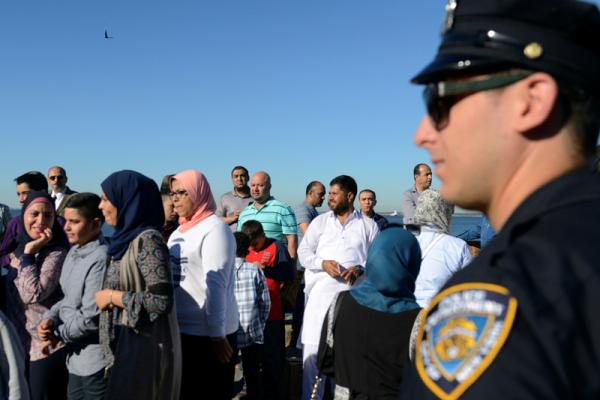
About 40 percent of Americans say atheists “do not at all agree” with their vision of America, according to a new study from sociologists at the University of Minnesota who compared Americans’ perceptions of minority faith and racial groups.
But the study marks a grimmer milestone — Americans’ disapproval of Muslims has jumped to 45.5 percent from just over 26 percent 10 years ago, the last time the question was asked.
And “nones” — those who say they have no religious affiliation, but may also have spiritual or religious beliefs — are also unpopular. This is significant because nones now make up one-third of the U.S. population.

My prayer for the next 50 years is that the church can find the Gospel and put it first — ahead of race, class, nationalism, gun rights, and any other worldly divisions that place God's people in danger; and to recognize that apathy toward any of God’s people is a sin. As Christians, we owe it to the four Birmingham girls and the Charleston Nine to band together, to fight against allowing another hate crime within the walls of a holy space again.

A 13-year-old boy was shot and killed by an officer in Columbus, Ohio, on Sept. 15, after he allegedly brandished a BB gun as police attempted to arrest him, the Columbus Division of Police announced this morning.
The officers were responding to a report of an armed robbery in the area. Tyree King, the 13-year-old, was thought to be one of multiple suspects.
The name of the police officer who shot and killed King has not been released, however it was revealed that he has been a police officer for nine years.

The family of a Muslim recruit who died during Marine Corps training is pushing back against claims by military officials that he committed suicide.
Raheel Siddiqui, 20, was in basic training with the Marines on Parris Island in South Carolina when he died March 7 after falling 40 feet in a stairwell. Marine officials have said that Siddiqui killed himself, but in a statement released Sept. 13 through their attorney, Shiraz Khan, the family said “they do not believe the story of Raheel committing suicide.”
“We believe there is a lack of material evidence needed to support ‘suicide’ as the most probable cause of death in this case,” the family said through Khan.
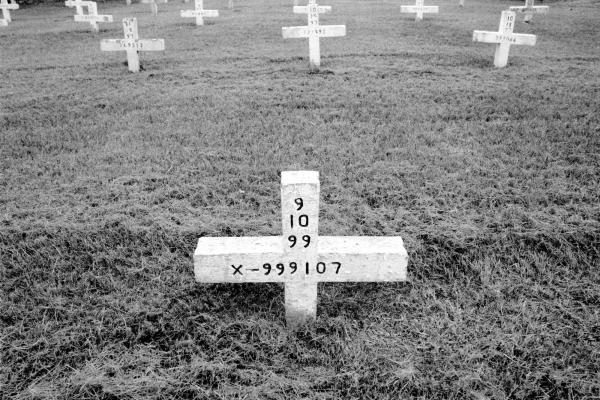
Since the reinstatement of the death penalty in 1976, Texas has had 537 executions — that’s over 400 more than any other state. But it has been more than five months since Texas has had an execution — 161 days to be exact. And that’s a record worthy of news. There’s only one other time in the past two decades that the death chamber has been that quiet in Texas.
But what’s happening in Texas reveals something deeper that’s happening all over the country. The death penalty is dying.
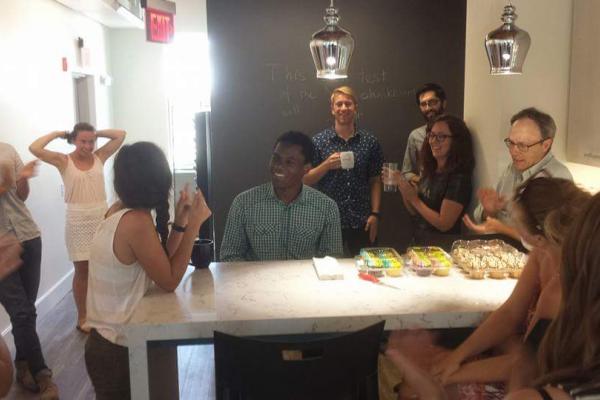
Each fall, Sojourners welcomes a new cycle of interns to our yearlong internship program. The program seeks to empower these leaders through professional development, spiritual guidance, simple living, and community building. The program embodies our organization’s history, which was birthed out of holistic community.
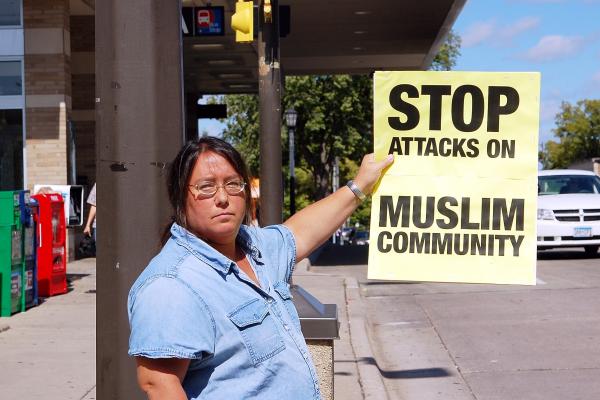
"When we allow one faith community to be targets then we open the doors for others to be targeted. I believe the worst is yet to come unless more people actively intervene with their voices, their votes, and in public acts of solidarity with their Muslim neighbors."
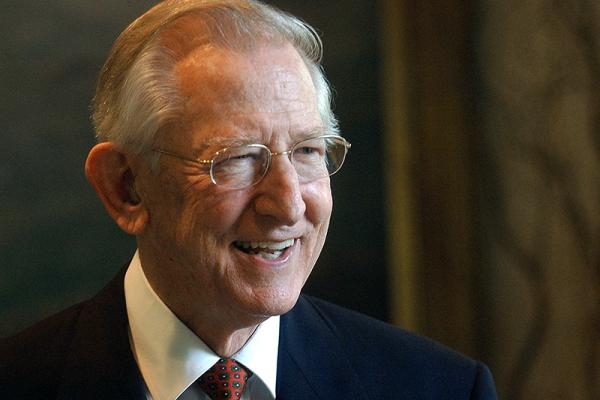
Butt was the former head of the H.E. Butt Foundation, which takes as its mission “the renewal of the Church” and runs retreat programs and a Christian camp for children.
He was perhaps best known, though, as the fatherly voice of one-minute radio spots, called “The High Calling of Our Daily Work,” in which he gently preached that people should make Christianity the cornerstone of their life’s work.
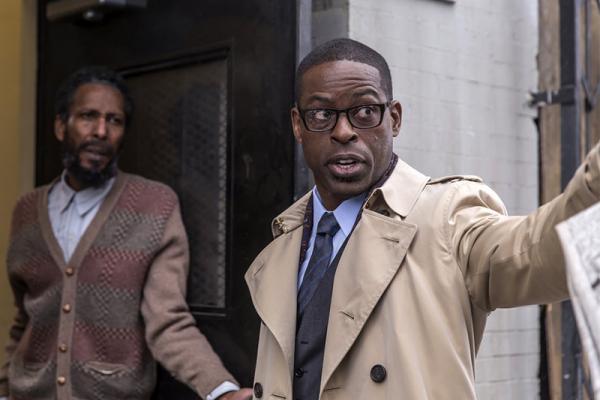
This Is Us is tough to describe because the last few minutes of the first episode contain a major game-changing surprise. But without giving too much away: Several characters from completely different walks of life are turning 36. Each of them feels stuck and knows it’s time for a change: An overweight woman determines to lose the weight, and a sitcom actor quits his series. As you might expect, their paths begin to cross in unexpected ways, and we learn just how connected these strangers really are.
Religious themes:
Sure, the whole “show-how-these-strangers-are-connected-even-if-they-don’t-realize-it” device isn’t new — but the show succeeds anyway. In today’s fast-paced, competitive, fragmented world, it’s always a good reminder that we’re all connected to each other, even, and especially when, we aren’t aware of it.