Share As A Gift
Share a paywall-free link to this article.
This feature is only available for subscribers.
Start your subscription for as low as $4.95. Already a subscriber?

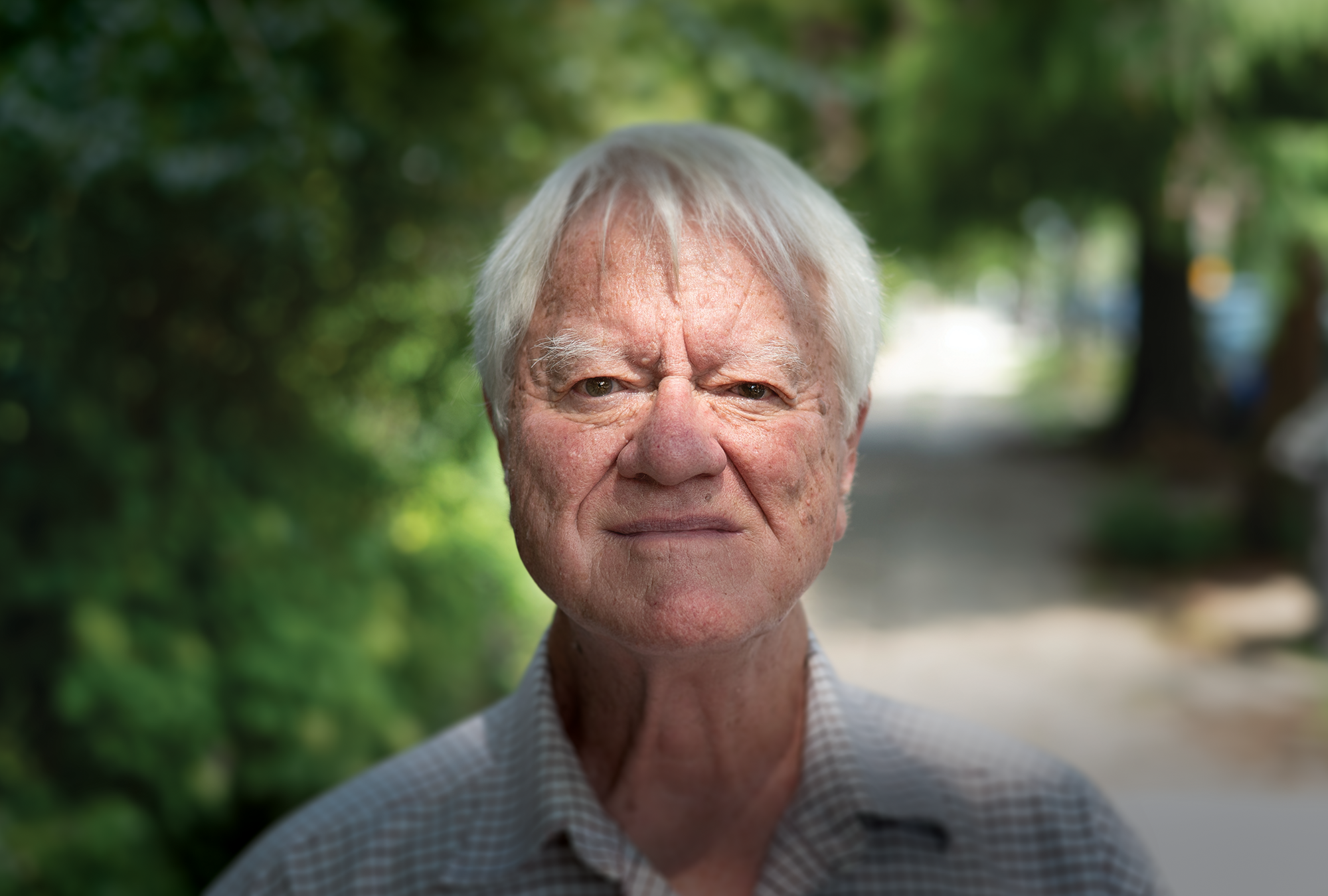
IN THE LATE 1940s, a 12-year-old George Lakey preached a sermon at his church declaring racial equality to be the will of God. He was never invited to preach at that Evangelical Congregational Church again. But that incident explains the life that followed.
While in college, Lakey became a Quaker. He graduated from the historically Black Cheyney University of Pennsylvania. He thought about being a musician. He considered teaching high school social studies. He pursued a Ph.D. in sociology, but instead of retaking his oral exams, Lakey used his schooling “to become an evidence-based social activist with skills to do homework for the movement,” as he writes in his autobiography Dancing With History. He spent more than six decades as an activist committed to practicing and training others in nonviolent direct action. (Music never left him, and he spent many years teaching peace studies classes to college students.)
In 1965, George and his then-wife Berit Lakey (who are both white) adopted Christina, a Black girl only a few months old. The Lakeys soon afterward purchased a house in West Philadelphia, where they also raised Peter, who was also Black and adopted, and their youngest daughter, Ingrid. George lives in that same house today.
And yet, rooted as he has been, a lot changed in his life over the years. In the early 1970s, he came out as bisexual at an annual Quaker gathering, in front of a thousand people. In 1985, after 26 years of marriage, he and his wife split up. Not long after, his son Peter died, “of poisoning,” at the age of 20.
Lakey’s early years involved his activism in the ban-the-bomb and Civil Rights Movements; his later years involved a successful campaign against PNC Bank’s plan to finance mountaintop removal mining in Appalachia. In the early 1990s, he and Barbara Smith founded Training for Change, an organization that trains thousands of activists committed to social justice and “radical change” every year. In 2024, at 86, he was arrested for joining about a dozen people blocking the entrance to Sen. John Fetterman’s office, to encourage Fetterman to support a ceasefire in Gaza. “There are those who look at things the way they are and ask why,” Lakey once wrote, paraphrasing George Bernard Shaw. “I dream of things that never were and ask why not.”
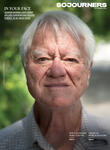
Author of books such as How We Win: A Guide to Nonviolent Direct Action Campaigning; Toward a Living Revolution: A Five-Stage Framework for Creating Radical Social Change; and Viking Economics: How the Scandinavians Got It Right—and How We Can, Too, Lakey has left plenty of anecdotes and strategies behind that are remarkably applicable to organizing in our present day. But in August, when photographer Tracie Van Auken and I met Lakey, who turns 89 this November, in his West Philadelphia home, I was especially curious to talk with Lakey about aging. He still stood over 6 feet tall, but later told us that he’s starting to have issues standing up after sitting down. He was wearing a wrist brace. We spent two hours with him—after which he said he would take his afternoon nap—and along the way we talked about his legacy as a leader in nonviolent movements.—Darren Saint-Ulysse, Sojourners associate editor

Darren Saint-Ulysse: In our email correspondence, you said, “This is such a great time for Sojourners to interview me, since I’ve really reached the end of the line for the ‘organizer’ role I played so often in my long activist career!” You still look strong! Why have you decided to stop now?
George Lakey: I’ve worn out. I was hoping I would be an exception! I feel like I pushed and pushed and pushed and pushed, and I can’t push myself anymore. A lot of it shows up in memory. Like in 10 minutes, if you ask me, “Oh, did we cover that?” I won’t remember if you did or not. So how useful am I in a meeting if I don’t remember if something was brought up or not? I just don’t have the memory support to be able to do organizing anymore.
How does that feel?
Oh, disappointing. I mean, I would like to be Superman.
Wouldn’t we all?
Oh, I’m so glad to hear you say that.
I identify with wanting to be everything, everywhere, all at once. What if I were able to be in these three places at the same time?
And to do that, I would organize an organization that had people like me who I had trained, be able to be in those three places once. [But now] I can’t train. I tried six months ago. And I was like, “Uh, where are we now?” I just couldn’t follow.
You’ve been reflecting on your life recently. Citizen George, a documentary about your life, came out in 2024. Your autobiography came out in 2022. Some people your age have looked back on their legacy with questions—“What did we actually do?”—especially these days. But I notice more of a sense of accomplishment from you. How do you look back at your legacy?
Well, when I was a young activist, I ran into some old activists who did feel that way. And I thought, “As far as I know, God wants me to be an activist all my life. But I don’t want to be like that when I’m their age. So what is going to make the difference?” And I thought, “The difference might be if I train people to be able to see the world the way I see it. And so that’s what I will do.” That’s the reason why training shows up [so much], especially in the book. I’m so proud that [Training for Change], the agency that I created, is still going strong.
I want a workshop to be as tough as we can make it—short of menacing.
Your trainings use direct confrontation. You tell participants: “I’m going to be like a police officer who’s in your face.” But there is a model of nonviolence training right now that relies primarily on PowerPoint presentations.
One of my regrets is that I left that movement without stamping out PowerPoints. That had been one of my goals: to stamp out PowerPoints!
What would you encourage others, who may have the same goal as you, but use PowerPoints as their main tool, to consider in training other people?
Well, they’re making it way too easy for people, which is a miscommunication about nonviolent struggle. My experience with nonviolent struggle is that it has never been easy. So, if the pedagogical methodology is undermining the content, that’s not good. People need to struggle. I’ve hardly met, in all those decades, anybody who didn’t have at least some point where nonviolent struggle was hard for them to grasp—or they grasped it and wanted to reject it, because there’s a lot about it that’s scary. Our culture doesn’t support it, our political culture doesn’t support it, the Left doesn’t support it.
It takes a really hardy kind of person to embrace nonviolent struggle, to get enough of the facts straight and the story straight so that they can soldier on in the midst of lots of distraction. I want the workshop to be tough. I want it to be as tough as we can make it—short of menacing. I’m not trying to be menacing or hurtful, but the instrumentality we’re trying to teach is tough.
How did you manage to find people who you wanted to build trainings with?
I kept asking people, “So who’s hot on training?” Including educational psychologists that have been doing this stuff for years. I ended up going to the American Sociological Association meetings, I went to the American Psychological Association meetings, and those would all have different things that related to training. I would just soak those up. I was an empirical guy.
It seems like you’re saying you have to show up in order to find the people.
Oh, yeah. I think so. I don’t think it can all be done in the head.
I want to talk about sustainability. What allowed you to be able to ask people for help—especially financially? I think many people are scared to ask.
Oh, absolutely. [Asking for money is] one of the universal fears.
How did you get comfortable with doing the asking?
I never did. So, number one was to become okay with being uncomfortable. Which was hard. Because I’m working class. Working-class people are not brought up to seek stuff that is out of the ordinary from middle-class people. We’re used to asking for the usual stuff, not the unusual stuff that would be a stretch for them. Like, who do I think I am? Asking a middle-class professional to stretch themselves for something I want to do? My dad [a quarry worker] would beat me up for doing that!
I had to take chances. And I related that to my commitment to nonviolent direct action because I said, okay, what is Dr. [Martin Luther] King asking me? Yeah, he is asking people to take chances. Some of those don’t even look that much like chances; they look like certainties to get beaten up. That really influenced me in a way that young people today are not influenced. I so wish that a movement would come up against Trump that he would not know what to do with; if it followed King’s way—especially the way in which the willingness to sacrifice cuts through so much rhetoric. And what people can see is, “Oh my God, that person is willing to [do XYZ] because that’s how strongly he feels about that.” I wish we had a movement like that every 15 years or whatever, to educate a new batch of people in courage.
It’s not to say that fundraising is going to become not threatening, because if I do it wrong, there are consequences. [For example,] I spend an hour and a half of my day going way out into the suburbs, sit in a gorgeous house, and ask this person for money, and they say, “Well, you make an interesting case, but no thanks.” That’s usually consequential for me. Sometimes my salary would actually depend on my fundraising. But even when my salary didn’t depend on that, the chance to realize my optimal ambitions with that organization were riding on it, because everything takes money.
And so, I kept remembering the movement. I was taught to be this nice working-class boy. So who the f**k am I? My dad didn’t use the word “f**k,” but he would have liked to. He would have said, “George, who the f**k do you think you are, going out there and asking Mrs. Heberling for $5,000?” He really felt I didn’t deserve [it]. I needed to be coming from a different class to take that kind of action. That’s how oppressed he was as a working-class person. And I wept for him. But sometimes I would weep for me. Because I idolized my dad when I was a boy. He was a very courageous man. That’s where I got my courage from, and to go against my dad that way—I stopped talking about it. I just wouldn’t tell [my parents] what I was doing.
I wish we had a movement like that every 15 years or whatever, to educate a new batch of people in courage.
You’ve talked about sustainably funding your work. How did you sustainably manage family? What did you do well, and what would you have done differently?
What I did well was to reach my third child’s brain, her thought process, on her level. I finally figured out how to talk to her in ways that would enable her to identify with what I do. And she is an activist [now].
In the process of stumbling and stumbling, there were the two older children who had the additional difficulty of the color difference—and racism being so real. You met Christina in the film, and her great wisdom in the film was: He still doesn’t get race! We love each other, and she is so willing to be honest about everything.
And then [Peter], who I cry about. [Christina] was at least able to find something to stand on, but he wasn’t able to find anything to stand on.
We were so far out ahead of the mainstream. You know, as white parents. Trying to rear Black children. And then [there’s] the whole gender thing, right? So at least Christina had gender going for her because females are expected to actually think.
But [Peter] just got totally confused, kept throwing himself into whatever came by. I will never get over losing him.
“I’ve hardly met anybody who didn’t have at least some point where nonviolent struggle was hard for them to grasp.”
I imagine a large part of your community in the past was as a leader. Now that you have stepped back, how does community work for you?
Aging for me, now, is putting myself first.
[My daughter] Ingrid is only four blocks away, so she keeps track of me, which is reassuring. But I don’t want to be a burden on her before I need to become a burden on her. I see my stage in life as one of taking away all those opportunities that you just described and saying “That was then, George. This is now. If you can get yourself out of bed and ready to meet these interviewers, that’s all that’s required.” I experience that as a relief. I don’t think I would have [felt this] if it hadn’t been for the film and the book. Enough is there in them so that most any activist can find some things [and say,] “Ooh, that was smart. I could do that.” That would satisfy me enormously, even though I probably will never find out. But on the other hand, the movement is close enough that I probably will find out!
In Dancing With History, you mentioned that in an alternate life, you could have taught piano and social studies. As a musician myself, I read that with great interest. What are your favorite songs to play on the piano these days?
I love what I do on the piano with folk songs. Because I kind of soup them up.
That means your left hand’s got to be pretty busy then.
Uh-huh. Exactly. Pretty busy. And hymns. I like playing around with hymns and making them more interesting. I like staying in the innovation mode, even though I’m sure I keep doing the same thing over and over. But nobody’s listening, so what?
Favorite hymn to innovate on these days?
“O Sacred Head, Now Wounded.”
Favorite protest song?
“Oh, Freedom.”
“Before I’d be a slave, I’ll be buried in my grave.” Why that?
Within the context of the song, it’s like it said: There is a place beyond which I will not go. So, I will try to be strategic: I’ll try to campaign in ways that are understandable in the middle, so the middle will join us. Make all these compromises and stuff like that. Try to control the people, the crazy people, so that we don’t upset them. Do all that. But this is where I [draw the line].
Do you think you could show us “O Sacred Head, Now Wounded,” the George Lakey way?
[Shakes head no.] My fingers are not as adept as they used to be. I can’t do what I want to do. Each time, it’s frustrating. Enjoy your fingers!
When was the last time that you were on that piano over there?
Yesterday. I’m delighted that it’s here. But it’s a mellow experience. Because it’s also a reminder of what I can’t do anymore. As well as what I can. So, I’m still working on that. There’s lots to work on in aging. Yeah. Lots of letting go. Without letting everything go.
Did this article have an impact on you? Tell us how! Whether you’re moved to take action, have a question, or want to share a comment (good or bad), we value your feedback!