Share As A Gift
Share a paywall-free link to this article.
This feature is only available for subscribers.
Start your subscription for as low as $4.95. Already a subscriber?

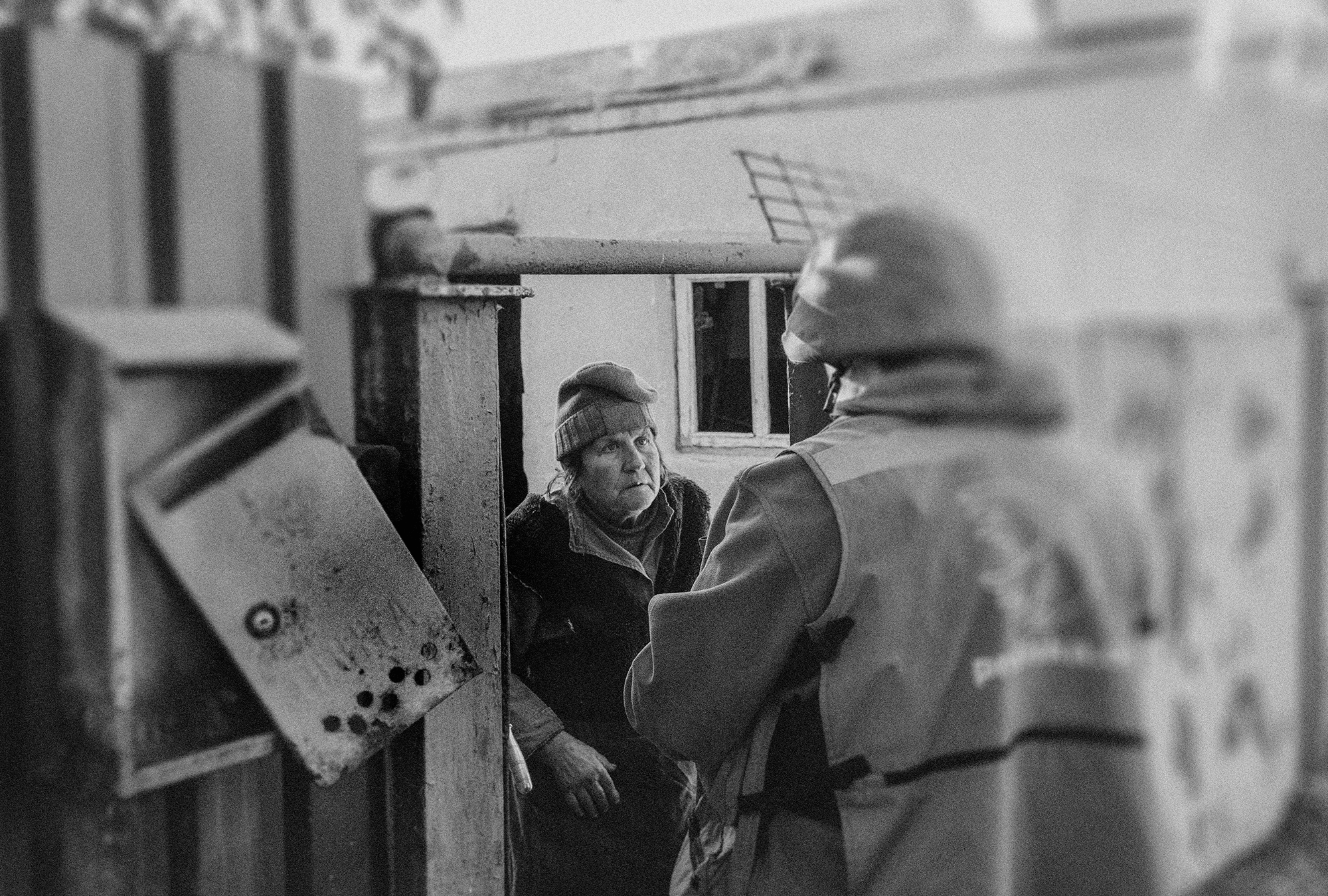
IN FEBRUARY 2022, Russia’s full-scale invasion of Ukraine triggered one of the largest humanitarian crises in the world. Within months, millions of Ukrainians needed assistance to survive a protracted conflict that continues today. In 2025 alone, Ukraine received $1.85 billion in humanitarian funding.
The United Nations mandates that humanitarian aid be distributed impartially, based solely on the severity of need. In practice, however, some needs are more supported than others. In global humanitarian funding databases, only 0.1% of project titles mention older people.
“Unfortunately, elderly people nowadays have truly become unwanted,” says Iryna Miroshnichenko, who runs Ocean of Goodness, Ukraine’s only displacement shelter exclusively for people with disabilities and limited mobility, in the city of Dnipro. She struggles to get her programs funded, noting, “everyone is focused on issues like gender-based violence or children. That’s what they consider urgent. That’s what gets attention.”
The implicit logic of modern humanitarian response often leads aid organizations to measure their impact by the economically productive lives—people who do, can, or will contribute to the workforce—that they save. This inadvertently means younger lives carry more weight, while the lives of older or disabled people carry less. We saw something similar during the earliest days of the COVID-19 pandemic, when approximately eight out of every 10 people who died in the U.S. were 65 or older. Nonetheless, the policy response prioritized reopening: to get back to work, back to school, back to productivity.
But the Ukrainian people that aid worker Yevhenii Tkachov, 57, evacuates from their frontline homes will not rejoin the workforce. Many of these elderly people will not live another year or even survive the drive out.
What place does honoring a dignified death have during a humanitarian disaster? Why do some like Tkachov fight so hard for it?

WHEN TKACHOV ARRIVED during the early morning at the address in Kostiantynivka, an industrial city in eastern Ukraine, the man he came to save was already dead. He lay frozen with a floral-printed fleece comforter pulled up to his chin; his white hair fanned out around his head, bare against the October draft blowing through shattered windows. In the bed pushed up against his, his widow lay still but awake, smiling and dazed—she didn’t even realize he was gone.
Their one-story red brick house sat resolutely in a field, surrounded by a maze of stout storage rooms, rickety structures of wooden planks and fence wire topped by corrugated tin roofs. A satellite dish extended from the main house, largely useless. The inside of their home was crowded with cardboard boxes, emblazoned with the logos of NGOs delivering goods to people living on the frontlines. The contents were scattered—paper towels, toiletries, and water bottles, which have become the town’s only source of fresh water. In the kitchen, a propane tank was used for cooking since the house no longer had heat or electricity.
Besides the frozen dew crunching under Tkachov’s boots, it was quiet. The surrounding houses had been abandoned. The couple was among the remaining 6,800 residents in a town that had 67,000 before the full-scale invasion, one of the last Ukrainian strongholds in the 90% Russian-occupied Donbas region.
Two weeks earlier, the man was well enough to refuse evacuation. Tkachov had driven east for hours on a stretch locals call the “road of death” due to the frequent Russian drone strikes along the otherwise tranquil, tree-lined route. False alarm, the man told Tkachov when he arrived. He was feeling better. But then he called again. His condition had deteriorated, and he was worried for his bedridden wife, who had dementia and depended entirely on him.
His instincts were right. Tkachov got her out as one of his last evacuations in Kostiantynivka. Within the week, Russian forces invaded from the south, turning city streets into an active battleground and triggering another civilian exodus that would bring the population down to 2,500 by spring 2026.
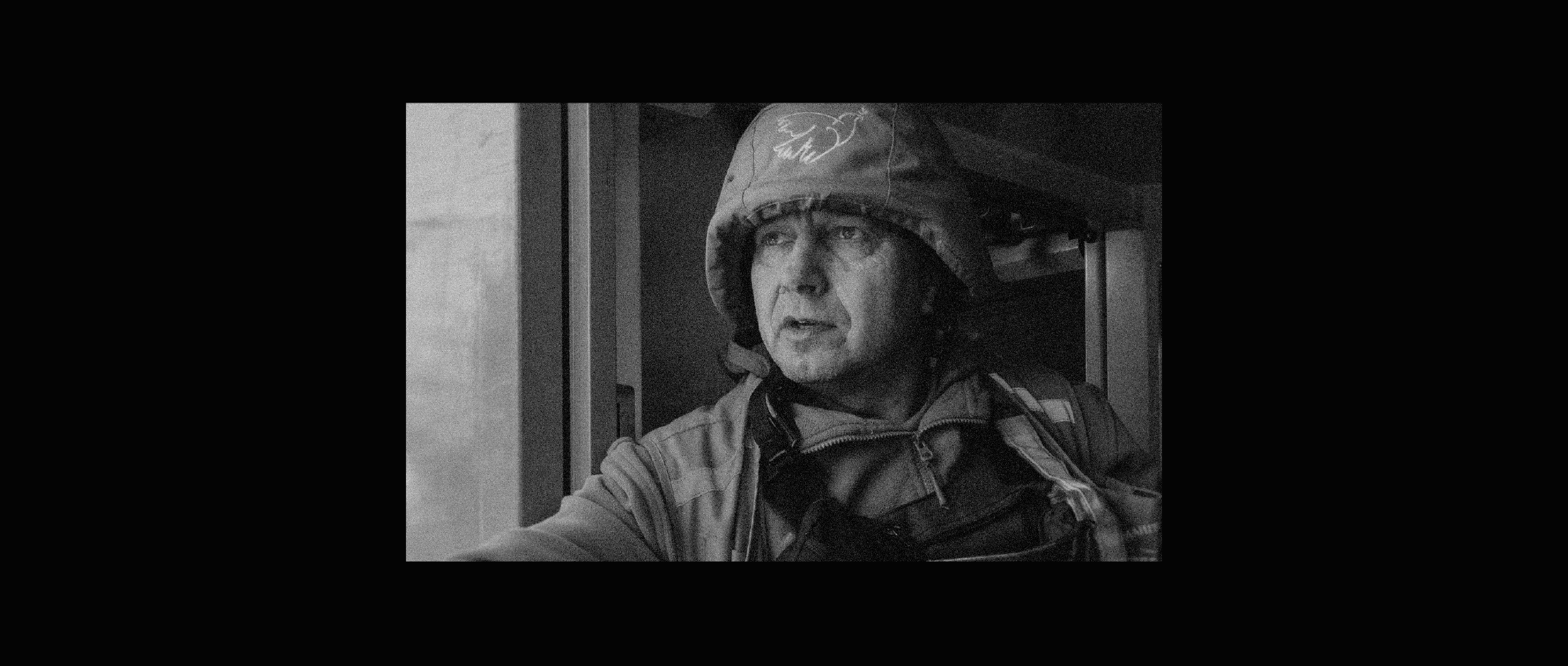
Yevhenii Tkachov wears a Proliska emblem on his helmet identifying him as a humanitarian worker evacuating Ukrainians from combat zones. / Photo by Marharyta Fal / Frontliner / Getty Images
I FIRST MET Tkachov over a WhatsApp video call in October 2025. From my hotel room in Kyiv, I saw his softly smiling face in extreme contrast to the pitch-black room (the electricity was out, again). Tkachov called from an undisclosed location in Donbas, Ukraine’s easternmost region, where he recounted the somber events of the day while sunk into an armchair, his grey cat cuddled up in his arms. He laughed easily and described his near-death encounters matter-of-factly, the only betrayal of anxiety being his habitually running his hands through his hair.
When he was 33, Tkachov converted to Pentecostalism, which motivated his pivot to international humanitarian work.
“The time came, and God called me,” he said.
In 2014, when Russia-backed militants captured Sloviansk in the Donetsk region, Tkachov first started evacuating elderly people, for which pro-Russian forces sentenced him to 30 days in a penal colony digging trenches. When they found out Tkachov was Pentecostal, they reclassified the charge to “ideological sabotage,” claiming he was an American spy—a capital offense. Four other captured Pentecostal Christians were killed there, but Tkachov was lucky to be freed when Ukrainian forces recaptured the city. The fear of capture is still there, however, when Tkachov drives into Russian-occupied territories.
“Our work isn’t just dangerous because of shelling. The worst case—and this is very real—is execution,” he said.
But this hasn’t stopped him. Defying dozens of attempted drone strikes, Tkachov continues to crisscross the expansive landscape of Donetsk, where he’s from, responding to evacuation requests. Over a decade, he has driven thousands of men and women (and the occasional family goose) toward safety further west.
Instead of running away, Tkachov jumps immediately out of his vehicle, faces the drone, and yells “WAHOOO!”
Tkachov works with Proliska, a humanitarian mission renowned for not leaving behind the most vulnerable—those with complex disabilities and mobility challenges, people who often are also older. He’s developed a reputation for taking on the most difficult evacuations at addresses closest to the front, for people who are in the worst shape. But it’s his unconventional approach to dealing with drone attacks that earned him the nickname “Crazy Yevhenii” with his colleagues. One reporter described that instead of running away, Tkachov jumps immediately out of his vehicle, faces the drone, and yells “WAHOOO,” flailing his arms energetically in hopes that whoever the operator is behind the machine would respect his brightly marked humanitarian aid vest.
Most evacuations begin the night before. Tkachov sifts through a list of addresses compiled from three sources: requests from organizations that come in through social media; referrals from military administrations and police; and direct calls from the people themselves. He prioritizes routes by their relative safety, picking the most accessible and closest routes first, and sets out after the sun rises, when there are other people on the road. More people means a lower chance of being singled out by a drone. Though Tkachov used to go in a convoy before 2022, he now ventures out alone because the route is too risky for more than one vehicle. On the most dangerous runs, he can evacuate three people a day. On safer routes, up to 10.
Upon reaching them, getting people to actually leave is sometimes a negotiation. According to a 2026 UNHCR report, a quarter of older Ukrainians near the frontlines have no intention of evacuating, even as the security situation worsens. The reasons are all practical: some say they have nowhere else to go; some simply can’t afford to leave; many have a chronic illness or disability.
“At my age, I just want to stay in my home and die here,” Olena, an 88-year-old resident of Kherson, told UNHCR. “I don’t have the time and energy to start all over again.”
But getting people to leave is Tkachov’s specialty, and he deploys methods that may not be the most honest. If he knows there’s a favorite grandchild, he’ll get them to record a video begging the grandparent to leave and play the message on his phone for the grandparent at their door. He tells scary jokes—Russians coming to shoot them in their sleep, etc.—the idea is to shock people into motion when gentleness doesn’t work.
“Yes, they curse, swear, call me an idiot, a sectarian. But in a large percentage of cases—it works. So yes, I’m a scary guy,” he said with a laugh. To him, it’s better than leaving people to die. “As a Christian, it is my duty to convince them to evacuate. If God already placed me in the Donetsk region, he probably wants me to save people here,” Tkachov says.
Recently, Tkachov observed that the refusal rate increased with the decline of the communication infrastructure. The Russian occupation has obstructed internet services since 2022, and it’s getting stricter. More people call him and lie about wanting to leave, when really, they simply want information from the outside. Tkachov takes it in stride.
“Our arrival is the only chance for them to find out if their loved ones are even alive. They’re ready to be shouted at, scolded—but at least they get news from their family,” he comments.
Those who do leave with him are not guaranteed safety either. The standard protocol for drone threats is to jump out of the car immediately, but those with mobility issues often can’t react quickly enough.
During the ride out, some of his passengers sit in silent shock, some keep their heads bowed in prayer the entire way, and some cry their hearts out. “You have to understand—they spent 50 years building that house; they know every stone, every tree. And they understand they will never go back and will live the rest of their lives as displaced people,” Tkachov says.
He drives them to a handoff point about 10 miles from the frontlines, where a bus is waiting to take them to temporary shelters—free, for up to a month with some government support—while aid workers attempt to find them more permanent placement somewhere safer in Ukraine.
As I listened to Tkachov, I had a nagging question, one that I almost hesitated to ask for fear of being insensitive: Without family, without money, and often in their 90s, dependent on a slew of medication, what are the chances of these people living much longer?
“I don’t think about that. If I kept thinking about it or remembering it all, I’d go insane,” he replies. “I’ve evacuated thousands of people; I just don’t want to carry all of that inside me. I’m sorry,” he answers. Sometimes, grandchildren of people Tkachov had evacuated call him to thank him, but he does not keep in touch.
Some needs are still on his mind, though. “The only real problem is with bedridden or immobile people who require constant care. There’s a shortage of places for them—a waiting list of about 50 to 100 people.”
In 2017, Tkachov founded and co-runs a “hospice” with his son, caring for about 40 people who have nowhere else to go. Such an institution is an unfamiliar concept in Ukraine. “Normally, in Ukraine, the tradition is for elderly people to take care of themselves,” he explains. “They don’t want to be a burden.”
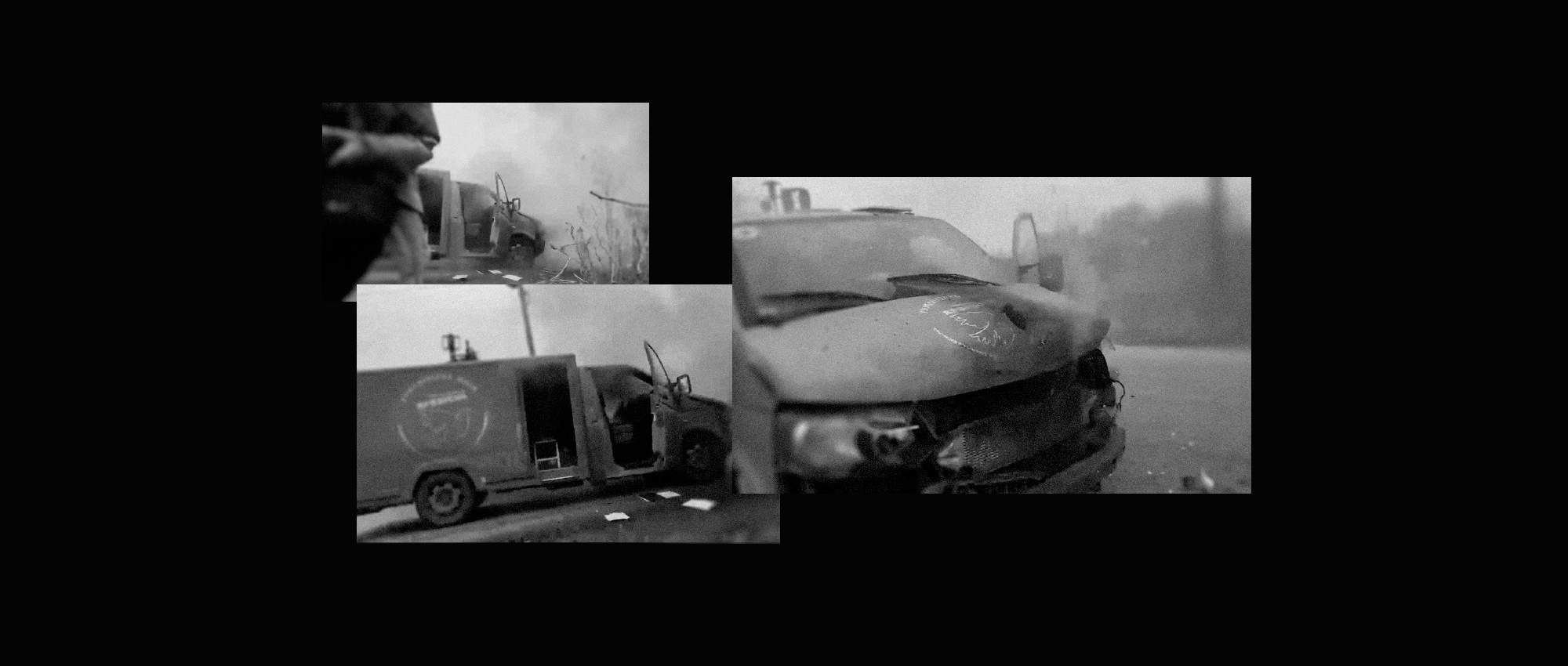
Video stills following a drone strike on Yevhenii Tkachov’s evacuation vehicle in eastern Ukraine. / Courtesy of Yevhenii Tkachov
THE EXTREME ISOLATION of these elderly Ukrainians may seem far away for societies in “peacetime,” but it parallels a broader pattern. For decades, small villages have been emptied of young people as they move to urban centers for work and education, leaving behind elderly family members. The same has happened across rural America and much of the industrialized world. How can humanitarians who want to save lives both provide a dignified death for the elderly and support elderly people as they live out their last years?
Ocean of Goodness in Dnipro is one of the temporary shelters that takes in people who Tkachov and others have evacuated. Shelter manager Iryna Miroshnichenko believes that elderly people and those with disabilities who arrive at the shelter are not at the end of their lives. “They have the right to keep living,” she says.
“People begin to adapt, to return to life, and they understand: ‘I can make decisions. I will keep living.’”
In a long building painted pale pink, I met Miroshnichenko, who was busy managing the intake of a group of elderly people who were evacuated two days before. Several had been displaced twice already by airstrikes. Her team was well equipped to initiate the process to find replacements for burned identification documents, call up relatives and permanent shelters, identify medication lists, and arrange checkups.
In these situations, it is easy to infantilize elderly people. In old age, the body often needs more assistance to walk, eat, and speak; older people are often treated as merely bodies that have lost the right to make decisions. However, Miroshnichenko tells me that the most important thing she monitors is a new arrival’s psychological state.
“They were made to leave their homes against their will,” she says. “Psychologically, that’s the scariest part, people simply die when they don’t accept that they had to leave their home.”
As I walk with Miroshnichenko down the main hallway, an old woman reaches out to grab my hand. She leans forward on her walker, a white bandage around her head. The week before she was plucked “like a kitten” out of her burning house by evacuators. “How will I live? Where will I live?” she repeats.
Miroshnichenko is adamant that her residents have to make their own decisions. This act of radical optimism, the act of being saved—even against their will—has to feel, retroactively, like a choice they made.
“That’s when people begin to adapt, to return to life, and they understand: ‘I can make decisions. I will keep living.’”
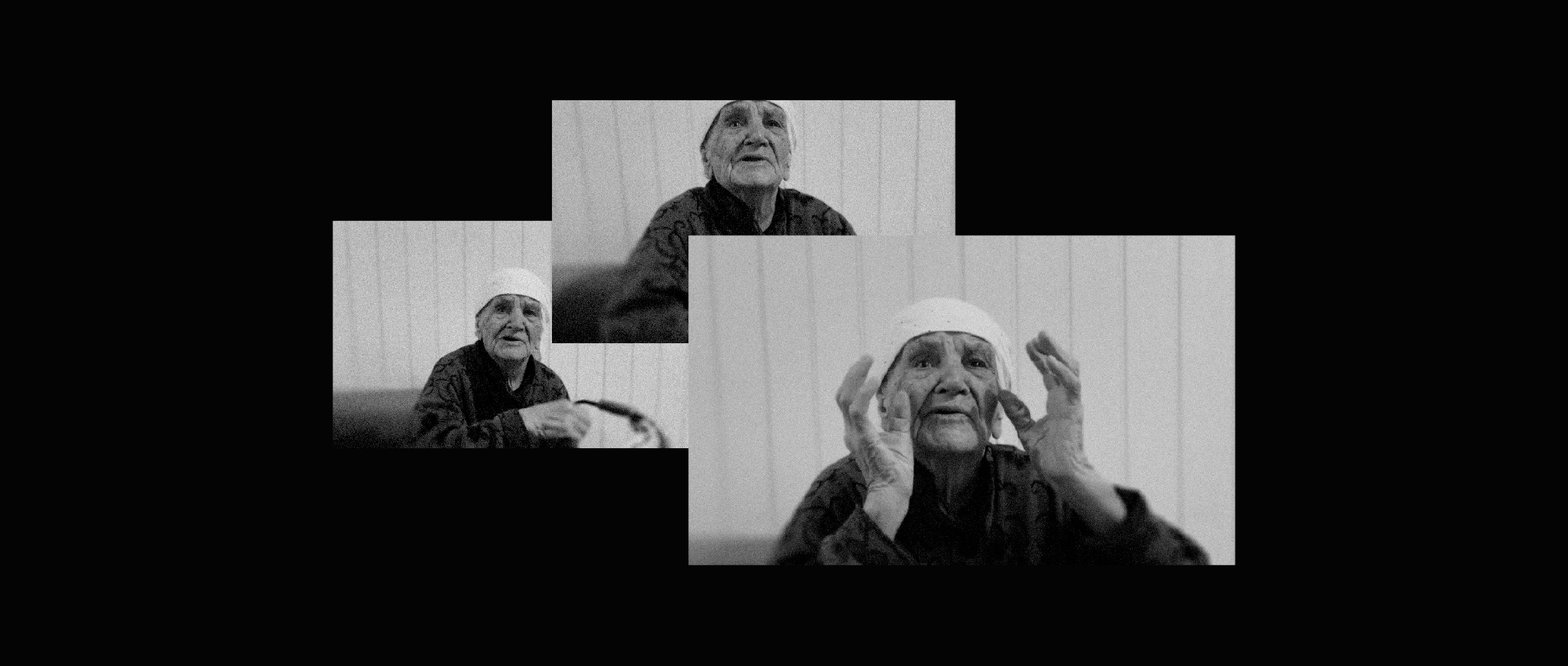
In April 2025, at Ocean of Goodness temporary shelter in Dnipro, Ukraine, a recently evacuated woman asks the reporter, “How will I live? Where will I live?” / Video stills from Wendy Wei
IN THE MONTHS since Tkachov’s October evacuation, the situation has deteriorated sharply. Kostiantynivka became an active battleground. Three more of Tkachov’s vehicles were hit by Russian drones. In one attack, an elderly couple died in his back seat, and the Proliska logo—the marking meant to signal humanitarian protection—was struck clean through. He saw seven bodies on the side of a road, but drove past them because it was too dangerous to stop. People who want to leave Kostiantynivka now must walk to the neighboring town to call: All local satellite phones are completely out of order. Some carry strollers to move injured neighbors. One woman was evacuated in a wheelbarrow.
When we caught up again this spring, Tkachov somehow still carried the same sense of humor and frankness. He had just visited his wife, mother, and daughter in Geneva because he was granted medical leave by the Ukrainian government after sustaining a concussion—all men of draft age are required to get permission to leave the country.
“All my friends took bets on whether I’d come back,” he chuckles. Often, people who leave end up staying out of the country, but Tkachov said he had a responsibility.
“To God, to the people,” he says, pausing to add with a laugh, “and to my salary!”
And yet: Tkachov no longer knows when years start or end. To him, every day is Groundhog Day, he says. When asked whether 2026 feels more difficult than 2025, the question doesn’t quite make sense to him. The road, the drives, the calls feel the same, no matter the year. Tkachov thanks God for gifting him with a mental filter to forget and keep moving.
“Very few people can afford to think this way, but for me, death is not a tragedy—it’s just another stage of life.”
This reporting was supported by the International Women’s Media Foundation’s Women on the Ground: Reporting from Ukraine’s Unseen Frontlines Initiative in partnership with the Howard G. Buffett Foundation. Liubov Sholudko contributed reporting.
Did this article have an impact on you? Tell us how! Whether you’re moved to take action, have a question, or want to share a comment (good or bad), we value your feedback!